
Control Resonant Review
Every once in a while, a game comes along with a segment or design idea so hard to wrap my mind around that I ask myself, “How did they make this?” Control Resonant had no less than four moments like that. Remedy Entertainment’s follow-up to 2019’s Control is an utterly mind-bending take on open-world games, packed to the brim with vibrant level design, fascinating and intricate stories, and a healthy dose of the studio’s trademark weirdness.
A rather lackluster opening few hours soon turn into one of the most compelling titles I’ve played all year, gaining new layers of depth and ambition over and over. Control Resonant is a stunning visual and auditory experience, but perhaps what’s most fascinating to me is that this isn’t Remedy deciding they want to make an open-world game – rather it’s Remedy saying, what would it look like if an open-world was grafted directly onto the Remedy formula. And that makes Control Resonant something wholly, uniquely distinct.
Resonant takes place seven years after the events of the original Control, this time putting you in the shoes of Dylan Faden, Jesse’s brother and the parautilitarian that inadvertently helped the supernatural entity known as The Hiss invade headquarters of the Federal Bureau of Control, The Oldest House.
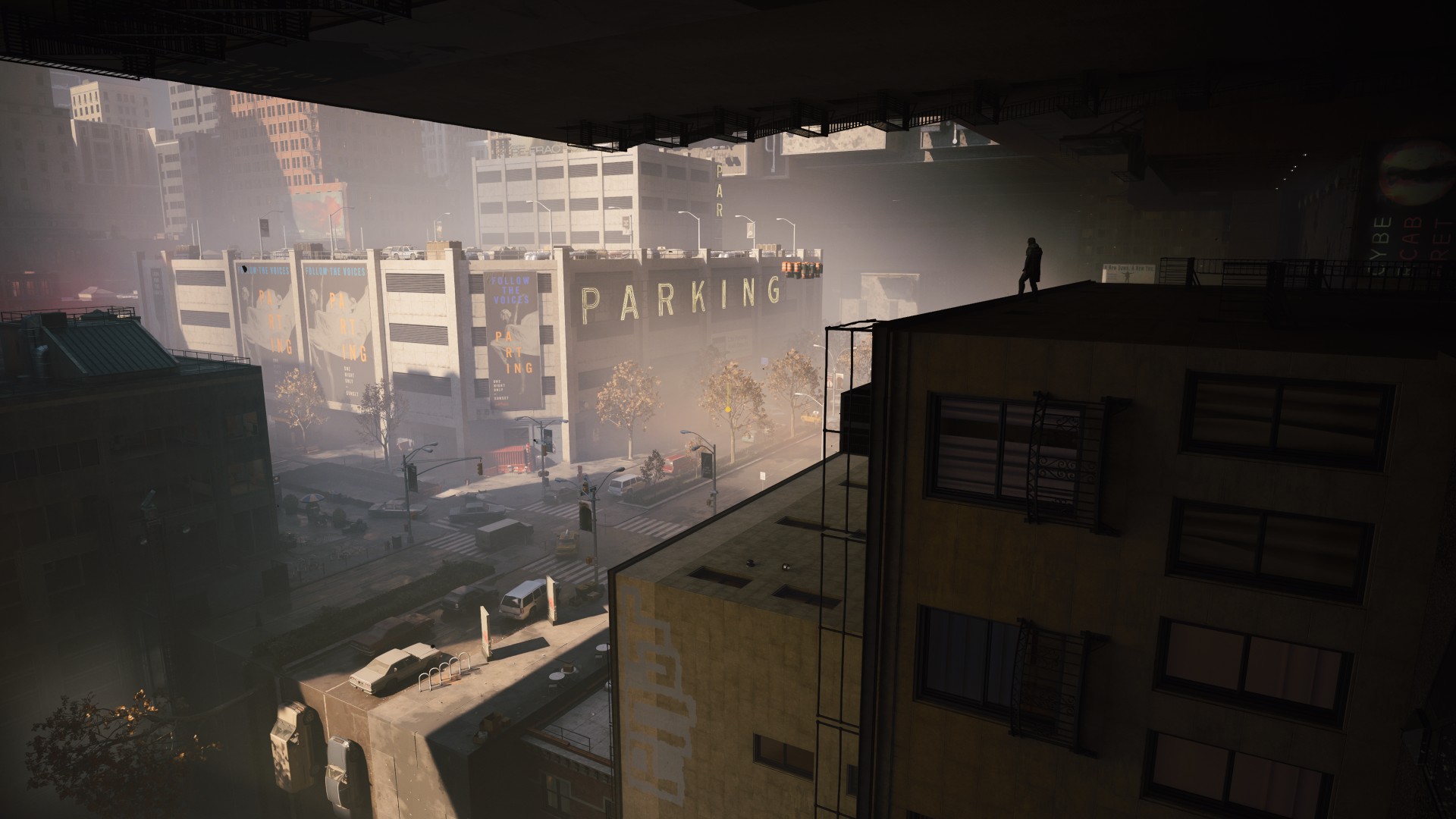
Waking up suddenly from his coma with a mysterious new shape-shifting weapon known as the Aberrant, Dylan finds that The Hiss have broken out of The Oldest House and invaded the streets of Manhattan. But things are even worse as a new supernatural phenomenon known as Patterning has twisted the city into an Inception-like kaleidoscope. It’s up to Dylan to navigate a twisted, warped, and deadly new version of New York and put a stop to it all.
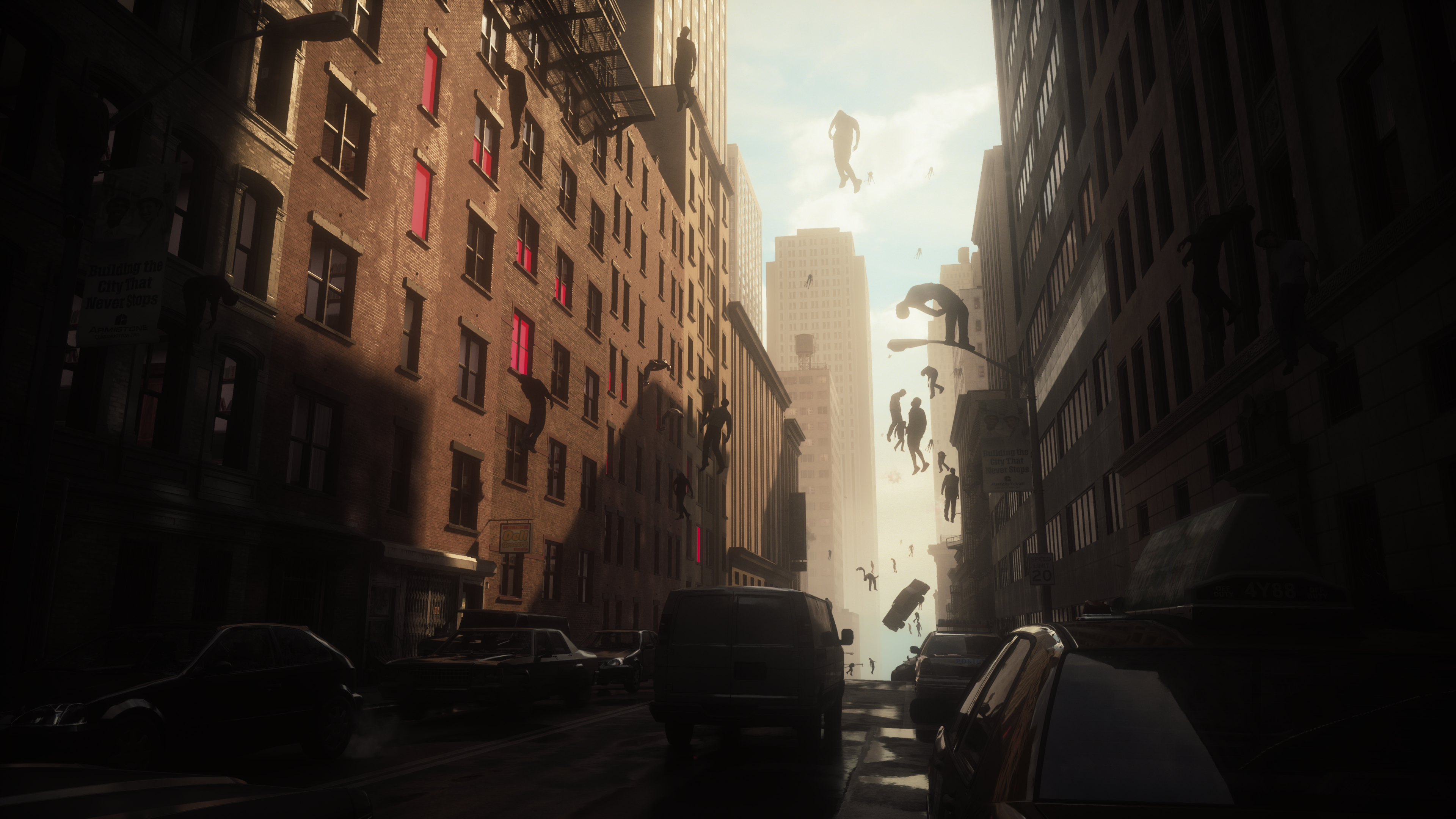
Open world games are no stranger to New York as a setting, but Resonant’s version of the city that never sleeps is gorgeous, but almost morbidly so. Mounts of blue mold melt cars and buildings into their mass, while kaleidoscopic mounds of bodies float through the air like some grim art exhibit. Resonant takes to morphing the familiar into the unknown with gusto.
Dylan is a much more soft-spoken protagonist than his sister Jesse, but there are some fascinating elements to how Resonant dives into his character and story. For one, his relationship with Jesse is a major focus of the overarching narrative, and fans who wanted some answers to big questions from the first Control should be pleased. The actual presentation can feel a bit lacking at times, with somewhat stiff characters and animations, even in cutscenes, but the quality of storytelling is strong.
Even further, there’s also a compelling undercurrent to Dylan’s arc – the idea of penance. Dylan feels monumental guilt and responsibility for the role he played in bringing The Hiss to this world. Resonant uses that detail to dive deep into the idea of penance, regret, and forgiveness. If people are deserving of redemption for their actions, whether done willingly or not. That element of Dylan’s story is something that resonated (yes haha) with me, and by the end of everything there’s a pretty clear, meaningful message that evolves from it.

But what I find most fascinating about Resonant is how it simultaneously feels vastly different from anything Remedy has done before, while also utterly nailing the studio’s style and vibe. If you were worried the shift to open world would make this game less Remedy-esque, don’t. The emphasis in Resonant is still squarely on telling a compelling story with rich characters, and providing an array of unique gameplay experiences.
The crux of how the game achieves all that, of course, comes down to the sheer design of the open world. Essentially, Resonant’s world is split up into a multitude of large explorable zones. These zones do connect to each other, but for the most part each zone is its own little thing. There is a set “main story” questline, but the bulk of Resonant’s story and experience is uncovered through exploration, and for the most part you can experience the narrative in any order you wish. As you make your way through New York, you’ll constantly uncover major narrative quests and little side activities – from a dimension-hopping dog that keeps losing her toy, to powerful bosses called “Resonants” that grant Dylan new combat powers. There’s even a quest where Dylan has to freestyle a karaoke song to save an exhausted crowd from a possessed karaoke machine that makes them dance. Those quirky little Remedy elements are constantly woven in and out of the game as a whole.
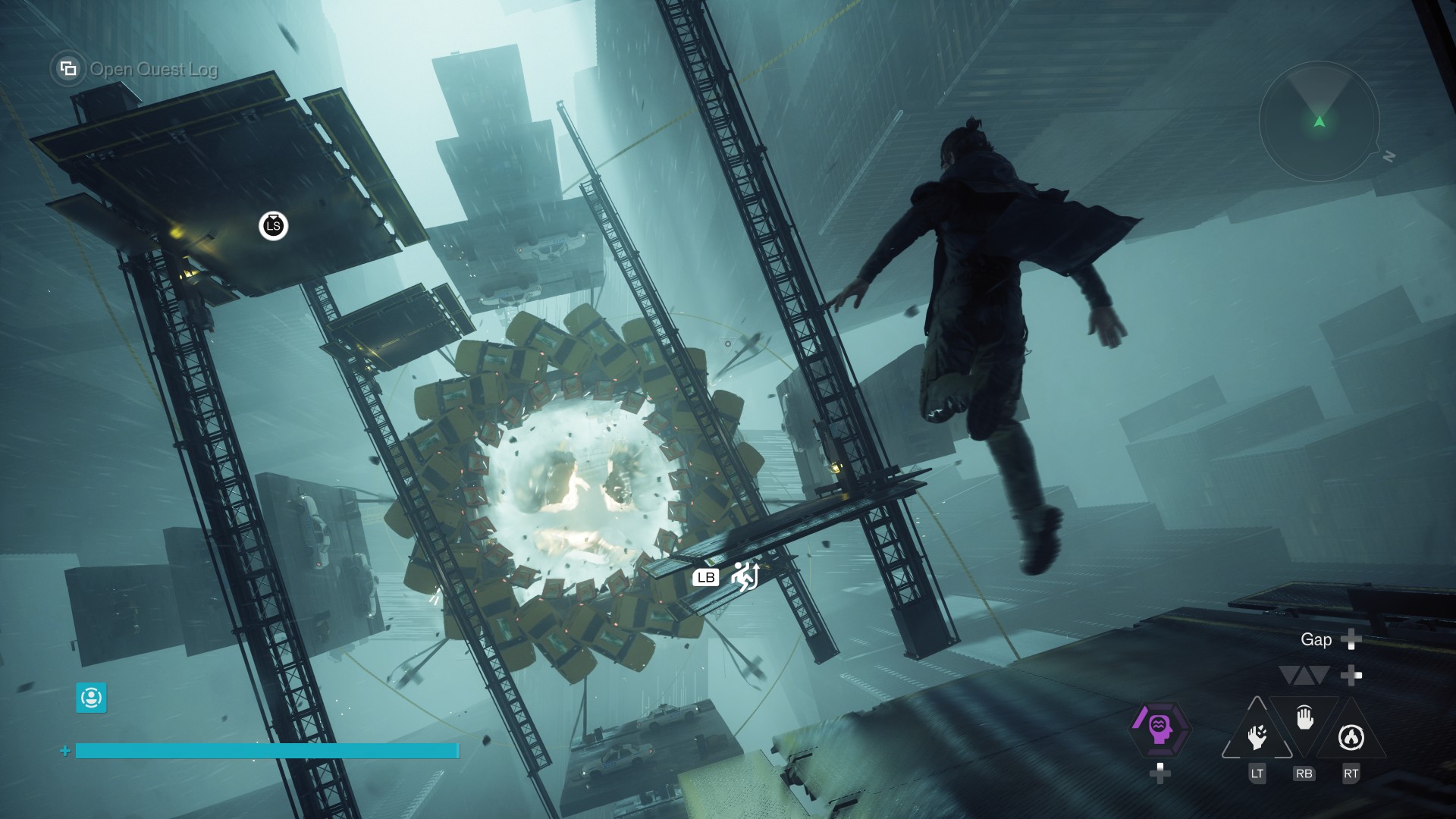
But an essential part of how you interact with the open world is the traversal system – probably my favorite since Insomniac’s Spider-Man in terms of pure game feel. Dylan can do a double jump followed by a short float that keeps you moving through the air for a good 5-10 seconds. On top of that, you can execute two air dashes every time you jump, and these can be strung together with the float in any order. The movement system feels absolutely seamless, easily letting you bound and glide across the rooftops of Manhattan. But as you progress through the game, you’ll unlock more traversal abilities, including a sort of grapple that instantly moves you to points. But the real winner here is the gravity shift ability, which lets you completely change your gravity to walk on walls or ceilings. A big part of what makes Resonant feel special comes down to simply how it plays. It's a reminder that open worlds aren't only interesting because of the content you fill them with, but the very nature of how you interact with and move through the world itself.
This mechanic is integrated into every facet of the game, and the way Remedy bakes it into level design is absolutely astounding. A battle gets filled with even more cinematic flair when you fly onto the roof and the perspective shifts. A late-game zone is a city that literally has a bottom and top portion, letting you constantly shift between it. Resonant constantly plays with perspective in both exploration and puzzle solving, quite literally adding an extra dimension to how you interact with the world – and just when I thought I couldn’t be impressed by what the game does with gravity, it would pull out a new wild card.
Coupled with this is a smart progression system that levels up the actual zones you’re exploring, instead of Dylan himself. Everything you do in a zone gives experience to that specific zone, whether it’s killing enemies, finding treasure, completing quests, or anything else. As a zone levels up, you’ll unlock new perks, like upgrading the zone’s merchant, marking more treasure spots, increasing health drops from enemies, etc. But each zone level-up also grants you one talent point for Dylan that you can use on a massive skill tree. Additionally, many of the game’s sidequests unlock relics that you can construct for a variety of buffs and bonuses.
Those two elements combined end up being a phenomenally interesting way of encouraging players to explore the world, and make everything you do feel like it has a purpose. It’s honestly one of the most rewarding systems I’ve ever seen in an open world game, harkening back to the Metroidvania-esque design of the first Control. And throughout all of this, baked into the fabric of every facet of the game, is Remedy’s strong focus on storytelling and world-building. There are dozens, if not hundreds, of notes scattered across the world diving into some tantalizing bits of lore – including a sort of spy organization that seems like it rivals the FBC, maybe setting the stage for the future. The overall world is also constructed in a way that it doesn’t feel overwhelmingly large, and manages to string discoveries along at a steady clip. Despite the human population of New York being decimated, this isn’t a world that feels lifeless and empty, instead more something twisted and deformed.
Of course, the other integral element of Resonant is the combat, marking Remedy’s first foray into action-RPG. And that’s where my biggest criticism comes in. While the combat system does click eventually and get quite satisfying, the opening hours of Resonant are shockingly rough. I mean that in two different ways: coming to grips with exploration and combat difficulty.
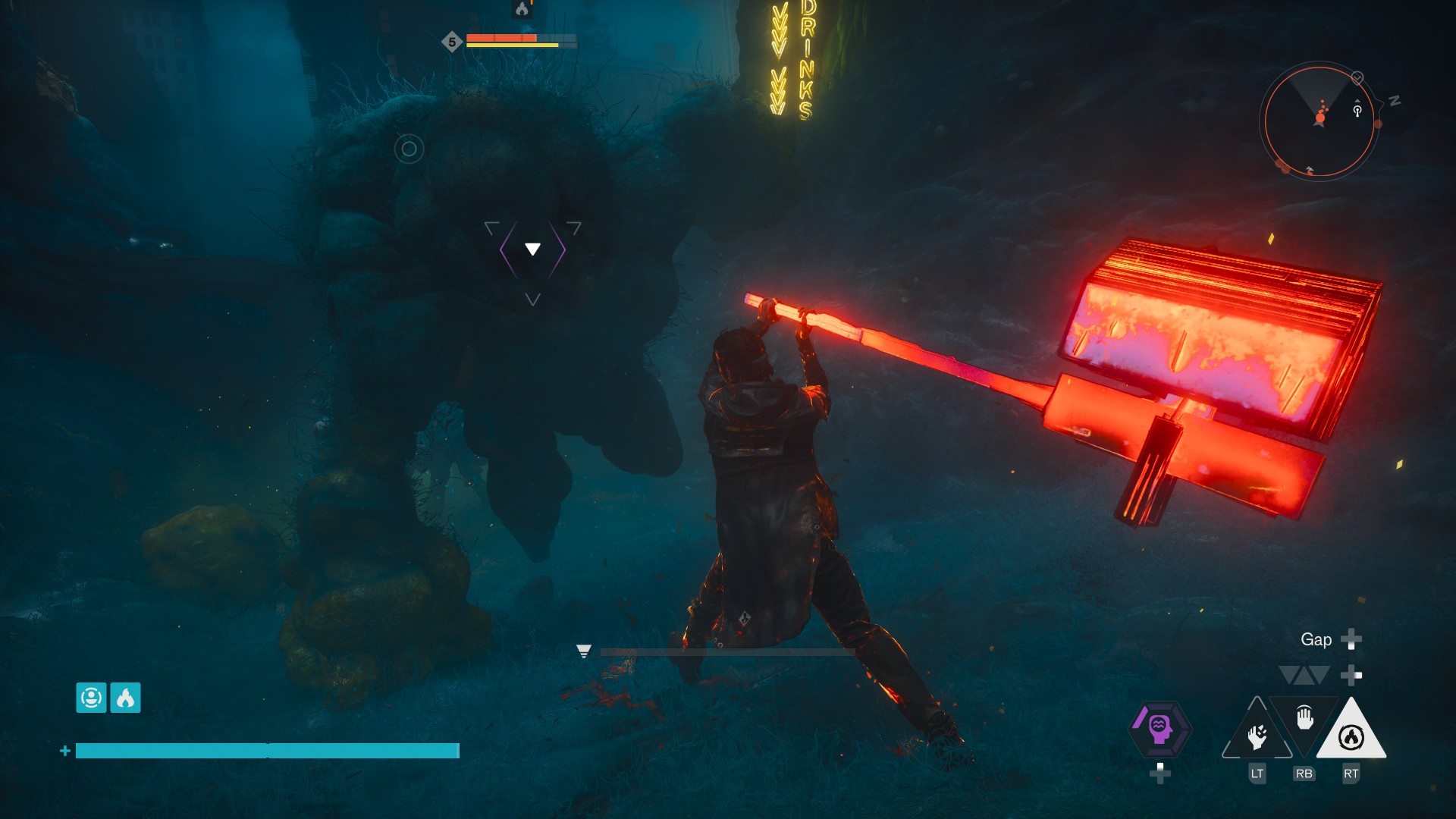
Until you unlock more options, both facets of the game feel alarmingly restrictive and difficult. Combat, in particular, has a huge difficulty spike at the start of the game, so much so that it’s quite discouraging. I think part of that is that Resonant poorly explains the importance of your entire build; investing in abilities for every weapon, trying out different combinations, and taking out basic enemies for health restoration.
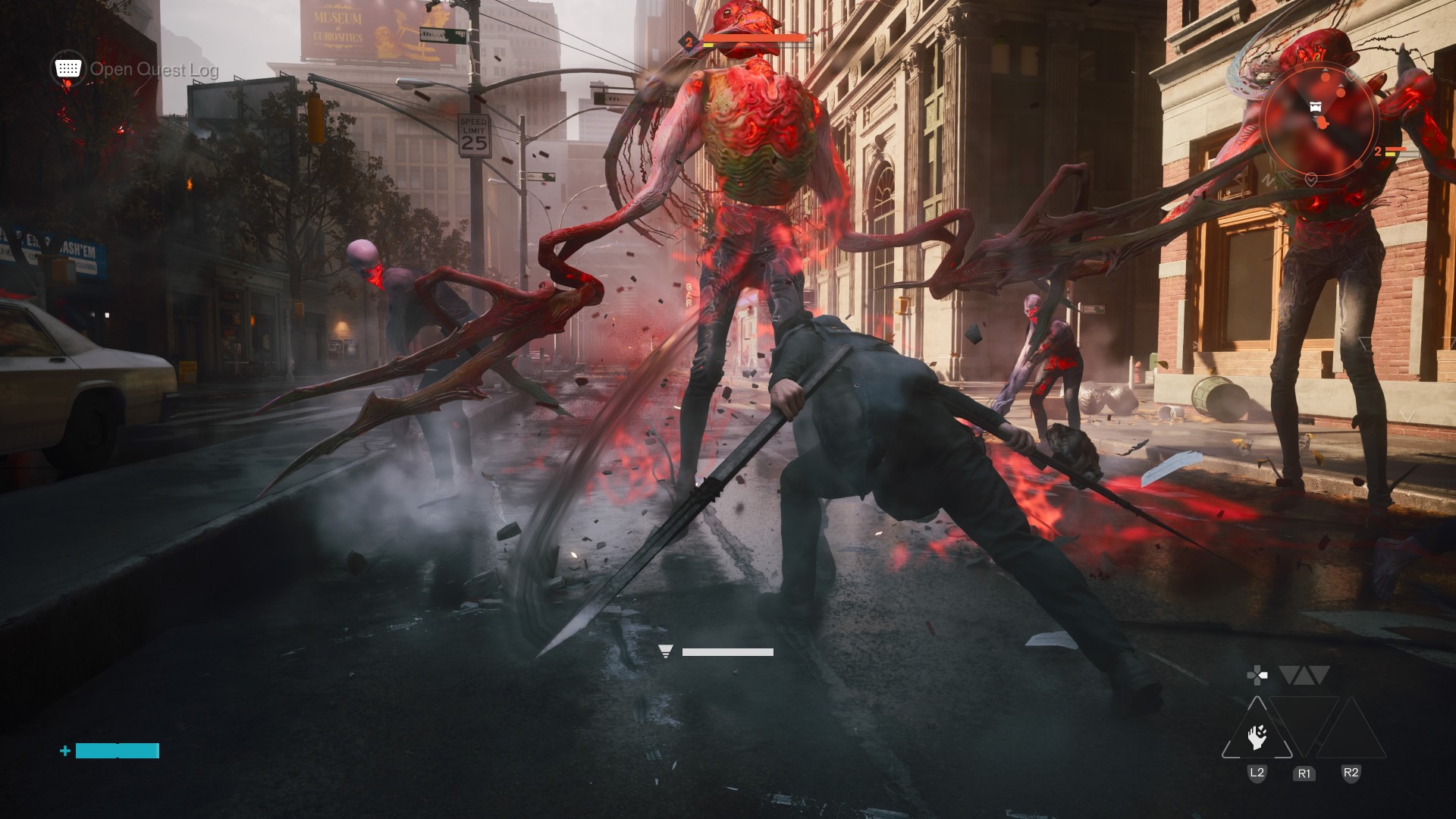
While it may sound odd, Resonant plays a lot like a cross between Kingdom Hearts 2 and DmC: Devil May Cry. It’s a combo-focused system where Dylan gets a main weapon, a sub weapon, a finisher, and then a variety of abilities that use the “Power” gauge. Your basic weapon can take one of three forms: dual blades, a cleaver, or a scythe. And these correspond to light, medium, and heavy attacks, respectively. Abilities have a wide array of effects, from a telekinetic push to summoning a void entity that peppers enemies, or powering up weapons with fire. There are a lot of different little elements, stats, and status effects to keep track of too, from Falter to stagger enemies to a mode called Dominance that activates momentarily when you execute an enemy and drastically ups your damage.
What’s really interesting about the combat here is that it’s clearly using the foundation of ideas from the forest game: heavy world and environment interaction, crow control, gauge management, and transposing all of that into a character action system. The result is something that feels true to the style of the first game, while still fresh.
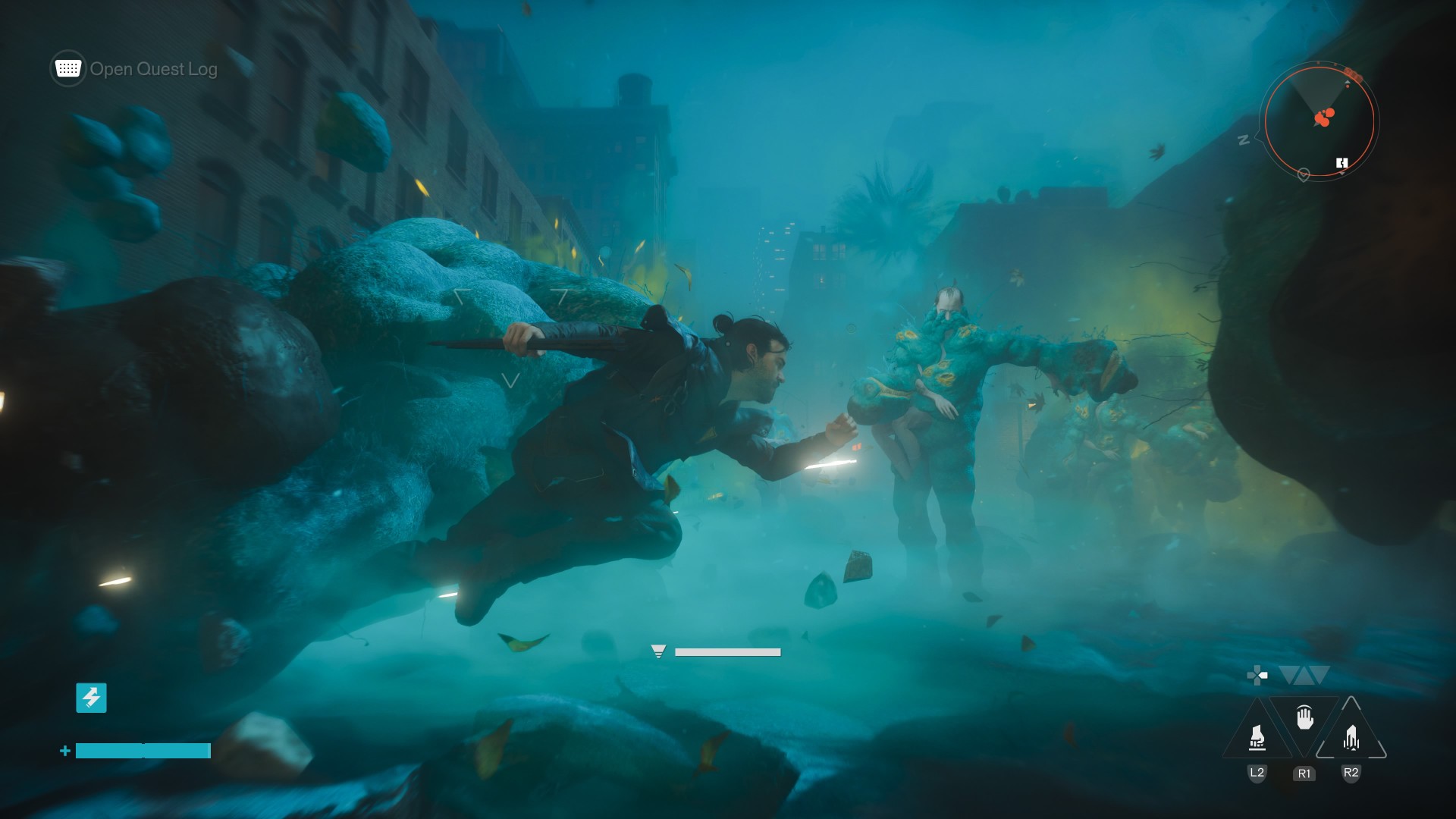
There’s so much to learn and keep track of that it initially feels entirely overwhelming. For the first handful of hours, I was convinced I was simply playing the game wrong and couldn’t figure it out, until I unlocked more options and started drastically experimenting with my build. And once the elements of combat come together, it’s a blast. Summoning a little turret, shifting gravity onto the wall, and slicing enemies with a giant scythe while debris goes falling down in gravity’s clutches is thrilling. The sheer cinematic flair to late-game battles is honestly astounding. Boss battles are also bombastic, adrenaline-pumping affairs with specific challenges that test how well you grasp the combat, outside of just two stinkers that are just waves of enemies.
It’s honestly a shame those first few hours feel rough and restrictive, as Control’s combat system can genuinely be thrilling and stands up there with the best of them, even giving you dodge cancels, impact frames, and the like. But I do worry that the initial hump you have to get over could be intimidating for people not already locked into the world and storytelling of Control. While there is a good amount of enemy variety, I do also feel like Resonant leans a little too heavily on combat at times, oftentimes locking you into lengthy battles that can last upwards of five minutes.
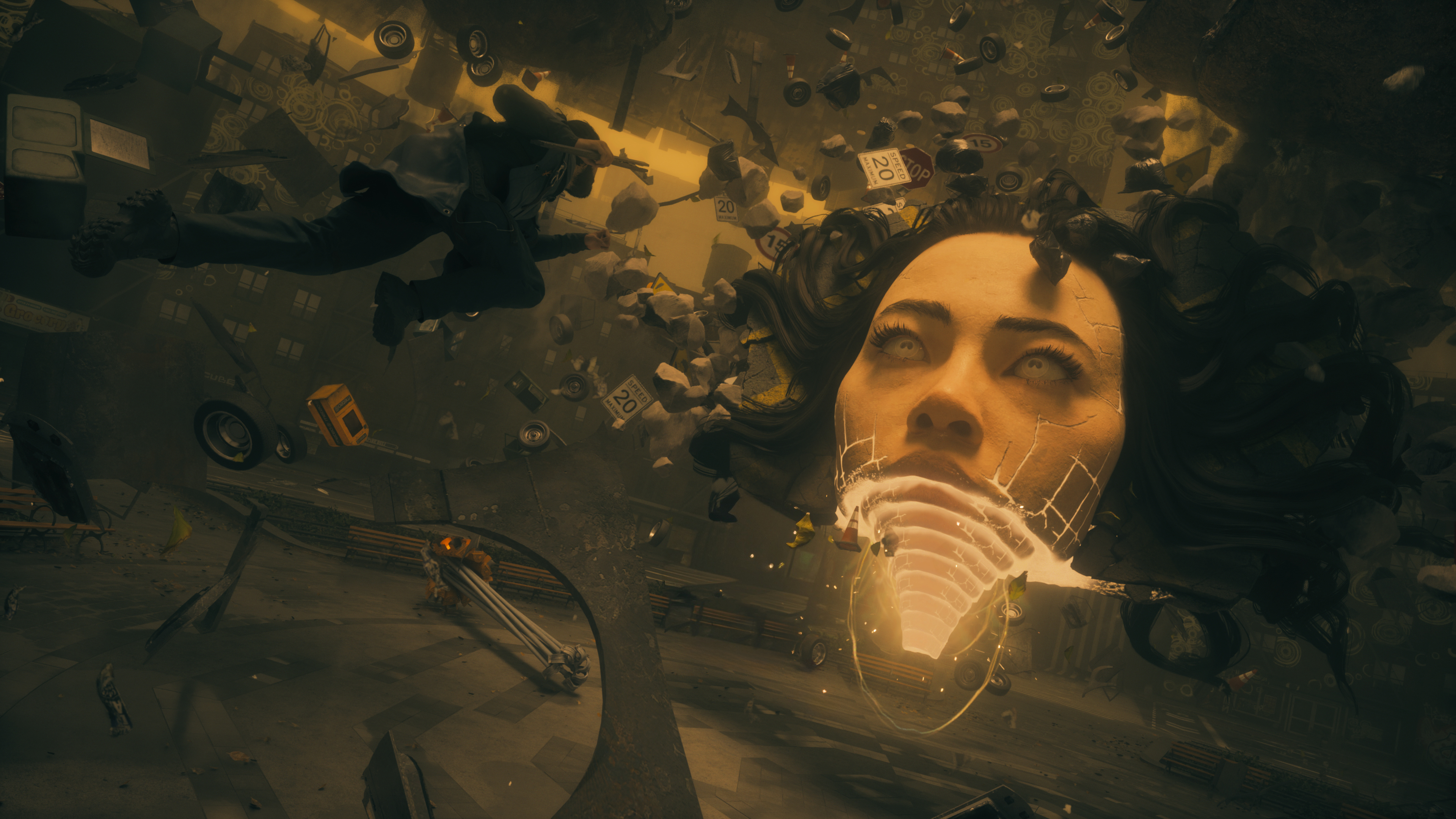
Despite those shortcomings, however, I couldn’t help falling in love with Resonant the more I played. The bizarre paranormal world of Control is on full display in this sequel, and it shines through in both the Escher-esque world design and amalgamation of side stories that are a joy to discover. Resonant feels experimental in a lot of ways, like Remedy pushing at the bounds of what it’s known for. But the bumps along the way are more than worth it for the astronomical highs Control Resonant reaches.