
The Adventures of Elliot: The Millennium Tales Review
If there's a single feeling that dominated my time with The Adventures of Elliot: The Millennium Tales, it's that I'm left wanting. Despite enjoying much of what Square Enix's new action-RPG has to offer, I couldn't help shake the feeling that there was genuine untapped potential here.
This is a game with an incredibly strong foundation that simply struggles to reach the heights it could have achieved. A large part of that comes down to how repetitive Elliot's structure is, and how much the game forces you to backtrack and tread through nigh-identical environments again and again. While Elliot's narrative and action do eventually come together in the latter half, there's simply too much fluff to cut through on the way there.
The Adventures of Elliot: The Millennium Tales is Square Enix's very first action-RPG done in the HD-2D engine, previously used for Octopath Traveler, Triangle Strategy, Dragon Quest remakes, and more. Turns out, the HD-2D style works incredibly well for an action-RPG, and the overall presentation is perhaps Elliot's most standout element.
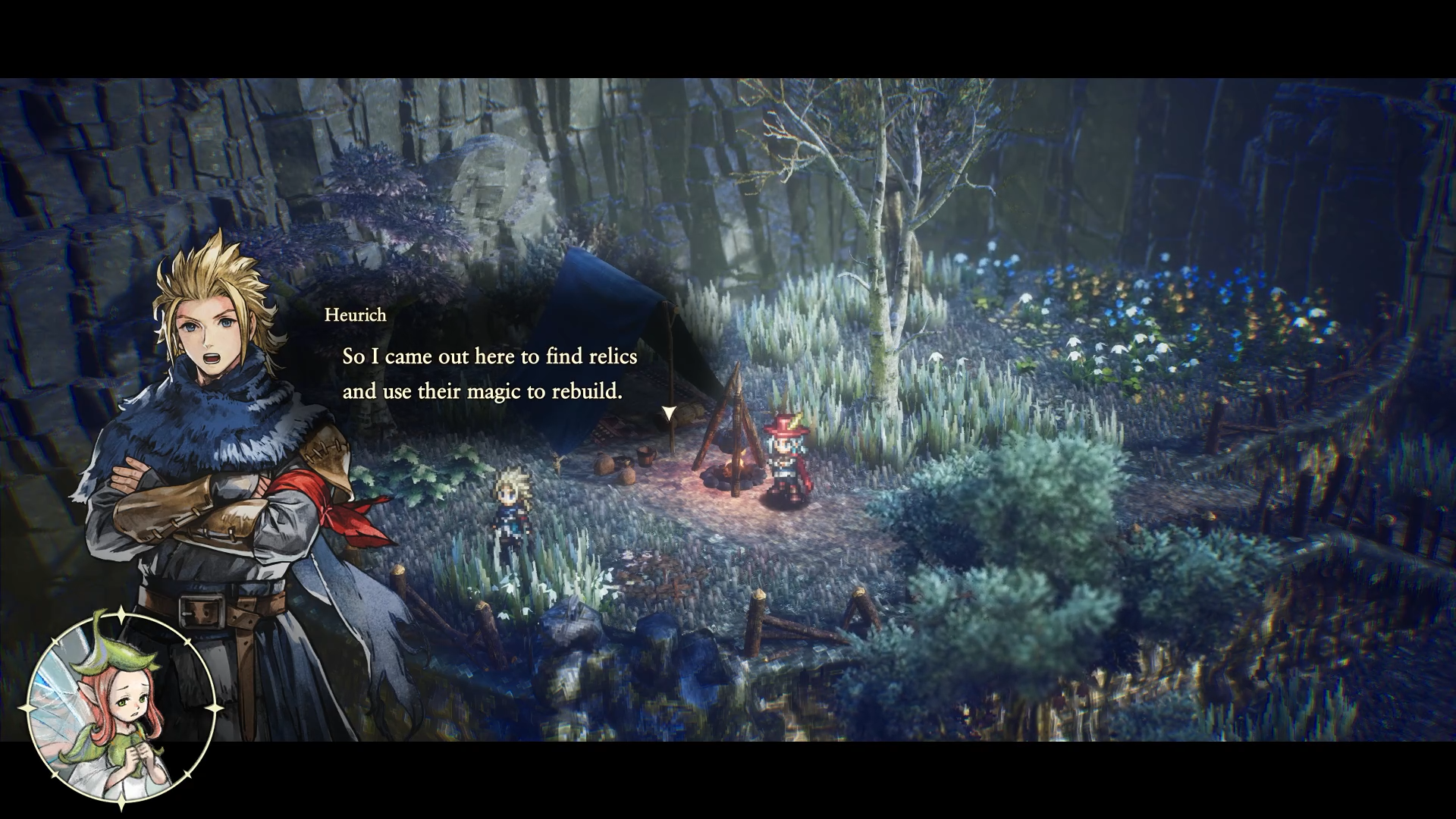
HD-2D gives a real sense of depth to the world, with far more emphasis put on lush environments and foliage than past games in the style, which have largely focused on medieval settings. What results is an experience that consistently provides bright environments or stunning vistas that pop off the screen, accompanied by a genuinely phenomenal orchestral soundtrack that treads the line between epic and whimsical. At the same time, I'm quite partial to the fantastically detailed and lavishly animated character artwork, instilling even minor characters with a real sense of personality.
Elliot takes place in a fantasy world called Philabieldia, where humans have been relegated to the Kingdom of Huther, safe in its walls from the beastmen that roam the land. When a mysterious set of ruins is discovered just outside the wall, the king recruits an adventurer named Elliot to investigate — resulting in a discovery that sends you through time. Along the way, Elliot meets a fairy named Faie that acts as his companion, aiding him with unique powers to tackle exploration, combat, and puzzles.
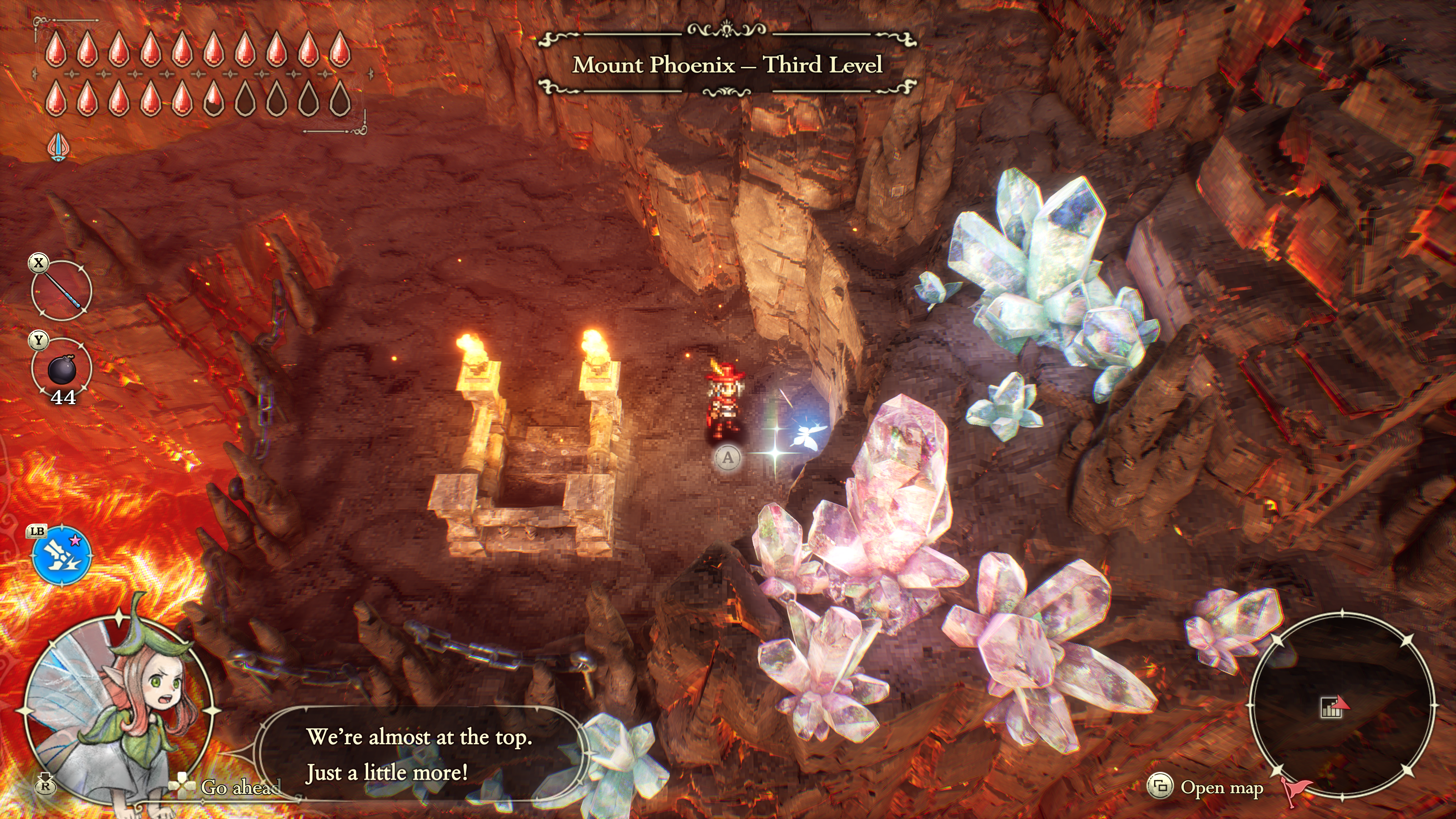
While many comparisons will likely be drawn between Elliot and The Legend of Zelda, this game actually feels far more in line with the early Mana, or Final Fantasy Adventure games, both aesthetically and mechanically. The gist of Elliot is that you're exploring the world while following the main story, tackling dungeons and bosses, taking on side quests, completing optional dungeons, all that good stuff. The game balances combat, exploration, and puzzle-solving by giving Elliot a variety of weapons and abilities that can be used in multiple ways.
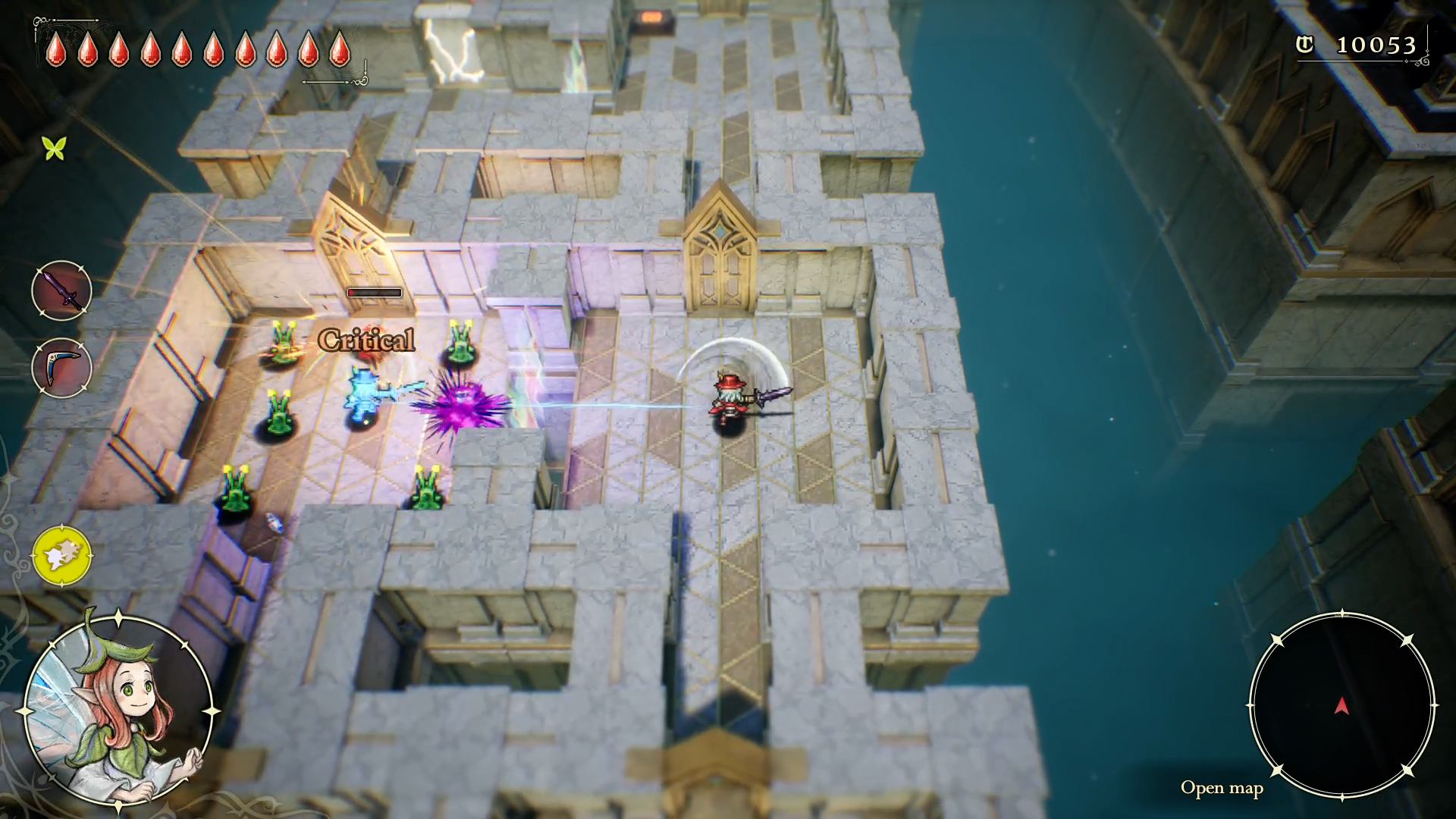
Elliot has four melee weapons: a sword, spear, hammer, and sickle. Each of these has different uses in combat and typically has a puzzle mechanic, too, like the hammer's charge attack being used to drive nails into the ground that block your path. You also have bombs that can blow up cracked walls and boulders, a boomerang that can hit enemies multiple times, and arrows for long range. While you don't have a dodge, you do have a shield that you quickly find out is vitally important, especially once you unlock a perfect guard ability that stuns enemies.
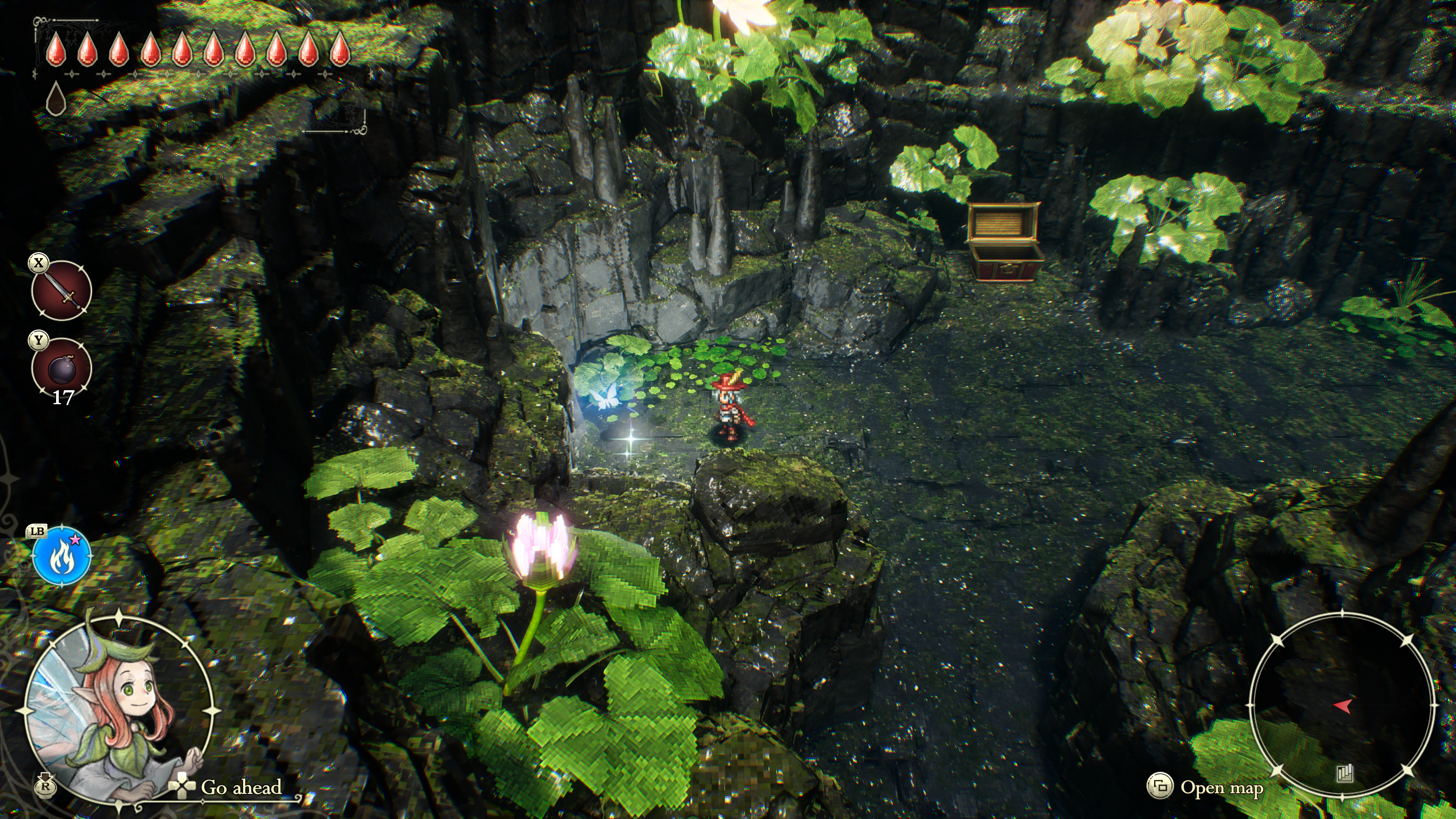
On top of this, Faie has her own abilities that open up a wide array of new options, such as giving Elliot a doppelganger that acts exactly as he does, a high-speed boost, a fire attack, a teleport, and more. Faie can be controlled independently using the right stick, and you can probably imagine the puzzle options this creates — navigating Faie to a far-off platform to teleport, or through a little maze to light a torch.
Where the game really starts to let you customize your "build" is with the Magicite system, which are essentially abilities you can equip on each weapon to grant drastically different effects. For example, one Magicite might make your boomerang bigger, but move much more slowly. Another might increase your sword attack when your shield gauge is full. Even further, another makes your bombs bounce once whenever you throw them.
Magicite fragments are gathered as you adventure, and can be turned into a merchant to create new Magicite — while you can also find new ones in chests. Similarly, you'll gather money called Tul as you adventure, used to buy accessories from shops, healing potions, upgrade your Magicite cases to hold more, etc.
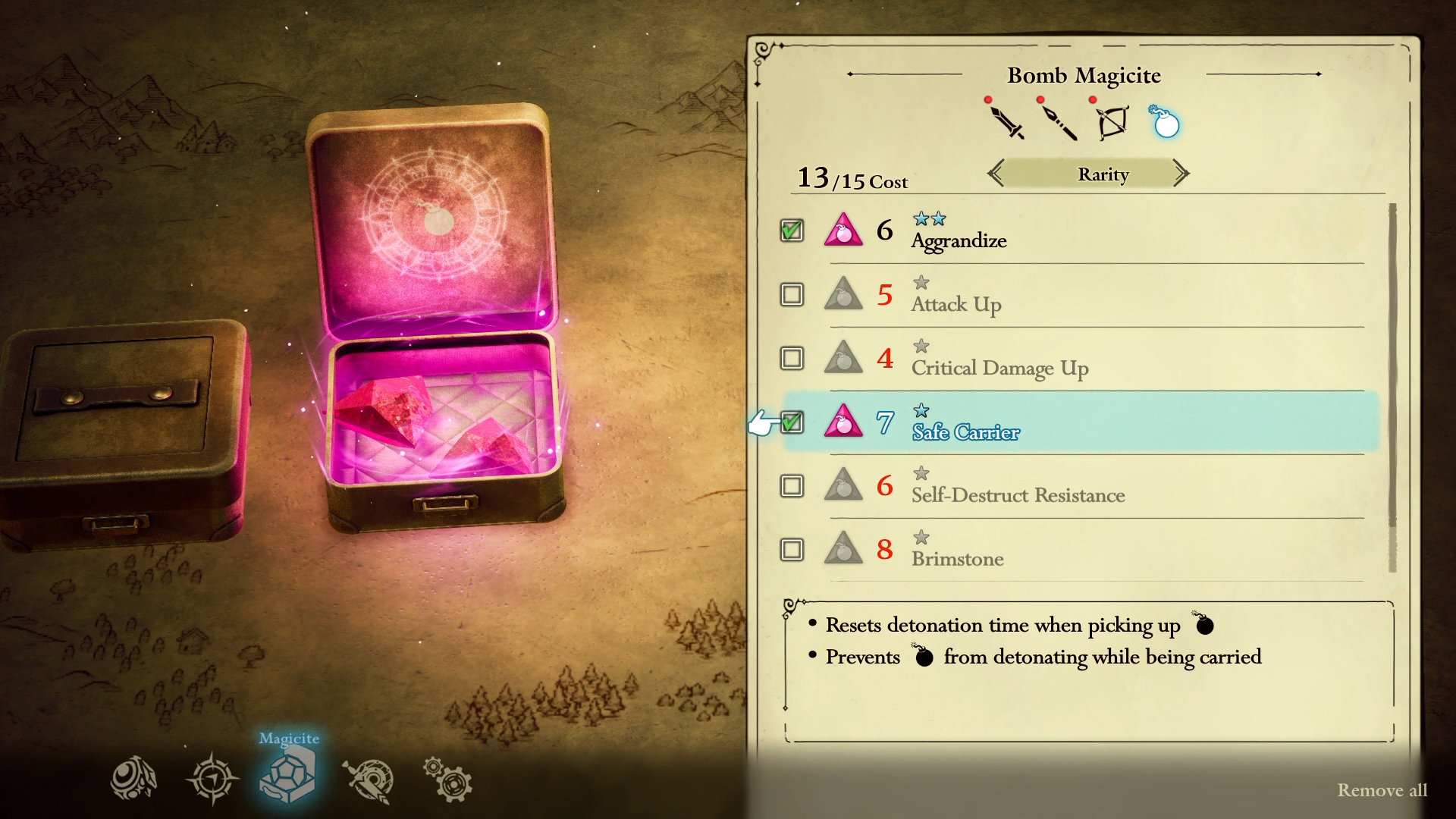
While the combat of Elliot starts slow and initially feels constrained, the further you progress into the game and the more options you unlock, it starts to feel more dynamic. In the last third of the game, combat really felt like it was clicking for me, and I genuinely enjoyed testing out a variety of Magicite builds.
And while this all likely sounds pretty good so far, unfortunately, Elliot is significantly dragged down by its main gimmick — the time travel. The game takes place across four different time periods called "Ages," each of which is the Kingdom of Huther at a different point in its history. The story twists and weaves through these different ages, but the big problem is that the game quite literally uses the same map four times over.
Each age is practically the exact same world map, sprinkled with only minor differences. The layout of the world never changes — dungeons are in the same place, shortcut tunnels connecting the various locales are in the same place, and even the same enemies often populate every age, for the most part. The intent behind this is seemingly to try and portray how time changes a kingdom and its people, but in practice, it quickly becomes monotonous as you repeat the same steps over and over.
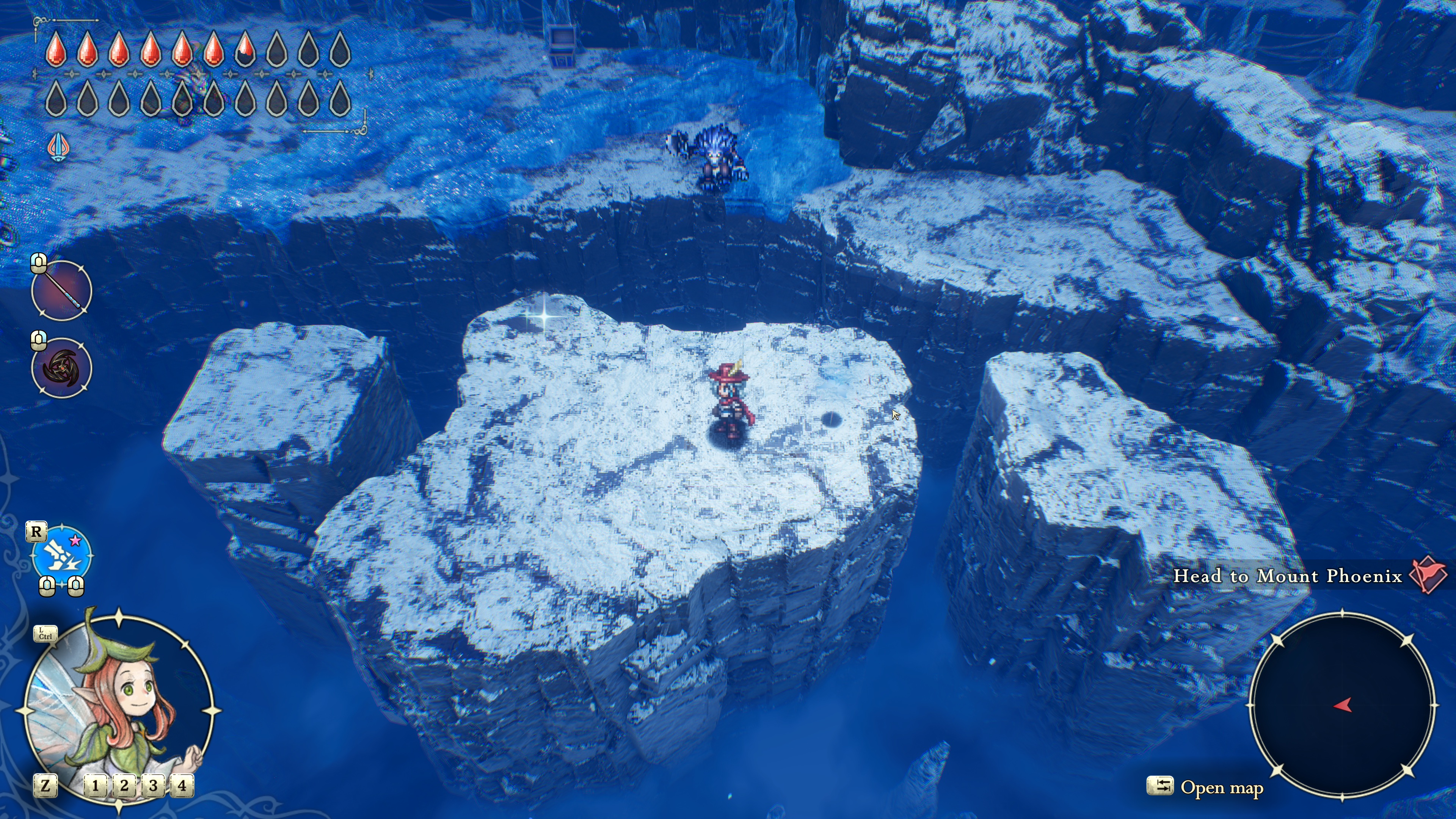
This also leads to some unfortunate frustrations with dungeons, because of how things are overgrown or ruined in different time periods. For example, I know where a dungeon is and head into it when arriving in a new age, only to find out I can only access a single room, and there are virtually no rewards to be found. It's an unfortunate element that, occasionally, makes you feel like you're wasting your time. Similarly, the game has a penchant for reusing enemy types throughout, and bosses are no exception. Even early in the game, I found myself facing multiple variations of the same boss — disappointing for a combat system that I genuinely enjoy, and would have preferred to use that against new challenges.
I also found the design of the dungeons themselves to be lackluster at times, too simplistic in their puzzle solving, with rote mechanics that rely on only one of your abilities instead of making full use of the suite of skills Elliot has. That is, of course, again compounded by the fact you're largely revisiting the same places up to four times throughout your playthrough.
And that brings me back to my first point, unrealized potential. Elliot is a consistently frustrating game, in the way that you simply want to see it do more, be more ambitious. That time-travelling gimmick is a great idea on paper (Chrono Trigger perhaps being the best example), but it just feels underbaked and underutilized here. Similarly, the story spends far too much time meandering through mundane developments before really kicking into high gear just near the end, along with multiple endings.
Even the combat system, which I overall enjoy, introduces most of your weapons and options quite early on — meaning the latter portions of the game rely heavily on the Magicite system, instead of getting new toys to play with.
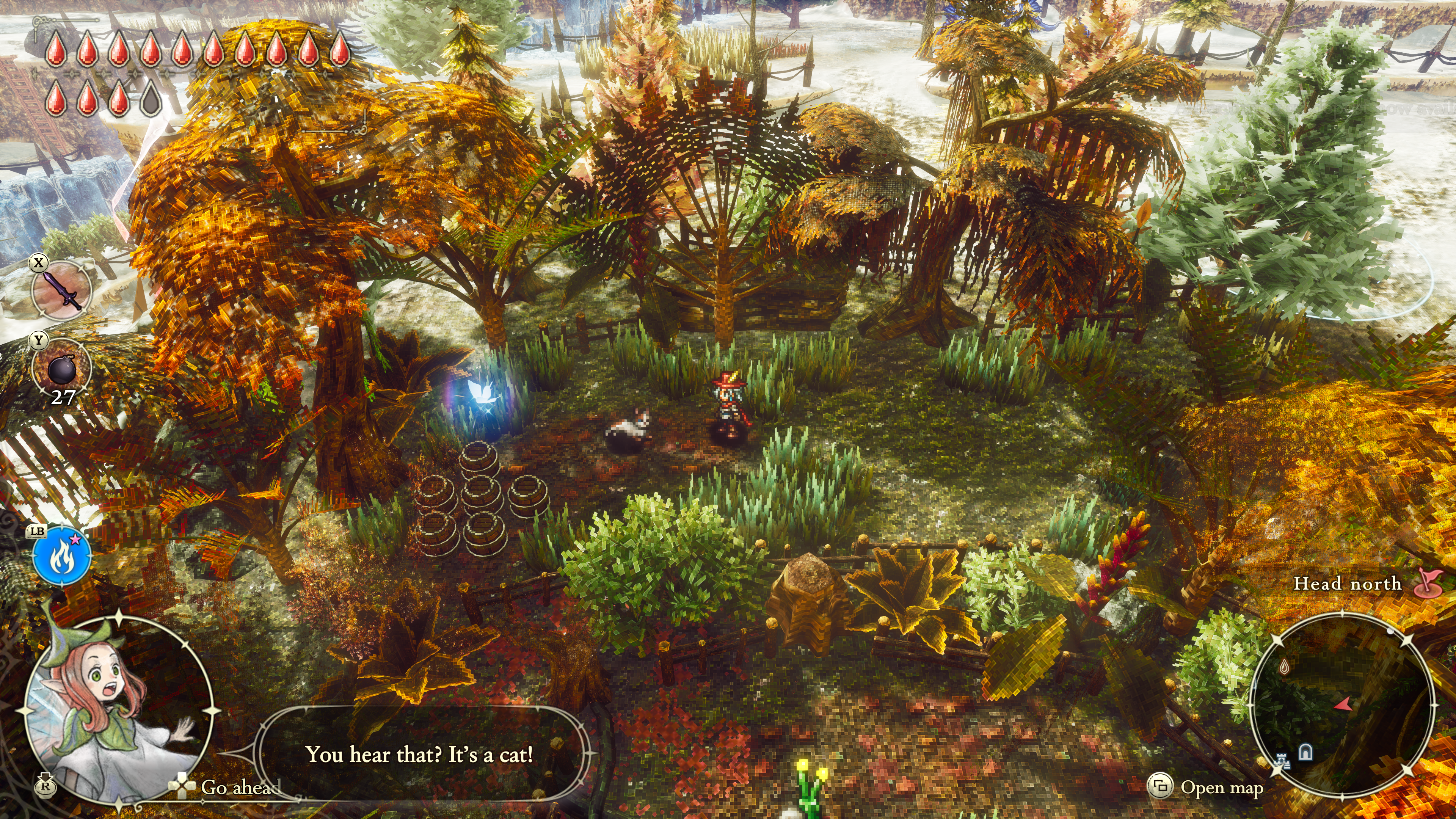
Nothing about Elliot feels outright poor, but there's an air of slight disappointment that the game can't shake. There are even parts that I really love: the genuinely bright and whimsical style and soundtrack, combat options, and ludicrous ending, but it feels like the whole package has trouble clicking together. And honestly, maybe part of that is simply how good nearly all of Square's HD-2D efforts have been up until now.
On its own, The Adventures of Elliot is just fine; a solid action RPG to fill your time. There's a strong foundation to build on for the future, if another HD-2D action-RPG can actually find that untapped potential that Elliot doesn't manage to reach.