
"We began asking ourselves how a tabletop version of Resident Evil might feel" - Vultures developers on creating a turn-based survival horror game
For years, I've seen people ask the question, "What if Resident Evil were a turn-based RPG?" But it's unlikely we'll ever see that officially happen as the series leans more into action and tension-filled horror with the likes of Resident Evil Requiem.
But there's certainly space for that idea to be explored, and a pair of developers, known as Team Vultures, is hoping to do just that. Vultures - Scavengers of Death is a turn-based tactical survival horror game, heavily inspired by genre greats like Resident Evil 2.
With a demo recently featured during Steam Next Fest, we were able to talk to the game's dual creators, Mateo Robayo Rodríguez and Giovanni Beltran, about the roundabout idea the game came from, survival horror's resurgence, how you make a "scary" turn-based game, and more.
Rodriguez and Beltran: It actually started as an experiment. At first, we were exploring the idea of what a demake of Resident Evil would look like if it were a text adventure, which naturally led to a turn-based structure. As we kept developing the concept and moved toward a 3D game, we began asking ourselves how a "tabletop version" of Resident Evil might feel.
That led to an interesting design question: how could we maintain tension and survival horror elements without relying on real-time action? The idea of giving players time to think about their decisions felt like a unique twist on the genre.
Survival horror has traditionally been tied to action and reaction, so translating that experience into a turn-based system isn't straightforward. There are a few games that explore similar ideas, but Resident Evil in particular is such an established formula that most people simply imagine it as a real-time experience. In some ways, the closest examples are actually the board games based on the franchise.
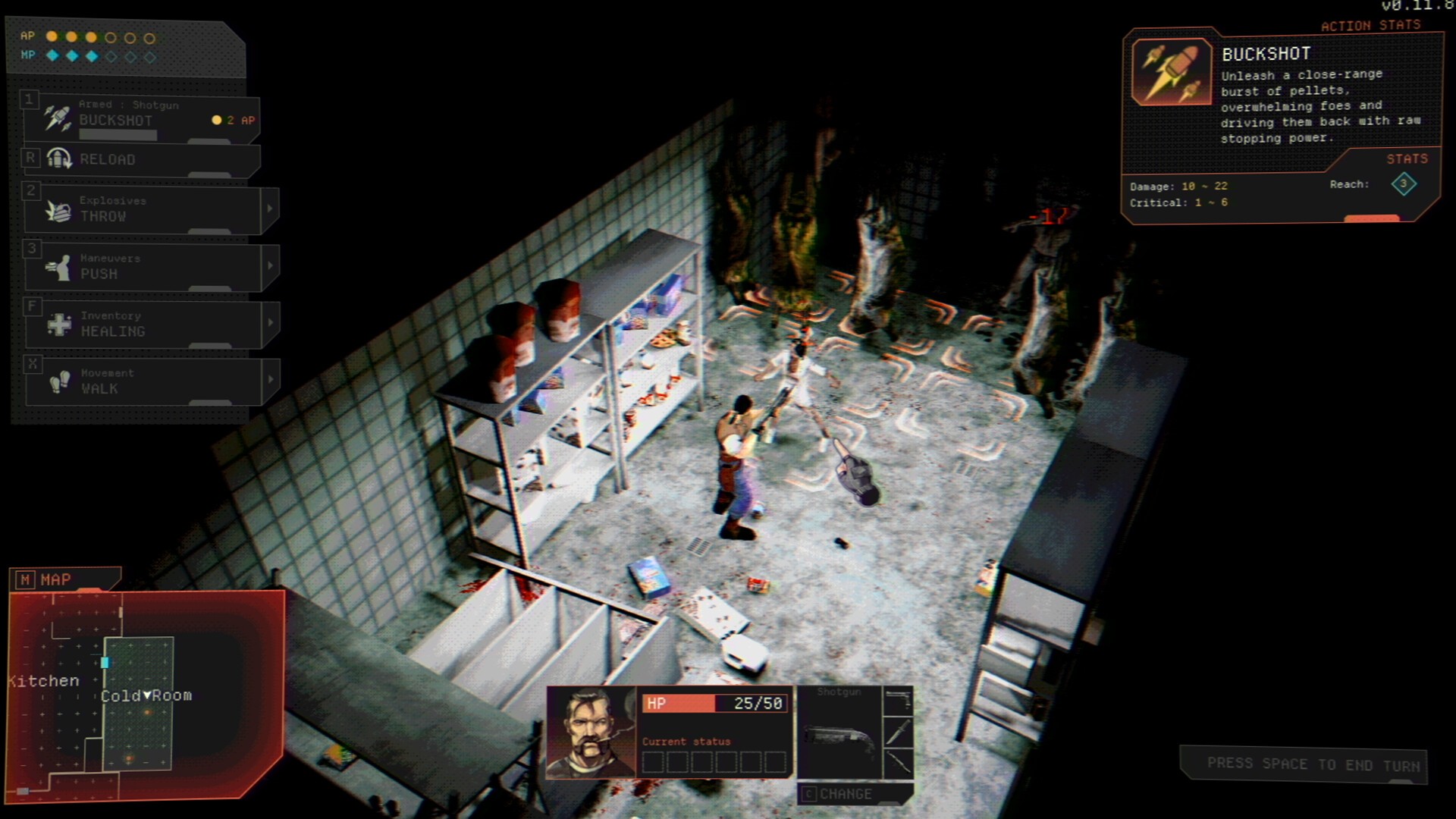
Rodriguez and Beltran: Probably fear itself. In real-time survival horror games, things like camera perspective, sudden movement, and jump scares can create very immediate reactions.
In a turn-based game, the pacing is naturally different, so that type of scare is harder to reproduce. Because of that, we focused more on atmosphere, environmental storytelling, and the tension of not knowing what will happen when you enter a new room or encounter enemies. There are still moments of surprise, but we rely more on anticipation and mood than on traditional jump scares.
Rodriguez and Beltran: Resident Evil 2 on the PS1 was definitely one of the biggest inspirations. For us, it really defines the survival horror formula of the 90s: strong atmosphere, careful resource management, and environments that constantly create tension. Beyond Resident Evil, we were also inspired by games like Silent Hill, which influenced the tone and psychological atmosphere, and more recent titles like Signalis and Crow Country.
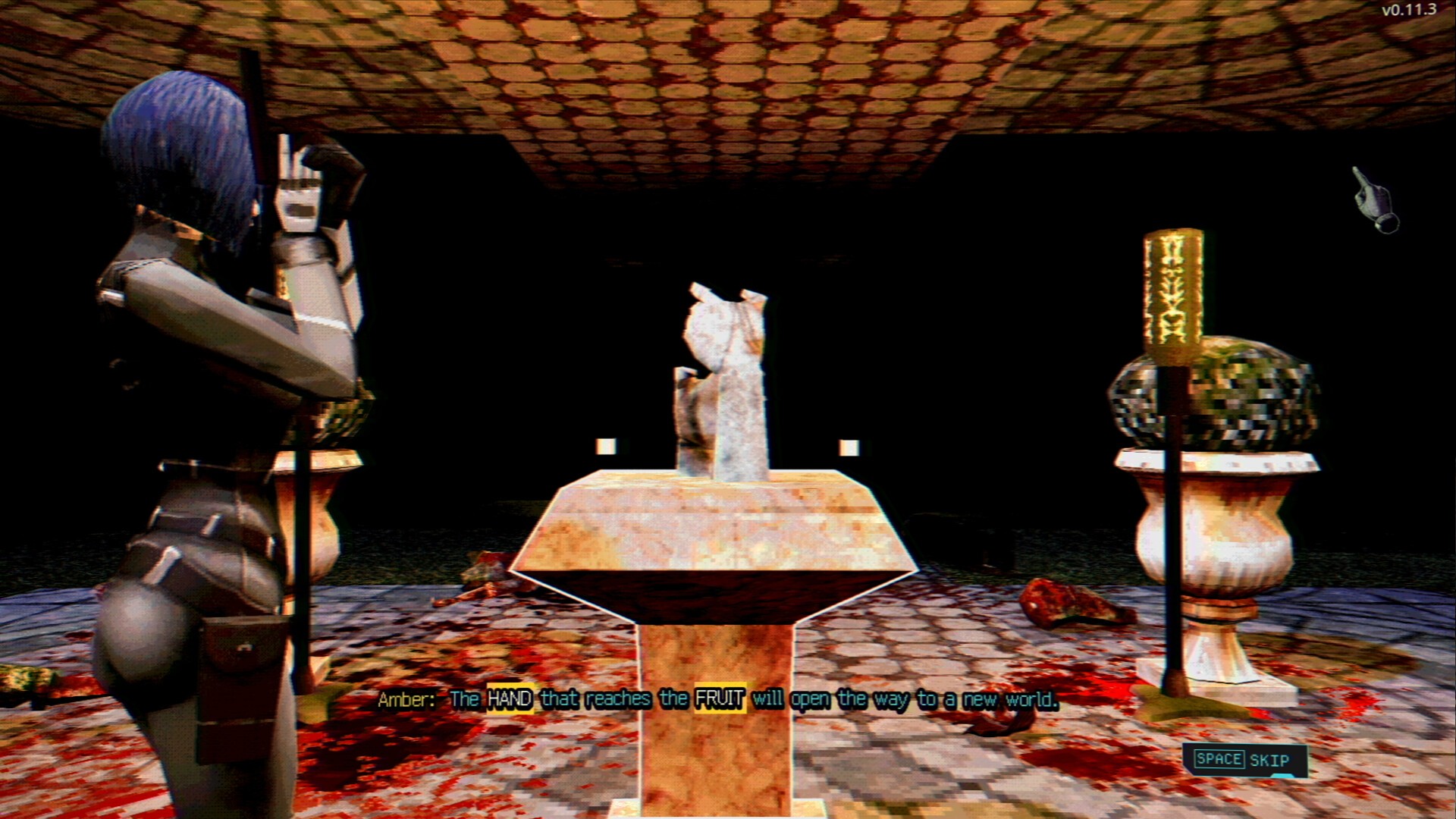
Rodriguez and Beltran: At first, we experimented with different visual styles, including pixel art combined with 3D, but we quickly realized that approach would require a huge amount of work and might make it harder to achieve the atmosphere we wanted.
The PS1-style aesthetic felt like a better fit for both the tone of the game and the scope of the project. There's something about the low-resolution textures and limited visual information that creates a kind of uncanny effect that works very well for horror.
It also embraces the idea of recreating a retro experience with a new mechanical twist. In a way, it's a nostalgic homage to the games we grew up with, and it invites players to fill in some of the visual gaps with their imagination, almost like looking at a small diorama.
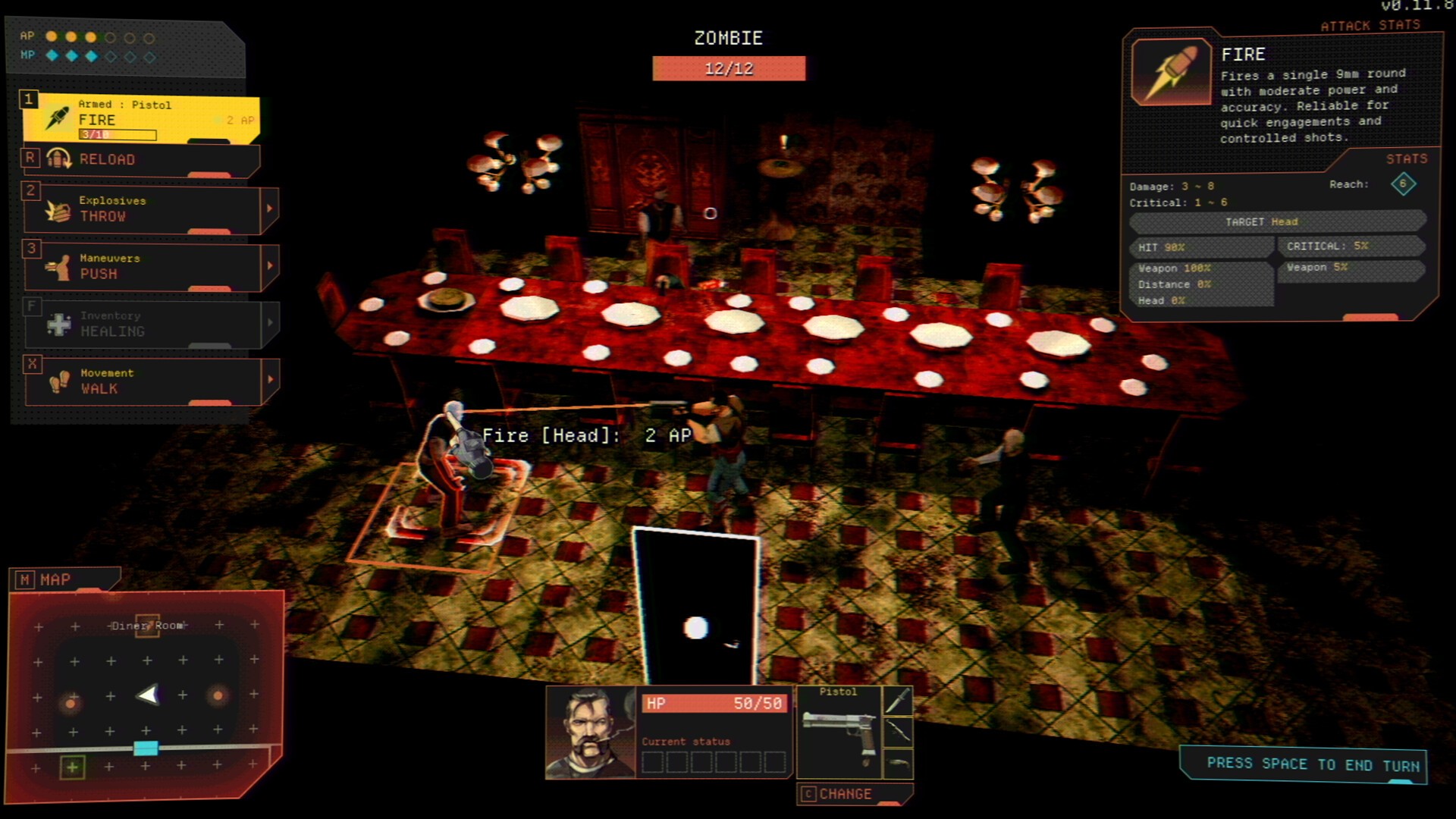
Rodriguez and Beltran: Resource management is still something we're constantly balancing, but the guiding principle has always been to give players limited tools and encourage them to think carefully about how to use them.
The turn-based structure actually reinforces that feeling. Every bullet matters, and every action has weight. We designed weapons and items so that each one has a clear purpose, and even something simple like a knife can become a valuable tool if used strategically. Our goal is to make sure players can overcome challenges without relying entirely on ammunition, while still maintaining the tension that defines survival horror.
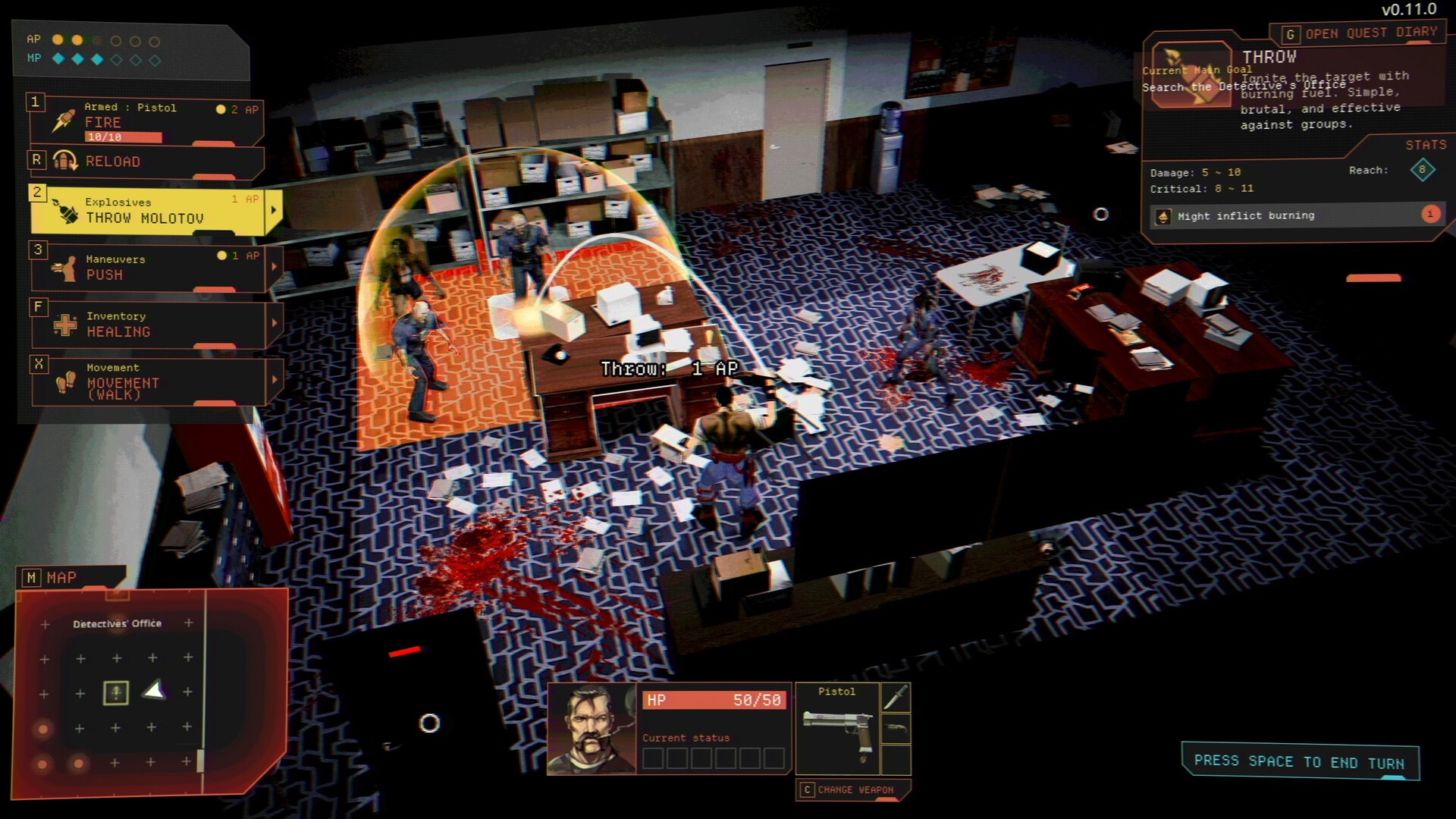
Rodriguez and Beltran: It's definitely a challenge. Instead of relying on fast action, we try to build tension through anticipation. When players explore an environment, we want them to constantly wonder what might be waiting behind the next door or in the next room.
Combat encounters also play a role in that tension, because players don't always know what kind of enemies they'll face or how a fight might escalate. In general, we lean heavily on atmosphere, environmental design, and narrative elements to create that sense of unease. The horror comes less from sudden shocks and more from the feeling that something dangerous could happen at any moment.
Rodriguez and Beltran: We actually wanted to avoid making overly flamboyant heroes. Our protagonists are strong and capable, but they're not the kind of characters who constantly boast about their abilities.
Leopoldo was inspired by the action heroes of the 80s/90s, someone experienced and brave enough to enter an infected city and handle the situation. Amber, on the other hand, draws inspiration from strong female characters like Mikasa Ackerman from Attack on Titan and figures like Ada Wong. In general, we tried to strike a balance: characters who are confident and skilled, but still grounded and believable within the world of the game.
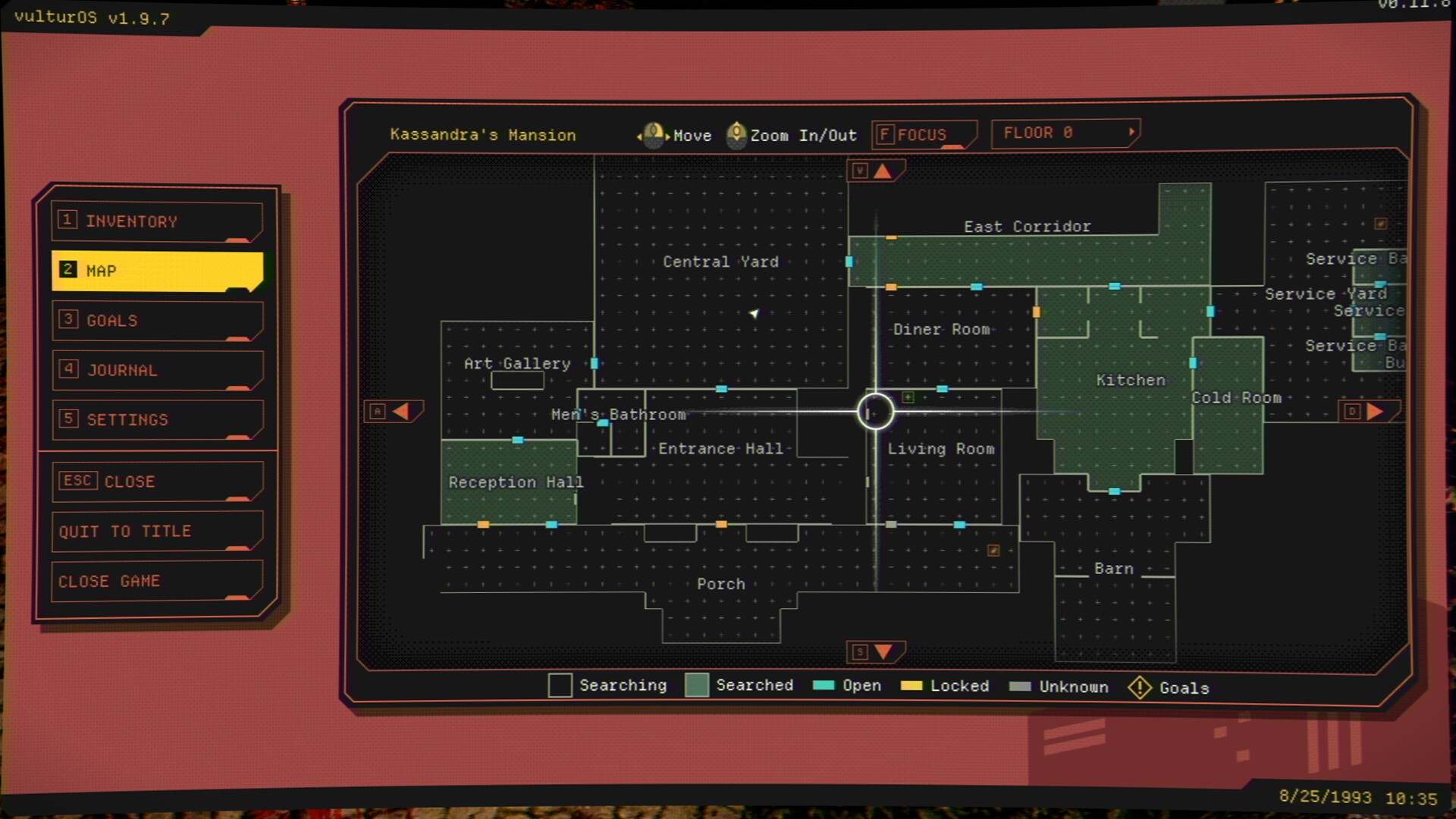
Rodriguez and Beltran: That's definitely one of our goals. One of our main concerns during development has been making sure the tactical combat doesn't become a barrier for players who come from traditional survival horror games.
At the same time, finding the right audience can be challenging. Vultures sits at the intersection of two genres: tactical games and survival horror. While turn-based games have seen a resurgence recently with titles like Baldur's Gate 3 and Expedition 33, some players still have reservations about the format.
That said, feedback so far suggests that survival horror fans appreciate the exploration, atmosphere, and tone of the game, so we hope the concept is interesting enough for them to give it a chance.
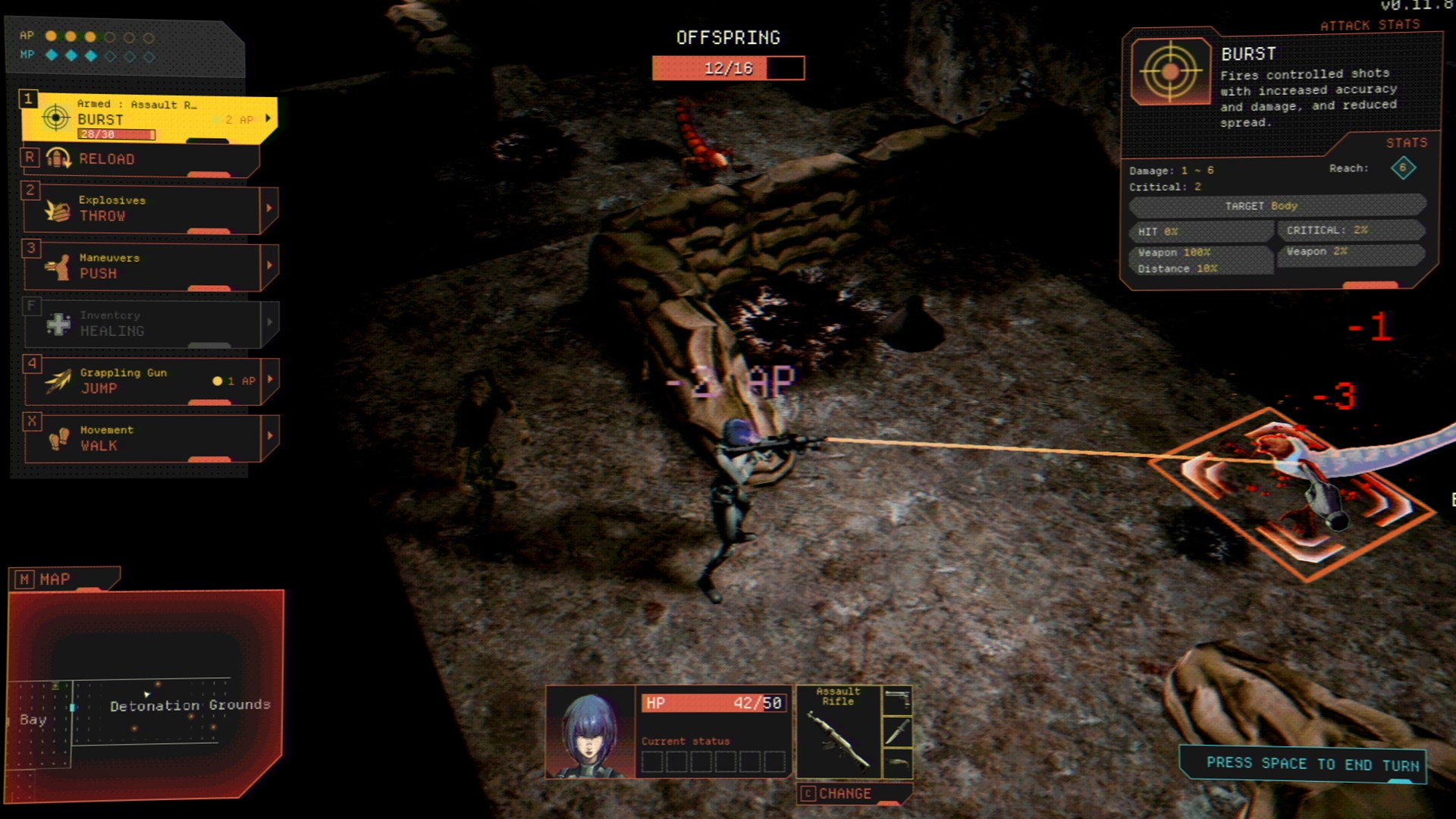
Rodriguez and Beltran: The genre is experiencing a big resurgence right now, especially among indie developers. Many of these games embrace retro aesthetics and revisit the classic formulas that defined survival horror in the past.
At the same time, most of the variation tends to come from narrative or setting rather than mechanics. The core gameplay structure of survival horror has remained very consistent over the years.
Because of that, we think there's definitely room for more experimentation. The formula is so well established that when a game deviates from it mechanically, it's sometimes not even considered a "pure" survival horror anymore, but that's exactly where interesting ideas can emerge.