
Akiba Lost Review
When Akiba Lost was first announced last September, it immediately caught my eye. The game involved developer IzanagiGames collaborating with the Nippon TV broadcasting network and AX-ON drama production company to create a new live-action sound novel. My playthrough of 428: Shibuya Scramble eternally left me wanting more games like it, so I knew I had to check out Akiba Lost.
If you are also afflicted with a similar condition to mine, I think Akiba Lost is an excellent spiritual successor to 428: Shibuya Scramble. While Akiba Lost possesses its own unique identity, the title was certainly influenced by 428: Shibuya Scramble’s narrative structure and spirit.
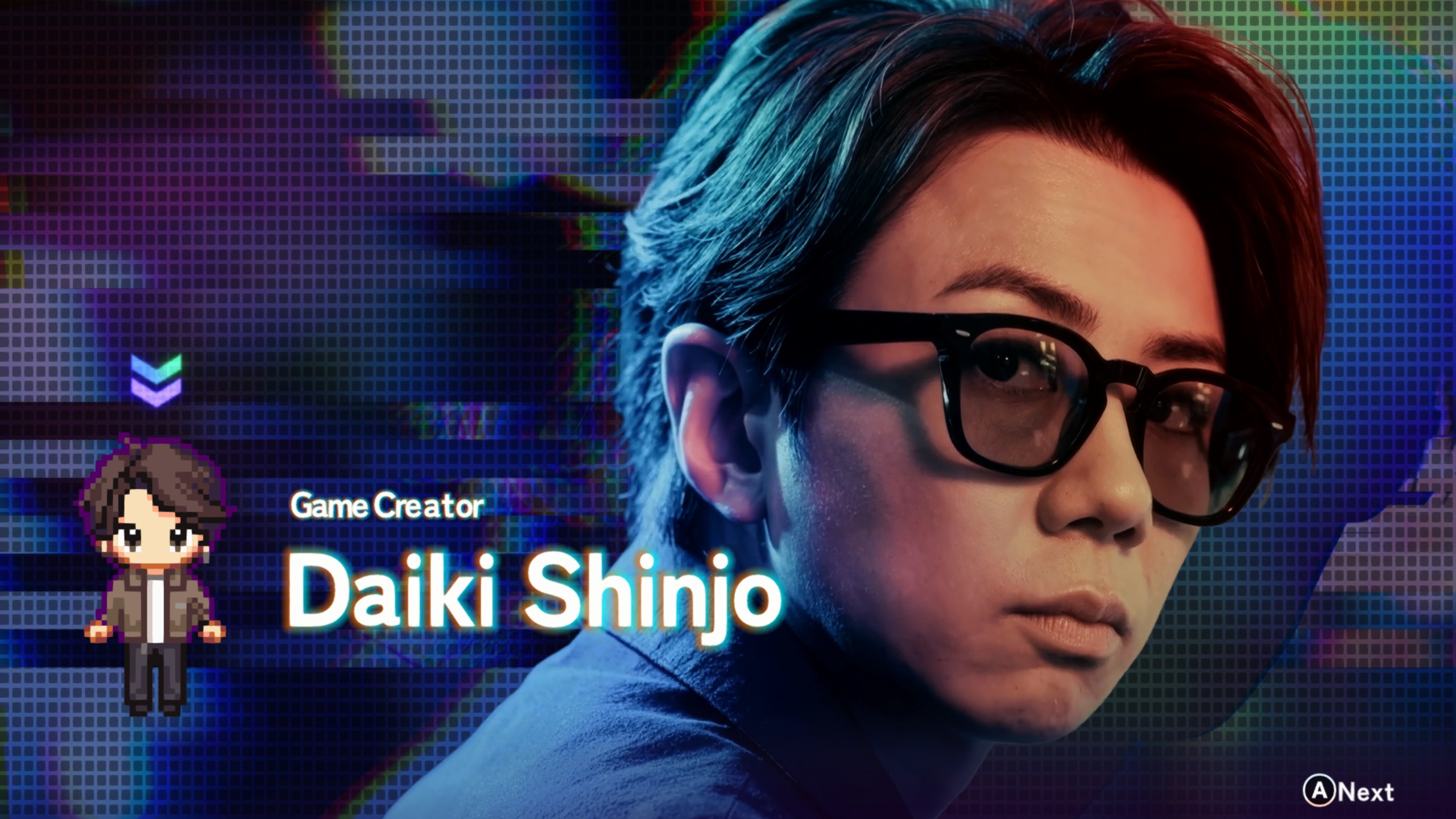
Akiba Lost’s main story revolves around Daiki Shinjo, a game developer that co-founded a company called Shirosawa Games. His company has been struggling to achieve the same success they found in their debut title. Daiki wants to get there with his next game, which is aptly named Akiba Lost as well. It’s also personally important to him too, because Akiba Lost is loosely based on a string of kidnapping cases years before the events of the game. They collectively became known as The Akiba Vanishing.
One of Daiki’s younger sisters, Ruri, was part of The Akiba Vanishing; she was kidnapped, and law enforcement never found the perpetrators nor the kidnapped victims. Daiki hopes that his upcoming Akiba Lost video game will reignite public interest in The Akiba Vanishing once more and in doing so, gain some new clues of Ruri’s whereabouts.

Aside from Daiki, six women from different walks of life serve as both the protagonists of Akiba Lost the video game I’m reviewing and Daiki’s video game that he’s about to start development on. They consist of:
- Aoi Shinjo, a maid café worker (Daiki’s other sister)
- Yukimi Kurahashi, a game streamer
- Moe Kurosu, a gourmet writer
- Kokone Nagato, an underground idol
- Chihiro Jimbo, a shrine maiden
- Wakana Yusa, a cosplayer
Before Shirosawa Games can even begin developing Akiba Lost, one significant problem emerges. The game involves mysterious kidnappings due to its loose ties to The Akiba Vanishing. Someone began to re-enact its scenarios in real life, shortly after the script of Shirosawa Games’ Akiba Lost was distributed to its lead actresses.
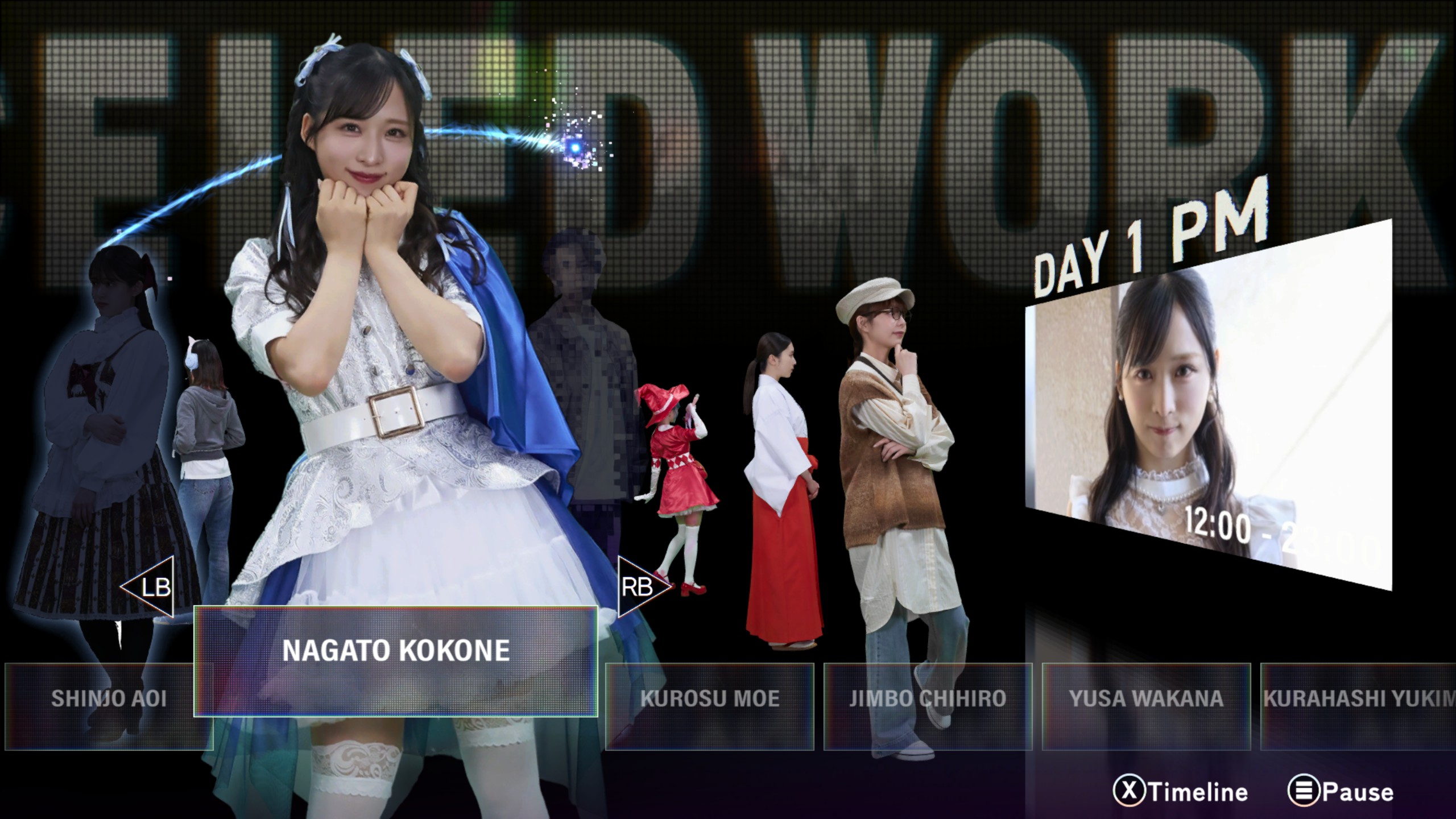
Akiba Lost’s narrative takes place throughout several days each divided by an AM and PM segment. After the prologue, players must complete each of the six women’s stories first before unlocking Daiki’s section that will then move the overall story forward into the next time slot.
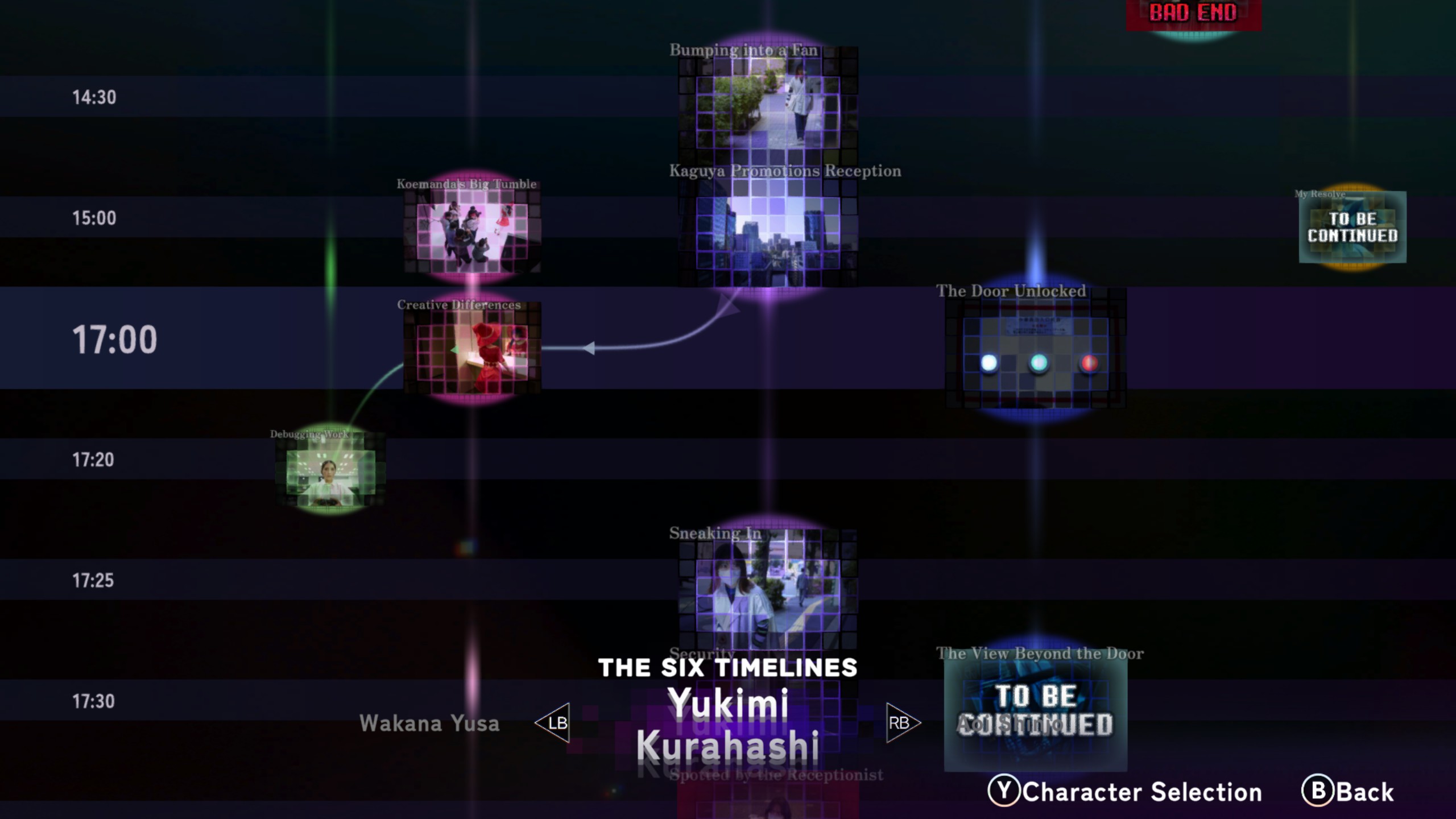
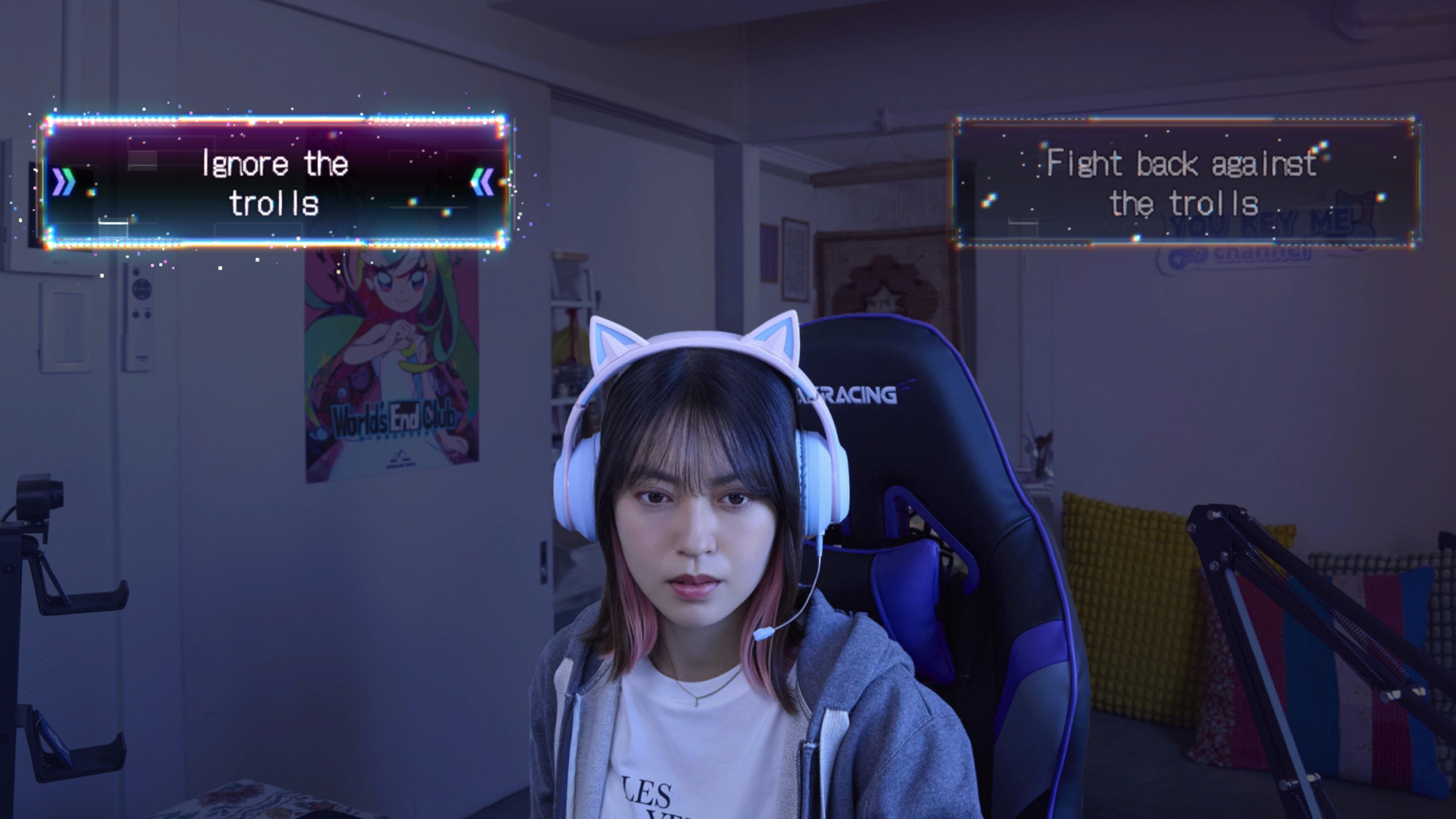
There are several mechanics that impedes players from finishing each protagonist’s segment that the game gradually introduces. First and foremost, there is usually a choice with two options on what a character should do next; one of these tends to lead to a bad end. Thankfully, there’s a versatile timeline system that teleports people back to where the choice was made.
Sometimes, a character’s section will stop abruptly as it becomes “frozen”; the entire screen will literally get icy and say FREEZE when this occurs. In order to progress, players will need to find that character’s name highlighted in purple on another protagonist’s story.

Activating this “key” will zap a laser on the timeline chart to unfreeze that character, so players can continue playing through them. The timeline also has a unique icon that indicates which specific scene contains a character’s activation key, just in case players forget where they’re located. Later in the game, this does become a bit tedious because some highlighted keywords are buried in the back half of a lengthy scene, and quick-skipping through them will also skip the line that contains it.
The trickiest progression blockers to overcome in Akiba Lost are the ones that require a character to show up from another protagonist’s route to cause some sort of event to directly change a character’s fate.
Occasionally, there are times when I start a character’s route in a time slot, and it leads to a bad end with no choices to affect that outcome. These usually need a side character that shows up in someone else’s story to be redirected to the affected character’s location; executing this often involves choosing a choice on that other character’s storyline that steers a side character in the direction or general vicinity they’re needed in, organically.
I don’t think anything in Akiba Lost was a huge hurdle to overcome, though. It just requires paying attention to the story and mentally keeping track of characters from time to time. There are a fair number of surprising twists and turns as people learn more about the lives and backgrounds of each character. I was initially worried that the characters may come off a bit one-note through their assigned roles, but they all had different layers to them.
While the overarching premise is heavy, Akiba Lost does a great job in balancing the mood with several comedic characters that help offset the gloominess. For instance, Kokone’s manager is a deceptively energetic man in his 40’s that desperately wants Kokone, and her idol unit, to find success, and is willing to go the distance to get them there. Meanwhile, the man who assists Moe from time to time is an incredible character with a fitting musical theme to match his eccentric nature.
Though I’m deliberately avoiding story details that could spoil the plot, there are times when the game does stretch the suspension of disbelief in some ways regarding how some narrative developments occur. One vague example is an entire plotline being put into motion when a character just happens to read a specific message from one of the many wooden plaques at a shrine.
Plus, I think Akiba Lost leans too heavily on flashbacks at the last third of the game. Several story segments constantly displayed previous events that just recently happened. It also doesn’t help that the game’s English script contained a few minor typos that occurred more often in its later chapters.
There are also rare moments where the last sentence of a text-filled page is abruptly cut off, and players can’t scroll down to see what the rest of that sentence says. Luckily, none of the missing text was ever an issue in understanding what was going on, yet it should never have happened in the first place.
Nevertheless, Akiba Lost’s central themes of how people process grief from loved ones disappearing from their lives are conveyed extremely well with its talented cast.
The astounding number of unique screenshots in Akiba Lost is absurd. Every scene seemingly has multiple versions shot of them at different angles and timelapses; even bad ends and “other” decision paths have unique shots made for them. Once Daiki moves the story forward into the next AM or PM time slot, a handful of photos from the previous section are added to a photo album for each protagonist.
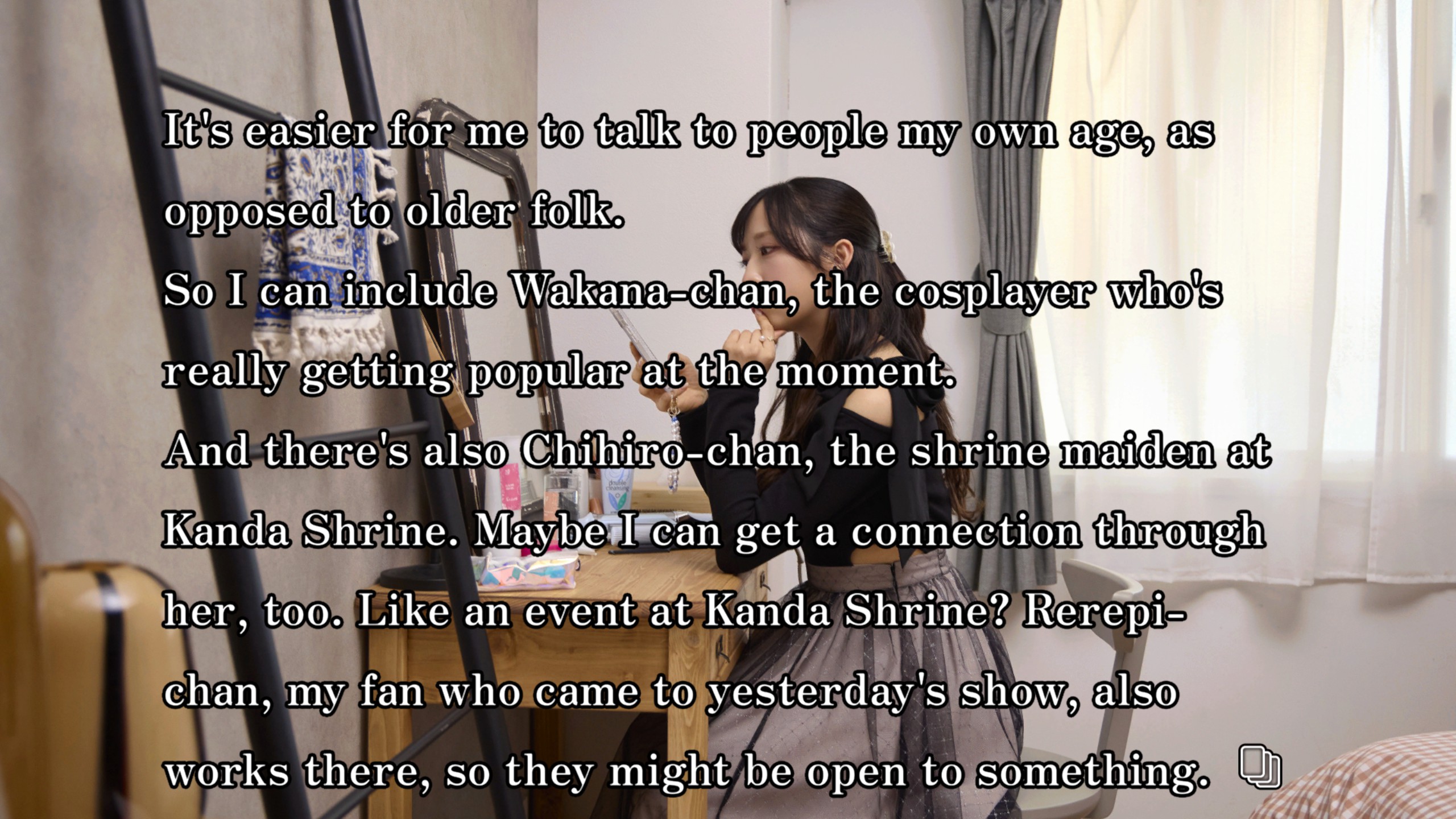
IzanagiGames’ partnership with the two Japanese television companies especially pays off in how consistently great each shot comes together – their composition, lighting, framing, and layout complements the text that’s overlayed on top of them. I think the lower limit of the textbox is a bit too low though; it rides up against the bottom border of the screen too closely at times.
A small nitpick I have with Akiba Lost is how it uses a “fast-forwarding” effect that blurs the image as it sequentially displays several consecutive “between” shots in quick succession to showcase movement, such as when a character is moving down the street. It somewhat resembles what happens when fast-forwarding a VHS tape if it was displayed in stop motion; I got used to it eventually, but it did take awhile for me to not mind it.
Another aspect of Akiba Lost that caught me off-guard was the amount of full-motion video footage it had. I was a bit taken aback at the 45GB file size when I downloaded it on PC, but it now makes with the amount of 4K videos in it. These videos most often play when concluding a character’s segment in a time slot leading to their “To Be Continued” screen. Sometimes they’ll play during important parts of a character’s story, though.

Akiba Lost does get ambitious in interweaving the live-action screenshots into the live-action video parts. It tries to naturally employ the screenshot as the first frame of a video clip, though the lighting conditions, color grading, and different lens utilized for each of them breaks the illusion often, so it doesn’t mesh together all that elegantly.
That said, I commend the developers for even trying in the first place. It’s an extremely difficult effect to pull off, and I absolutely respect the ambition.
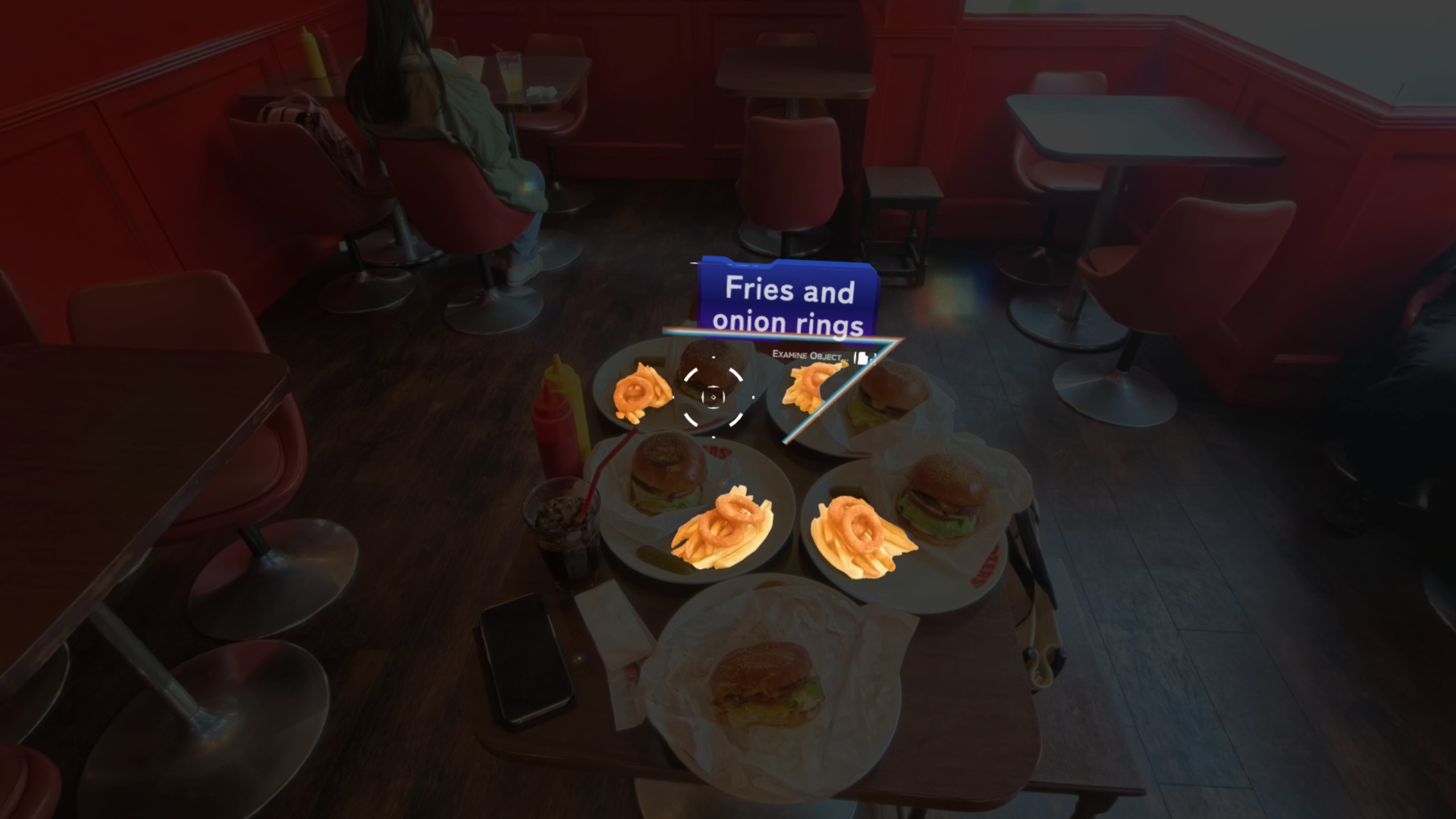
There are small adventure gameplay segments in Akiba Lost, as well. They involve a 360-degree camera to inspect a character’s entire surroundings with a cursor. People and items of interest will be immediately highlighted, along with a sound effect, to indicate that something can be inspected. They’re presented similarly to Square Enix’s Paranormasight games, if they were done in live action instead.
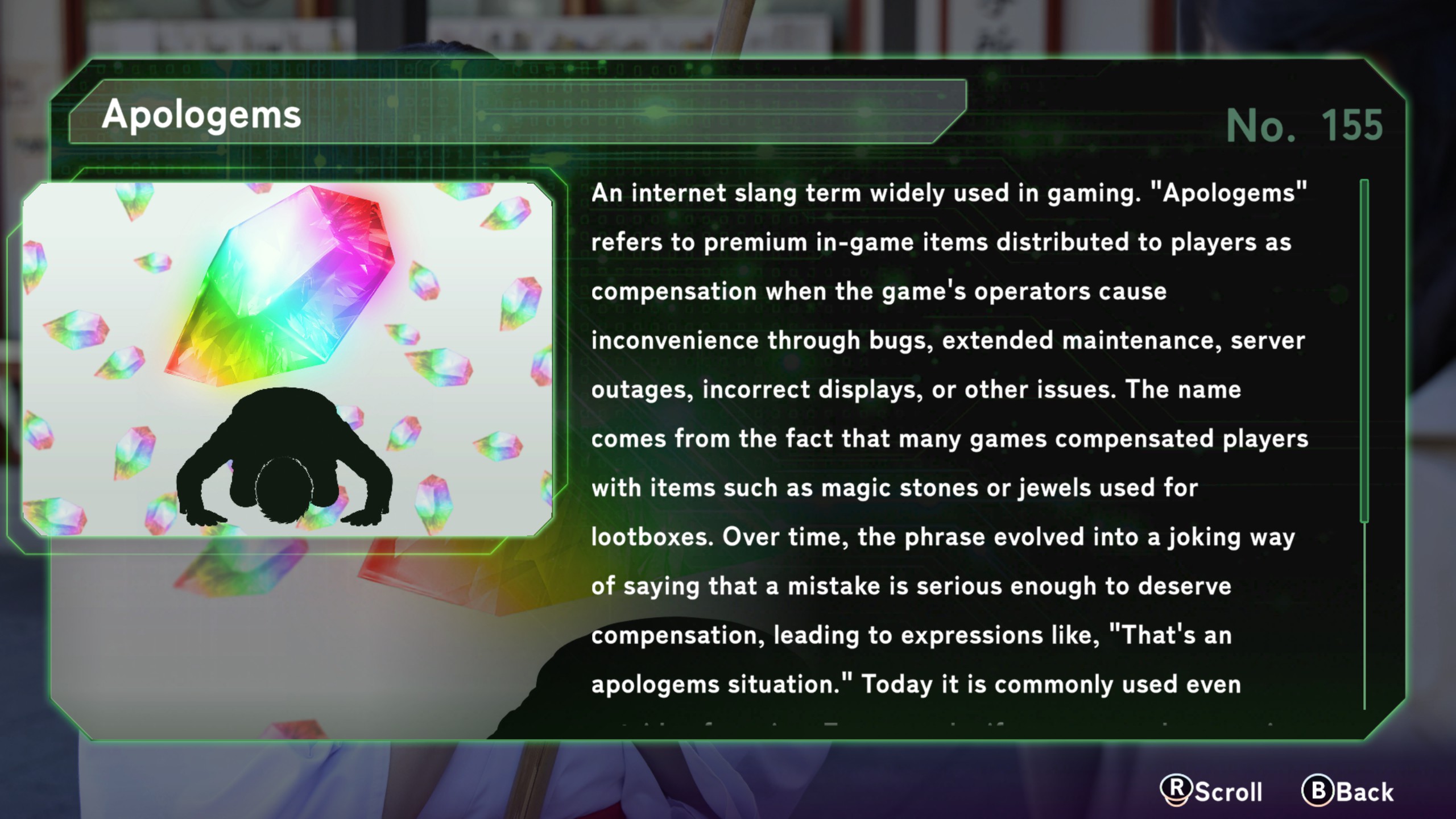
One of Akiba Lost’s best features is its extensive, and informative, glossary feature. The total number of glossary tips is just shy of 300, but a lot of them have lengthy descriptions that are written in a fun way. They often contain small factoids or trivia of characters, too.
Since the game is set in Akihabara, it is filled to the brim with lots of terms pertaining to Japanese culture that explains their historical context, their contemporary relevancy, and if that term is utilized in a specific way for a character. I love that Akiba Lost’s glossary is not just filled with common terms you’d find in a tourist guide – it gets pretty deep into the culture of Akihabara itself.
In fact, Akiba Lost might possess the most up-to-date English dictionary of popular contemporary terms in Japan at the moment that's inside a video game. Not sure what an oshi is? What about a cheki session or dandori? Hell, it even has an entry for apologems. It’s worth reading every single one of these.
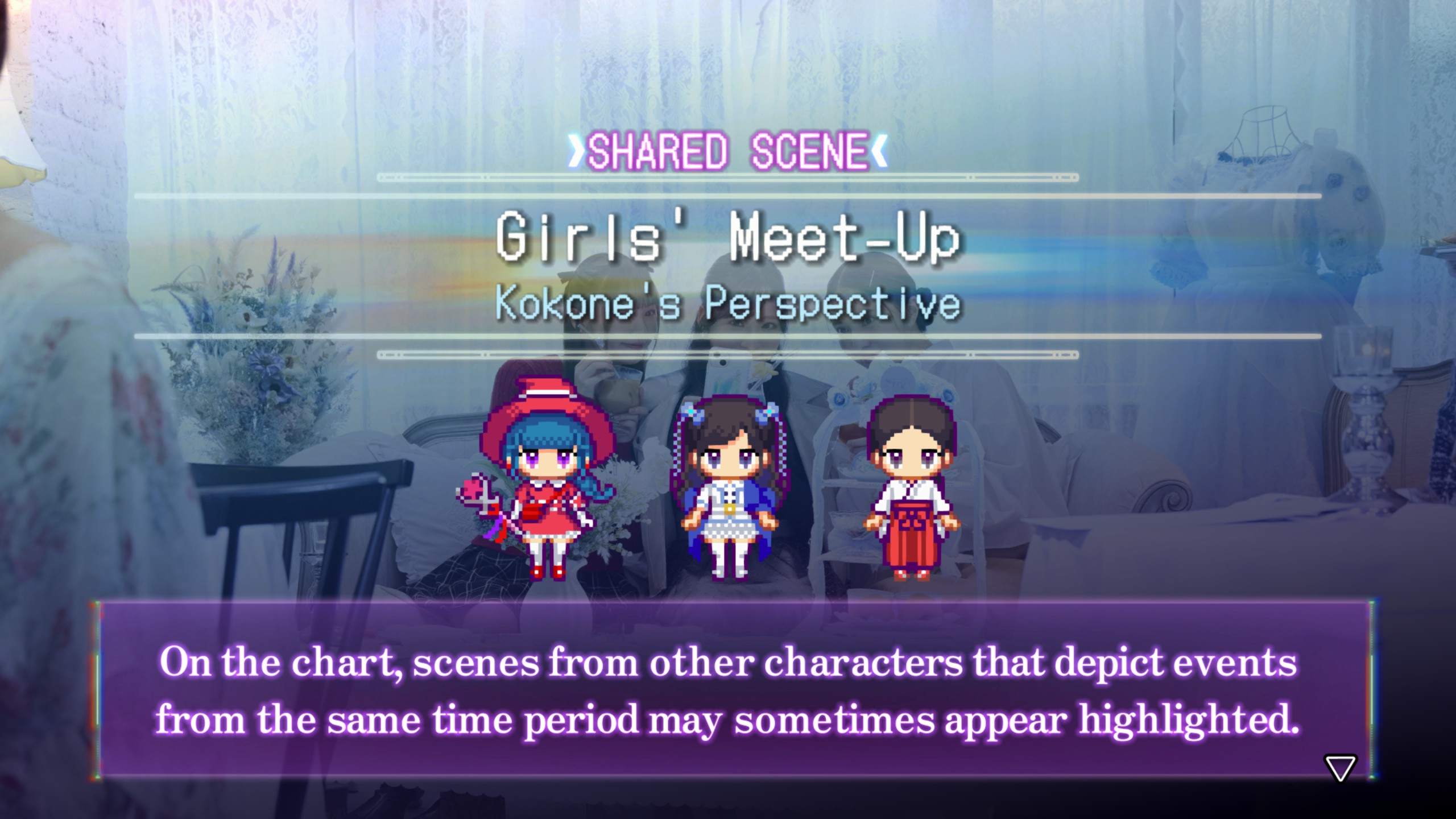
The game embraces its narrative revolving around a game studio. Every single character on their page have adorable chibi pixel art renditions, even though most of them aren't utilized. Selecting a character from the six main women resemble a carousel revolving around a silhouetted Daiki that "fills up" his portrait as players complete each of their route in a time slot. Once his model is completely visible, the carousel of women revolves around him rapidly in a stream of rainbow lights as if to summon him. It honestly reminded me of the animation that plays when... you a roll a 5-star character in Fate/Grand Order.
With all that said, the destination that the entire plot is striving towards does get wild - to put it lightly. I obviously won’t spoil where it’s all headed, but the revelations that unfold during its true end are one of the craziest reveals I’ve seen in the genre. It does come together though it, once again, asked a lot out of my suspension of disbelief. Once the end credits rolled, I was still quite befuddled.
There’s a lot to love in Akiba Lost. Its colorful ensemble are all explored in-depth, its vast amount of glossary terms are as fun to read as they are informative, and its ambitious cinematographic live-action presentation blending still shots and video clips into its sound novel format. I think the overall story’s direction takes some odd turns as it nears its finale, but the journeys every character takes to get there is a great, delightful read.