
Utawarerumono: Past and Present Rediscovered Review
My feelings were a bit mixed even before I sat down to play Utawarerumono: Past and Present Rediscovered. While I had wanted to love Monochrome Mobius: Rights and Wrongs Forgotten as much as I had the original Utawarerumono trilogy, back when I had reviewed it I found myself left wanting. The series' transition from a Visual Novel and Tactical RPG hybrid to a more classical turn-based RPG in the vein of Dragon Quest didn't quite hit the mark - and the story felt like it had only just gotten going when it decided to wrap things up, and not in as elegant a way as the series had done in the past.
I won't go over my complaints for that game again; my review remains, and while I am aware that many of those issues were eventually polished out with post-launch updates, the bulk of my concerns remain relevant even now. All I had wanted from Past and Present Rediscovered was some indication that there was a meaningful reason for it and Monochrome Mobius to exist. While I had a markedly better time this go around, however, I don't think they've quite made their case.
Starting with the good - while the core gameplay loop remains the same, there have been a number of tweaks that have greatly improved playability. My main issue with Monochrome Mobius was combat; both in terms of how it was balanced, and how it felt monotonous to do. A big part of that was a feeling that most attacks were pointless - and while things still aren't perfect, a combination of significantly better user interface and an expanded repertoire of moves greatly helps even things out.
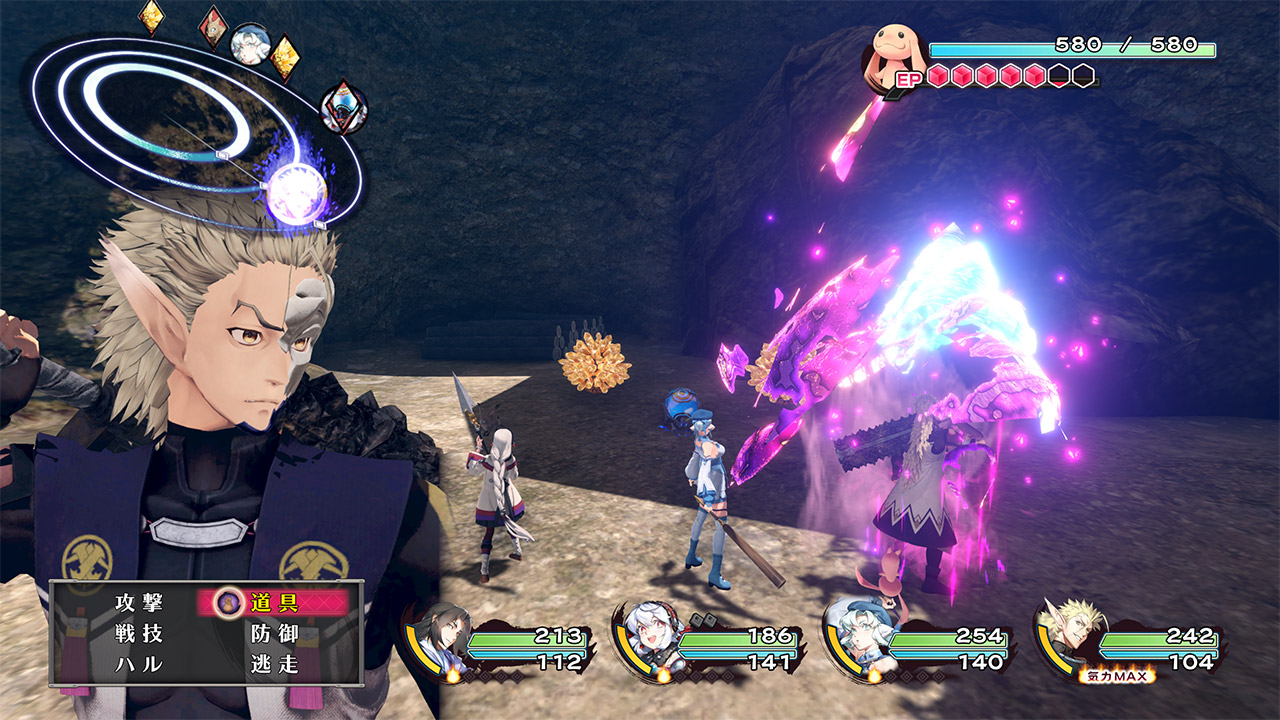
For example - in Monochrome Mobius, whenever you unlocked a stronger version of an attack it would take up a new slot on your set of skills. Since you would essentially never want to use the weaker variants, it was wasted space. Here, upgraded forms of attacks simply replace their originals by default - with an optional button prompt to switch attacks to a weaker form. You'll still never really go backwards, but it leaves room for new skills to be added that have more interesting effects - including an overhaul to how Overzeal works.
Keshin form further buffs your stats during Overzeal and unlocks the ability to use specific powerful moves that use a percentage of your MP that scales alongside you, rather than a preset number. Combat complexity ramps up even early on, and later on Okugi attacks offer an additional wrinkle to things. Take several turns of Keshin form, or immediately spend Overzeal for one extremely powerful Okugi? Depending on the situation, one might be the better choice than the other.
Even Halu comes with far more nuance than in the previous game. This time you'll be unlocking various new frames for him, each with their own unique attacks that you can relatively freely swap between whenever he's been summoned to the field. Enemy morale is now more easy to gauge, with highlighted enemy's color denoting how close they are to being staggered. It's all a bunch of minor changes, but they go a long way.
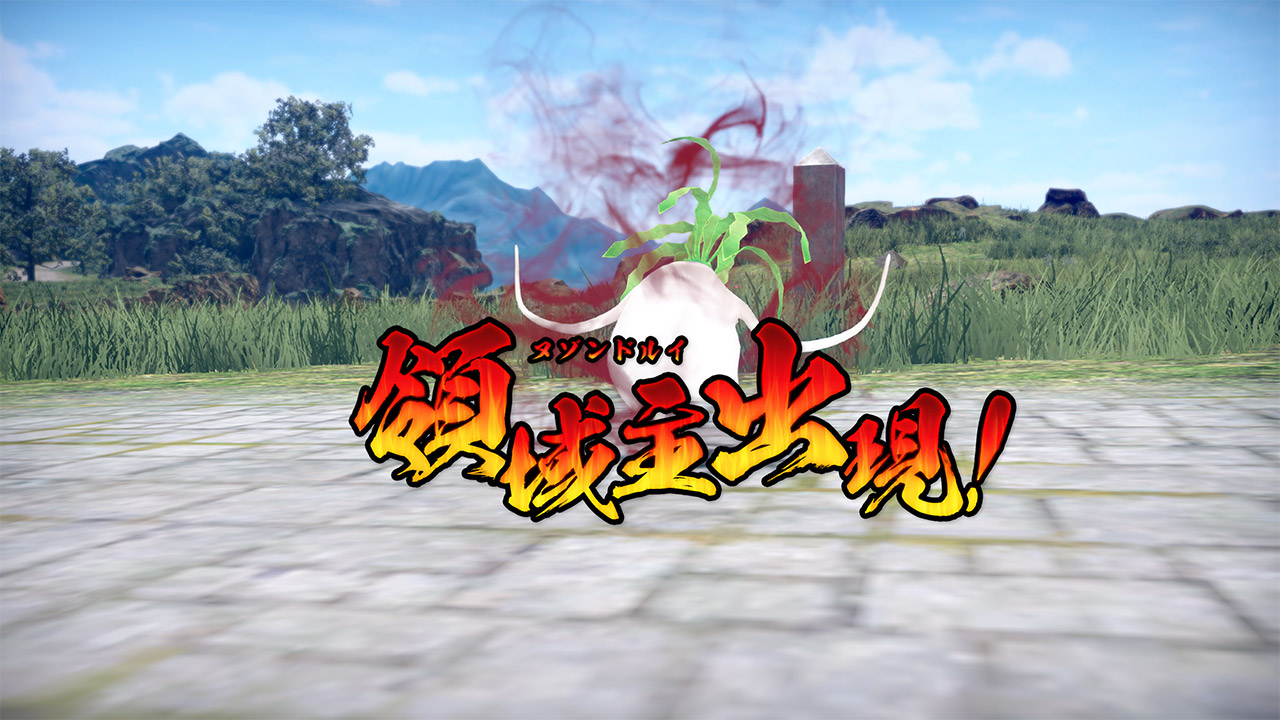
What is not a "minor" change is the new Area Conquest system. Battle enough enemies in a zone will spawn a unique boss encounter which encourages you to play in a specific way; defeat them, and you'll be able to instantly kill every enemy in the zone with a single field attack, or by running over them in your Woptor. Your base movement speed has been considerably buffed, to the point where running is no longer a separate feature, but even without that being the case this massively cuts down on how many normal battle encounters you'll face. Instead, things are balanced around a smaller number of more unique fights.
The other side effect from being able to mow through enemies in the field is the resources needed to invest in equipment upgrades and Halu's ABL. These remain mostly unchanged, but a result of the enemy encounter changes means you're spending far less time grinding these out. On the off chance you decide to grind an area it takes a matter of minutes, rather than hours.
From a purely gameplay standpoint it is fair to say that the game is a more than competent, and even quite fun, RPG. I certainly enjoyed that element more than the prior game, at least. The problem is everything else.
While there is no shortage of new locations, I hesitate to say that you're ever exploring when all is said and done. Dungeons are almost entirely linear - and to that end, the game loves to point you right in the direction of your next story objective. Nice to know which fork in a dungeon is the "wrong" one, but it's hard to shake the feeling that things may just be a tad too railroaded. I can't say sidequests were very interesting to engage with, either.
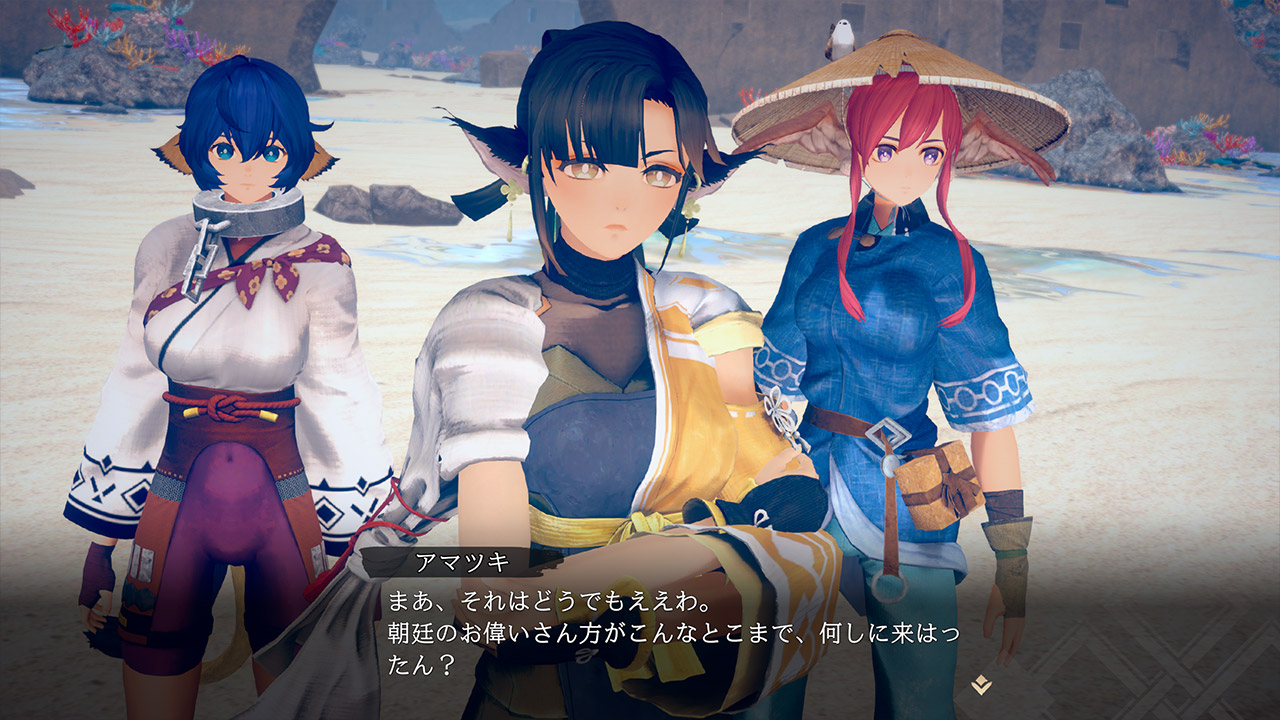
In a roundabout way, you can apply the same criticisms to the story. Past and Present Rediscovered doesn't really add anything new to the Utawarerumono story, rather than revisit what was already present. Anything that is well and truly new is resolved in such a way that the actual status quo of the universe remains unchanged. Some scenes offer nods to more iconic events in previous games, and while at first I thought these were respectful - after finishing the game, it feels cynical.
There are story moments I liked, and I can appreciate what it delivered to the franchise - but at the end of the day it feels like a tale that didn't really need to be told, and even worse than that one that may as well have not existed in the first place. Instead of feeling like an integral part of the world and story, it feels haphazardly stapled on in a way that can also very safely be ignored if one chose to do so. This is especially rough when the game doesn't even try to hide that it expects you to have played both the original trilogy as well as Monochrome Mobius; existing characters weave in and out of the story with little rhyme or reason, seemingly only to fulfill an obligation to appear. It's not a bad story - it's even got some moments that do hit - but I'd hesitate to call it noteworthy by any real metric. It's just too derivative of what came before.
If you already liked Monochrome Mobius, I'm certain you'll end up enjoying Past and Present Rediscovered. I can't deny it's a major improvement, but if anything it's this stark difference that makes the remaining deficiencies all the more disappointing. Utawarerumono: Past and Present Rediscovered is a decent RPG, but for a long-running story like Utawarerumono I couldn't help but hope for more. Solely as an RPG, the improved combat carries it a long way - but I don't think this duology ever needed to exist.