
GreedFall: The Dying World Review
When I reviewed GreedFall back in 2019, I played it almost entirely on a whim and came out rather surprised, enjoying it far more than I expected it to. Not only was it a competent action RPG with an interesting setting, strong storytelling, and surprisingly engaging characters, but it also felt like a sort of return of the type of RPG that many western studios had begun to move away from in recent years. It was really only let down by somewhat average action-based combat and a general lack of polish. It might not have set the world on fire, but it felt like Paris-based studio Spiders finally had something of a hit on their hands, and the potential to follow up within that world was something I've personally looked forward to ever since.
Unfortunately, GreedFall: The Dying World did not leave me with the same sense of optimism upon completing it. At times, it did remind me in passing of some of the elements that left a strong impression on me seven years ago, but more often than not, I felt like the vision for the now-not-a-sequel never quite coalesced.
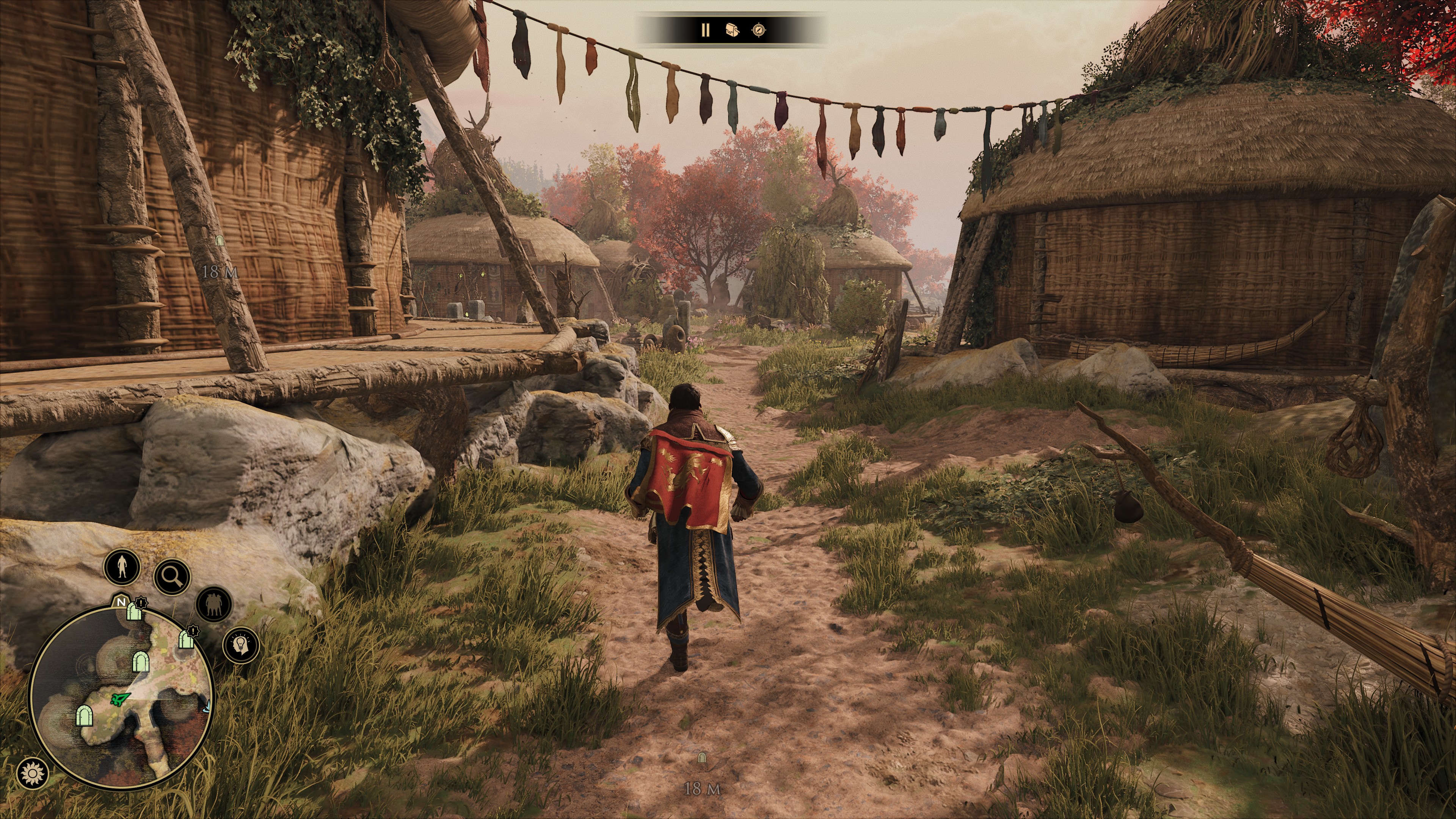
Before I start the review proper, I feel like the context around certain aspects of GreedFall: The Dying World's development cannot go unstated to understand the state in which this game is releasing. In 2019, even before the release of the original game, Spiders was wholly acquired by Bigben Interactive, now primarily known as the publisher Nacon. Spiders had previously worked almost exclusively with Focus Entertainment, which remained as the publisher of the original GreedFall.
I know of Nacon as the publisher that infamously entered a protracted legal dispute with Frogwares regarding missed milestone payments and IP ownership rights for The Sinking City, with the developers even directing fans to avoid purchasing their game on Steam, which Nacon listed without the developer's knowledge. For Spiders studio specifically, the French video game workers union Le Syndicat des Travailleureuses du Jeu Vidéo (STJV) published an open letter in 2024 from Spiders employees to management at the studio and at Nacon. This is around the time that GreedFall 2: The Dying World entered early access to largely tepid reception (The '2' has since been dropped from the title).
The letter outlines deteriorating work conditions at the studio, including growing mismanagement and turnover, a lack of transparency with new ownership, and an unwillingness to negotiate with workers. In 2025, another STJV report reported on both layoffs and job cuts from positions that had been voluntarily vacated. In the weeks leading up to GreedFall: The Dying World's 1.0 release, Nacon filed for insolvency and postponed their Nacon Connect digital showcase a day before it was scheduled to air.
In a response to an RPG Site inquiry, an STJV representative at Spiders stated: "Working conditions haven’t improved much, and a fourth of the workers have left the company since the beginning of 2025, either voluntarily or because they were fired." The statement was punctuated with "no project is confirmed or actually planned after [The Dying World's] release."

I'd love to state, despite the conditions around the game's release, that GreedFall: The Dying World is a triumph and a testament to the resilience of those who remained at the studio, but it simply isn't. Any good ideas are let down by poor execution, and -- perhaps due to the financial situation of the publisher -- multiple aspects of the game still feel short-sighted and unfinished.
To start, with the early access release of the game, one of the big shakeups that colored most of the early impressions involved the significant departure of its combat system. The original GreedFall used a behind-the-shoulder action-based combat system that allowed for pausing to select items or commands while allies acted largely autonomously. GreedFall: The Dying World instead goes for a more old-school style of RPG combat reminiscent of truly Real-Time-With-Pause (RTWP), and has drawn comparisons with games like Knights of the Old Republic or Dragon Age: Origins.
In this system, regular attacks occur at automated intervals while special abilities are selected from a command bar at the bottom of the screen. When paused, targets and movement inputs can be queued up to fire off once action is resumed. Many elements are actually reminiscent of the framework of the basic components of most Xenoblade games, such as the auto-attack build-up of combat resources, with special abilities having both this resource cost and associated cooldown. Lastly, each party member can be controlled directly in battle as well.
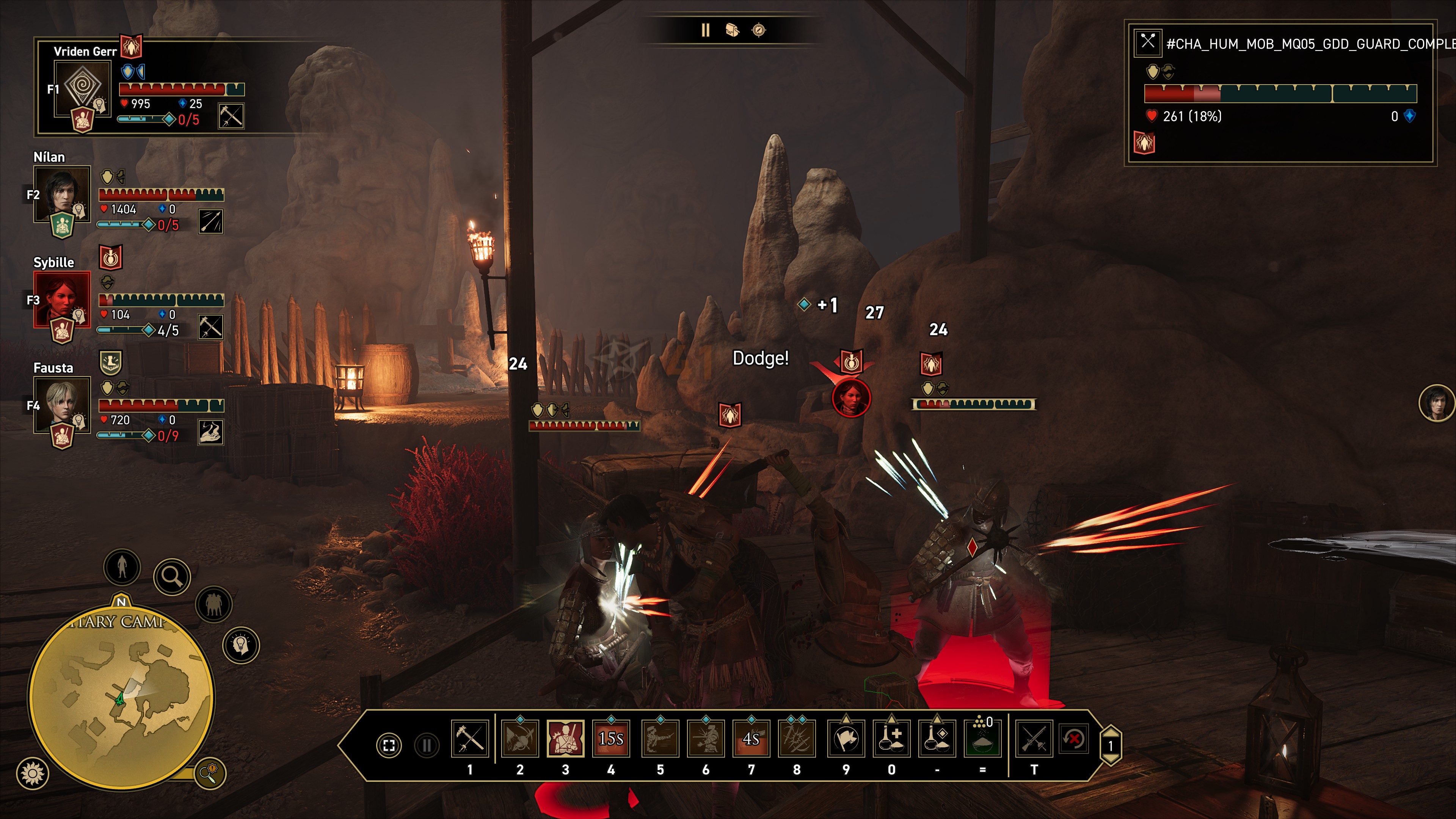
I think the reaction to this combat change is going to be highly player-dependent. I specifically really enjoy RTWP combat, so I found myself completely at home here. I didn't really see it as an improvement or a worse version of the first game's combat system, just a different one. Some elements of the first game's combat do return, such as how armor is represented by shield icons over each health bar, and how certain abilities can be used to break through or bypass them. It is, however, a little bit more involved, especially since now all four characters can be individually positioned and micromanaged directly.
I played the entire game on the game's default "Tactical" difficulty, which describes itself as a comprehensive combat experience that requires management of the entire party. This meant that I was challenged a number of times and had to really learn to love micromanaging the positioning of all party members away from hazards or enemy area-of-effect attacks. The game also offers a "Focused" mode and an "autonomous party" setting, for those who only really want to control their own character, along with individual sliders for incoming and outgoing damage, and an invincibility toggle for good measure.
The main drawback of the game's combat is with regard to variety. With a 50+ hour runtime, I found that the combat system did not evolve enough, nor was there enough enemy variety, to keep the combat interesting for the game's entire duration. Two-thirds of all enemy encounters are against different human factions with combat abilities that align largely with your own party. Creatures such as monkeys, raptors, and large cat-like beasts make up the rest of the combat, and 5 or so boss creatures round out the experience. There is some variety in how different arenas are constructed and the environments in which each battle takes place, but it still feels like a missed opportunity. One fight on a moving ship would have been cool.

The RPG progression and gear systems in GreedFall: The Dying World are also generally a strength. Gear is divided into both a quality (Uncommon, Epic, Legendary, etc.), which determines the number of bonuses it provides, alongside a tier (I through XIII), which is more an indication of overall strength, statistically. Gear is also divided into weight tiers and can be customized with the Craftsmanship talent to be augmented further. Craftsmanship upgrades specifically are huge boosts to overall armor values, so it was nice to see a lot of weight applied to this system, where often it could be seen as an afterthought because gear crafting simply isn't potent enough. In total, the system is set up in a way where nerds like me can spend a lot of time scrutinizing new gear at the craft bench, breaking down old equipment to upgrade new ones, and making sure the resulting stat layout appropriately benefits each character.
Attribute (Stat) and Skill acquisition are pretty standard fare for this sort of game, but I did like that there are enough stat selections and the level cap is such that making decisions for which attributes to improve on each character remains meaningful throughout the course of the game. Skill selection is similar, though the companion party members do get far fewer options than the player-character.
My one major nitpick here is that many skills are often tied to specific weapon types or specific stances, which largely adhere to the classic tank-damage-support triad. So once a decision had been made for a certain playstyle (in my case, a sabre-wielding DPS character), it felt like most of the possible skill selections immediately became pointless to consider, since I was never going to place points for another weapon style or support or tank abilities. There are options to respec, and I'm sure there are viable hybrid builds that would work, but I did end up wishing the skill selection was outlined somewhat differently, perhaps more agnostic to the specific gear or playstyle.
Talents do return in The Dying World as they were in the original game, both acting as specific skill checks for locked doors or following tracks, or to access different dialogue options. Specific party members each support a different talent, so party composition also needs to take this into account -- a player with low diplomacy might consider bringing Sybille along for a little boost. Party members in general act as proxies for the faction they represent, and overall, the cast is pretty varied with strong English voice acting performances. I should mention that one of the party members, Till, is awkwardly lacking any follow-up quests or storylines after being recruited, while all of the other companions have 3 quests each. This contributes to him feeling like a late and unfinished addition.

GreedFall: The Dying World is a prequel set a few years before the events of the first game, with a few characters making return appearances. In the first game, the player took on the role as a legate of a Merchant Congregation who is tasked to head to the island of Teer Fradee to interface with the native population to help solve the plague of the Malichor disease spreading throughout the homeland. I have to describe the story of the first game, because in The Dying World, the role is deliberately inverted, with the player instead taking the role of a native islander who finds themselves stolen away to the mainland shortly after the discovery of their island.
As I stated in my GreedFall review, the setting here has clear and obvious parallels with the colonial history of North America, including the displacement and eradication of thousands of Native Americans. Even more specifically, this displacement was not only due explicitly to colonial aggression but also from the spread of foreign diseases, which is also a story element at play here. I'm not a historical authority, but I did come away from the first game feeling that the story was carefully considered, with apparent care taken to place special emphasis on the disadvantage of the native people, including having characters like Siora take a hugely important role in the progression of its narrative.
In GreedFall: The Dying World, many of the elements of this flavor of storytelling are still present, but they occasionally tend to fall flat or end up poorly realized more often than not. Even though the game primarily takes place on the mainland, most conflicts in the region are described and take place almost entirely off-screen. As in the first game, multiple factions such as the Bridge Alliance, Theleme, and the Nauts each play different roles, but their impact feels lessened. A war is described between factions, but this is rarely ever depicted. Since the game largely takes place in areas controlled by the Merchant Congregation or Bridge Alliance, other regions like Theleme and Deutan end up only being represented by an ambassador (and the mentioned party member proxy).
In general, the storytelling often fails to be compelling. Many characters are immediately framed as being villainous by being cartoonishly bigoted towards the player's status as a native, and much of the quest direction often involves snooping around, finding evidence of past wrongdoings, or having the party stand in a circle discussing the next course of action. The antagonist Kurnaz actually reminded me somewhat of Final Fantasy XII's Vayne Solidor in that he so often takes a back seat to current events that by the time the narrative circled back around to him, any deserved animosity I had for him had waned. There are even elements of an ancient Astrian civilization that are introduced, but they end up feeling somewhat like a stand-alone plot point that are only relevant for a couple of quests.

When preparing some notes for this review, I ended up surprising myself at the number of minor to moderate issues that I wrote down that prevented me from enjoying The Dying World any more than I did. Such issues included how it was difficult to compare my current inventory to a shop's inventory when interacting with a shop menu, and I couldn't find a way to easily sell materials in bulk, or mark as favorites or junk. Outside of a shop menu, my item and equipment sort criteria needed to be reset every time I entered the menu. No dialogue history is present whenever I'm offered a conversation choice, making it more difficult than it should have been to know which choice to select. Lastly, very limited tooltips are available on icons during mouseover unless you're in pause mode, and only one custom marker is available to place on the map. Individually, none of these are dealbreakers, but collectively, they contribute to the overall feeling of the game possibly being rushed out the door to recoup whatever expenses it could.
Where GreedFall fails most egregiously, however, is in its technical aspects. Playing on an admittedly over-specced PC, my performance framerate actually remained pretty consistent with minimal stuttering, but that's where the accolades on this front really end. The most prevalent issue is related to the inability for High or Ultra textures to load properly, often being replaced with low-resolution substitutes or no textures at all. These issues would gradually go away over time during a longer play session, but often resurfaced whenever I loaded a save. The result was that a game that already had a very brown and neutral color palette ended up feeling extra muddled and drab when the texture work wasn't displaying properly.
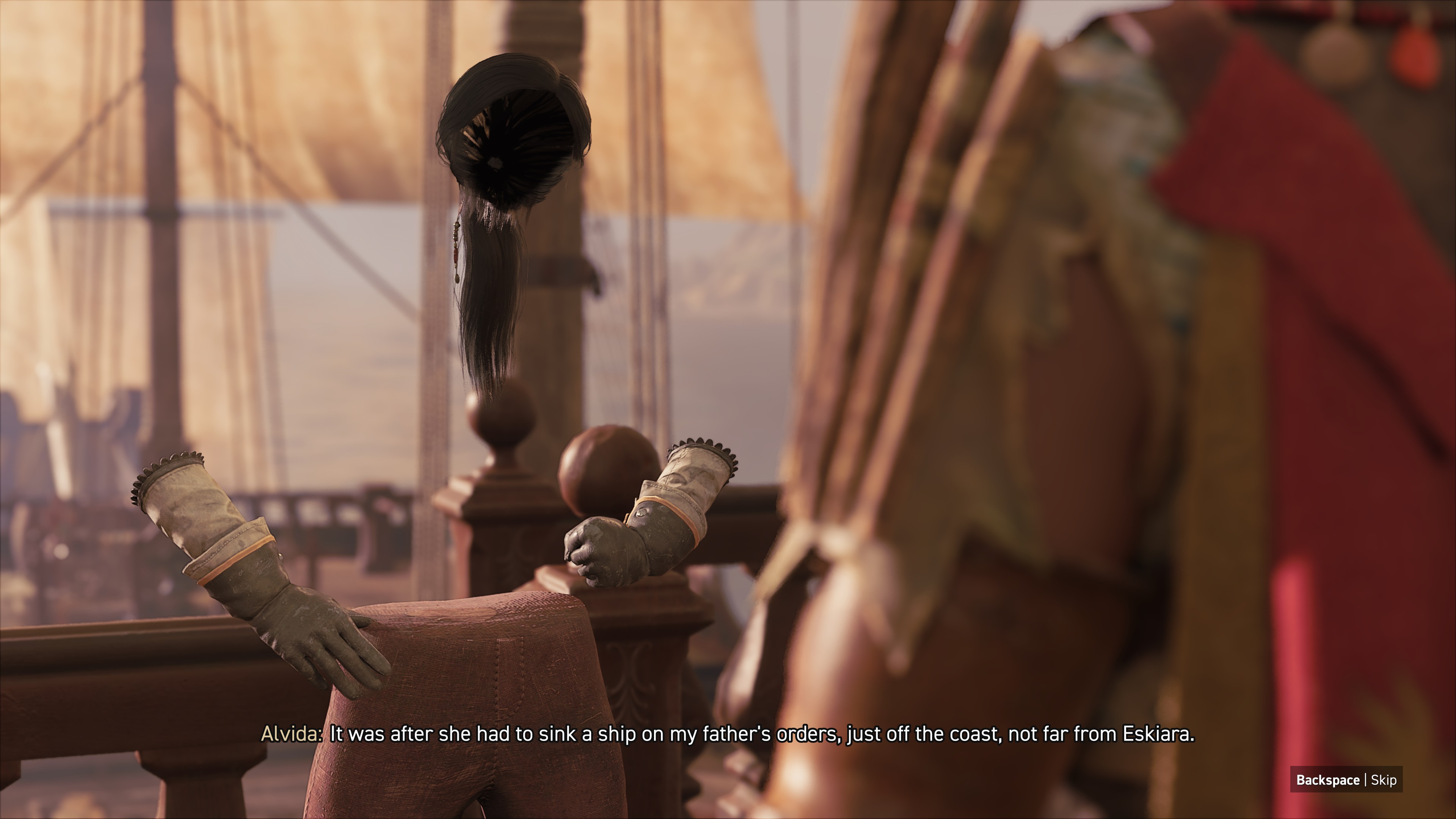
In the worst situations, armor texture on certain characters failed to appear at all, resulting in floating appendages or severed heads. An initial look at some player feedback suggests that this phenomenon is likely GPU-dependent, and it's hopefully something that can be ironed out, but it impacted my enjoyment nonetheless. Additionally, I crashed about 4 or 5 times during my 50-hour playthrough, which is not a problem I typically encounter often.
There are aspects about GreedFall: The Dying World that remain compelling -- the overall world-building remains top-notch, the RPG progression systems are well-designed, and fans of GreedFall's established lore will have plenty to latch onto. However, the narrative doesn't carry the same inventiveness as the original game, the combat changes appear to be courting a more niche playerbase, and multiple gameplay and technical shortcomings compromise the experience entirely. If Spiders and Nacon can manage to support the game after release, it's possible that many of these issues could be addressed, but the state in which this game was released doesn't have me feeling optimistic.