
"Starfield will eventually become something that will be legendary" – Inon Zur on Music Composition, Working With Todd Howard, Fallout 4’s Main Theme, and More
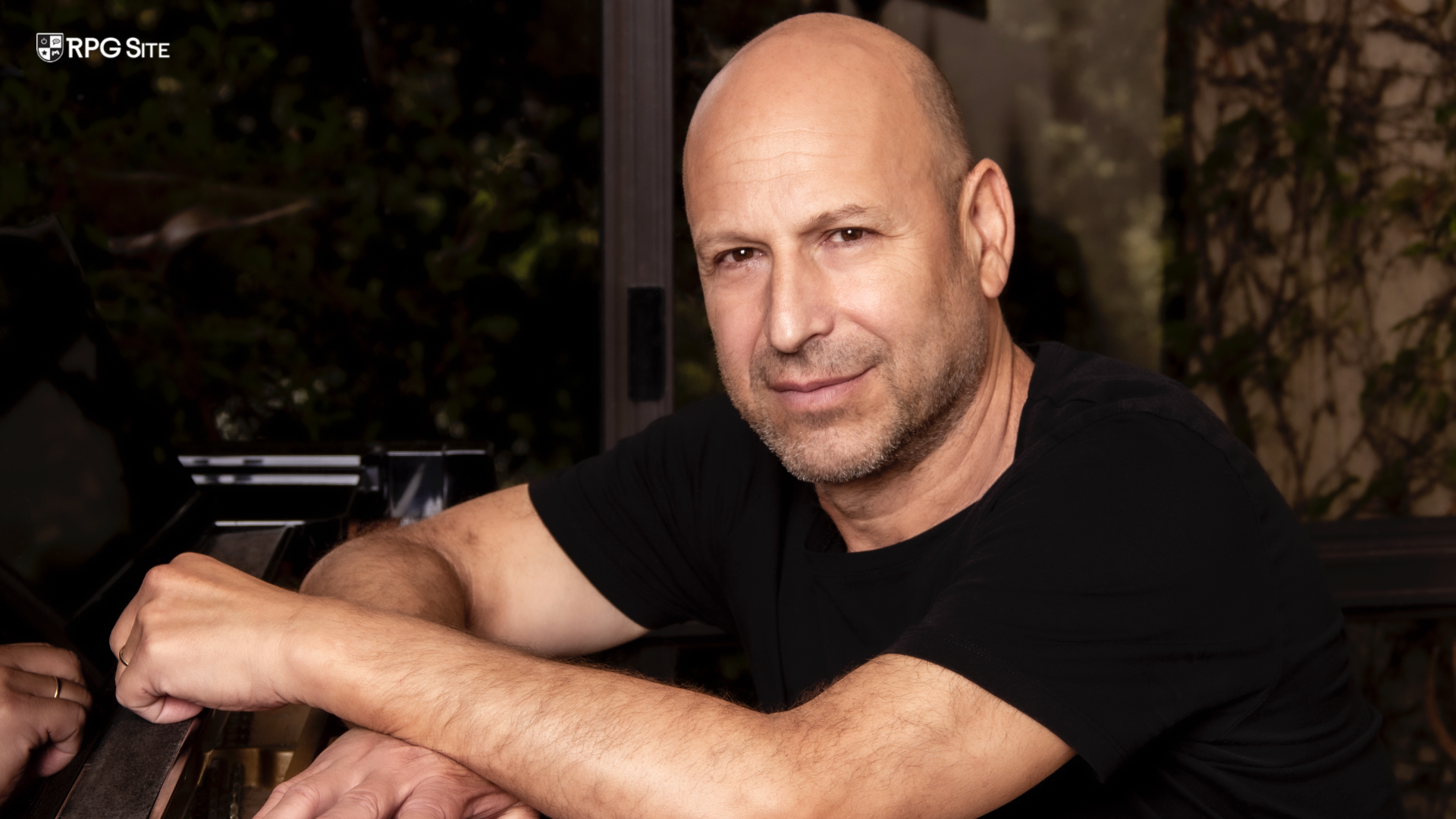
Inon Zur has composed music for some of the biggest RPGs over the course of his career including Fallout 4, Fallout 76, Dragon Age II, and more-recently Bethesda's Starfield and Team Ninja's Rise of the Ronin. I recently had a chance to chat with Inon Zur about his career, his approach to composing music, working with Todd Howard, his thoughts on vinyl vs digital music, coffee, and much more. This interview was done on a call. It has been slightly edited for clarity.
RPG Site: For those unaware, tell us a little bit about yourself.
Inon Zur: My name is Inon Zur. I was born in Israel and I moved to the US in the beginning of the 90s. I started working in TV composing lots of kids and young adult programming, action oriented shows like the Power Rangers, Beetleborgs, The Vision of Escaflowne, and many more.
My debut in video games was in 1997 writing the score for Star Trek: Kllingon Academy. Since then, I've composed for over a hundred substantial video games. I am so excited and proud to be part of this amazing industry.
Inon Zur: My name is Inon Zur. I was born in Israel and I moved to the US in the beginning of the 90s. I started working in TV composing lots of kids and young adult programming, action oriented shows like the Power Rangers, Beetleborgs, The Vision of Escaflowne, and many more.
My debut in video games was in 1997 writing the score for Star Trek: Kllingon Academy. Since then, I've composed for over a hundred substantial video games. I am so excited and proud to be part of this amazing industry.
RPG Site: Before you started your career as a composer, what got you into music in general?
Inon Zur: As early as I remember, back when I was two or three years old, music was the centerpiece of my life. My parents were not musicians, but they loved music and music was played all the time at our home. I was magnetized to the whole notion of music, melodies, and harmonies. I was infatuated by this, and I started studying piano at the age of eight, and right away started composing. My dream has always been to compose music. It was really in my veins to just write music all the time. I must tell you that this has not changed, and I'm now 60 years old.
Inon Zur: As early as I remember, back when I was two or three years old, music was the centerpiece of my life. My parents were not musicians, but they loved music and music was played all the time at our home. I was magnetized to the whole notion of music, melodies, and harmonies. I was infatuated by this, and I started studying piano at the age of eight, and right away started composing. My dream has always been to compose music. It was really in my veins to just write music all the time. I must tell you that this has not changed, and I'm now 60 years old.
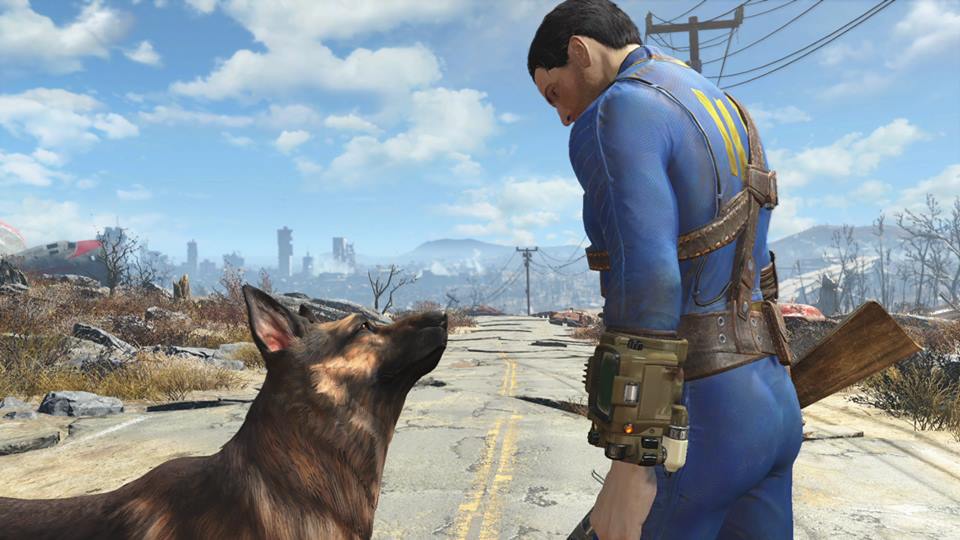
RPG Site: I think I first discovered your music when I heard the main theme for Fallout 4. I hadn't played a Fallout game at the time. That theme song is now legendary with how grand it sounds. I'm curious how you perfectly balance composing for soundtracks that you'd hear in big movies, but also those that perfectly fit in video games. I've not really seen this balance anywhere else.
Inon Zur: It starts from the belief that music for media has the same role when it comes to either movies or TV or video games. It's just being put to work in a different way. In TV and movies, we're really glued to the picture and we have to really respond to everything we see. In games, we cannot do it because it's very hard to predict what the player is going to do. All we could do is really try to enhance the emotions as much as we can, and this is where the whole thing starts: how to create the right emotions.
It doesn't really matter if it's for a big Hollywood film or for a video game. What's important is whoever is being engaged in this media, either sitting and watching, or playing the game, has the right emotion, state of mind, and this is something that music does best.
As far as my writing styles, I am classical trained so my compositions are always derived from my classical training, but for many years, I've always been integrating classical instruments, and classical and orchestral language with more sound design-ish and I would say maybe even ethnic elements that I'm incorporating with my music and I think with this, I can create a very unique language that will support every game.
Inon Zur: It starts from the belief that music for media has the same role when it comes to either movies or TV or video games. It's just being put to work in a different way. In TV and movies, we're really glued to the picture and we have to really respond to everything we see. In games, we cannot do it because it's very hard to predict what the player is going to do. All we could do is really try to enhance the emotions as much as we can, and this is where the whole thing starts: how to create the right emotions.
It doesn't really matter if it's for a big Hollywood film or for a video game. What's important is whoever is being engaged in this media, either sitting and watching, or playing the game, has the right emotion, state of mind, and this is something that music does best.
As far as my writing styles, I am classical trained so my compositions are always derived from my classical training, but for many years, I've always been integrating classical instruments, and classical and orchestral language with more sound design-ish and I would say maybe even ethnic elements that I'm incorporating with my music and I think with this, I can create a very unique language that will support every game.

RPG Site: You've been involved with many franchises where you've composed soundtracks for multiple entries. After you've created your musical language for one soundtrack, how do you evolve or build on that for future entries so that each new score has its own unique flavor while still feeling like it is a part of the franchise?
Inon Zur: That's the million dollar question. *laughs* It's a great question, and I wish I could really explain it in one simple answer. It all starts from intention. When I'm approaching a project, for me the first thing and it doesn't matter what I'm working on, there's always the three W's. It is the where, where does it happen? And then there is the when. When in time is it? Is it in the future, in the past, is it a parallel reality for example like Fallout? And then the third W is the most important one: the why. Why does it happen? What is the story behind it? What is the motivation? It all starts from this.
Let's say that Fallout has its own musical language that I've developed throughout the years. This is a given, and I'm going to use this set of tools. However, with each game, with each story, I'm trying to research these three W's and then have my music really adjust to the new increments and then the new story basically. This way I have the Fallout language, but I'm using it to describe a whole new story.
So if I need to bring in a new element, usually I am, if I need to really introduce a whole new language, for example, in Atlantic City which is one of the DLCs, latest DLCs for Fallout 76, I actually introduced a jazz band as part of the score. This is something that was always in the Fallout radio, but was never part of the score. I felt that this is a really great time to bring it. I always try to see what's ahead of me, take my toolbox, and use it for what I have.
Inon Zur: That's the million dollar question. *laughs* It's a great question, and I wish I could really explain it in one simple answer. It all starts from intention. When I'm approaching a project, for me the first thing and it doesn't matter what I'm working on, there's always the three W's. It is the where, where does it happen? And then there is the when. When in time is it? Is it in the future, in the past, is it a parallel reality for example like Fallout? And then the third W is the most important one: the why. Why does it happen? What is the story behind it? What is the motivation? It all starts from this.
Let's say that Fallout has its own musical language that I've developed throughout the years. This is a given, and I'm going to use this set of tools. However, with each game, with each story, I'm trying to research these three W's and then have my music really adjust to the new increments and then the new story basically. This way I have the Fallout language, but I'm using it to describe a whole new story.
So if I need to bring in a new element, usually I am, if I need to really introduce a whole new language, for example, in Atlantic City which is one of the DLCs, latest DLCs for Fallout 76, I actually introduced a jazz band as part of the score. This is something that was always in the Fallout radio, but was never part of the score. I felt that this is a really great time to bring it. I always try to see what's ahead of me, take my toolbox, and use it for what I have.
RPG Site: Before I ask you about Starfield, and if we had unlimited time, I'd probably spend five hours picking your brain about the Starfield soundtrack, I'm curious about your relationship with Bethesda now. You've worked with Bethesda on so many titles that it feels like you are part of their family now. When you take on a new project for them, do they still give you any direction? How do you approach working with a longtime partner like Bethesda?
Inon Zur: Yes, they are giving me direction, but also they trust me to apply my judgment because they know me so well. I know them so well. Having said that, I must tell you that in many projects, especially on new projects, there's a lot of bouncing back and forth. There are a lot of adjustments. The fact that I did other things and we did successful soundtracks and everything doesn't say that they're never really giving me any breaks when it comes to really getting what they want. and I'm totally in for it.
I will never say "Wait a second, I've been composing music for you for the last 25 years. It's gonna be okay." No, I always listen because they are playing the new versions of the games. They know exactly what works, and sometimes it takes four, five, six or more versions until we get to the right answer or the right piece for them.
Inon Zur: Yes, they are giving me direction, but also they trust me to apply my judgment because they know me so well. I know them so well. Having said that, I must tell you that in many projects, especially on new projects, there's a lot of bouncing back and forth. There are a lot of adjustments. The fact that I did other things and we did successful soundtracks and everything doesn't say that they're never really giving me any breaks when it comes to really getting what they want. and I'm totally in for it.
I will never say "Wait a second, I've been composing music for you for the last 25 years. It's gonna be okay." No, I always listen because they are playing the new versions of the games. They know exactly what works, and sometimes it takes four, five, six or more versions until we get to the right answer or the right piece for them.
RPG Site: Given where you are in your career right now, do you still find yourself seeking out new projects or do you have absolutely no time to even accept what's currently being offered to you?
Inon Zur: I'm always hungry for new projects. I'm always hungry to discover, to meet new people, to be introduced to new projects, because I believe that a composer cannot really stay afloat. A composer always needs to swim and swim hard, and learn hard, in order to maintain what they're doing in the best way, and improve all the time, and develop new languages, and new styles all the time. This is a passion that I had, and I still have it. I had it from the get-go.
Inon Zur: I'm always hungry for new projects. I'm always hungry to discover, to meet new people, to be introduced to new projects, because I believe that a composer cannot really stay afloat. A composer always needs to swim and swim hard, and learn hard, in order to maintain what they're doing in the best way, and improve all the time, and develop new languages, and new styles all the time. This is a passion that I had, and I still have it. I had it from the get-go.
RPG Site: I assume when people interview you or generally talk to you about your music, most of them mention Fallout 4 as their favorite soundtrack. For me it's a tie between Starfield and Rise of the Ronin actually. I want to cover them one by one. Starfield, specifically because I love space, but the soundtrack was the first time a space game reminded me of watching Star Trek: The Next Generation as a kid. What was your inspiration for the musical language in Starfield and how did you approach it compared to Fallout? It is a brand-new world, but still a Bethesda game.
Inon Zur: I must say that it was a long journey and search to find the right language for Starfield. Yes, I love Fallout music, but for me, both Rise of the Ronin and Starfield, and I would add to it also Syberia, a small game that I did, that I'm very very much emotionally attached to. These are a few of my favorite scores I did personally.
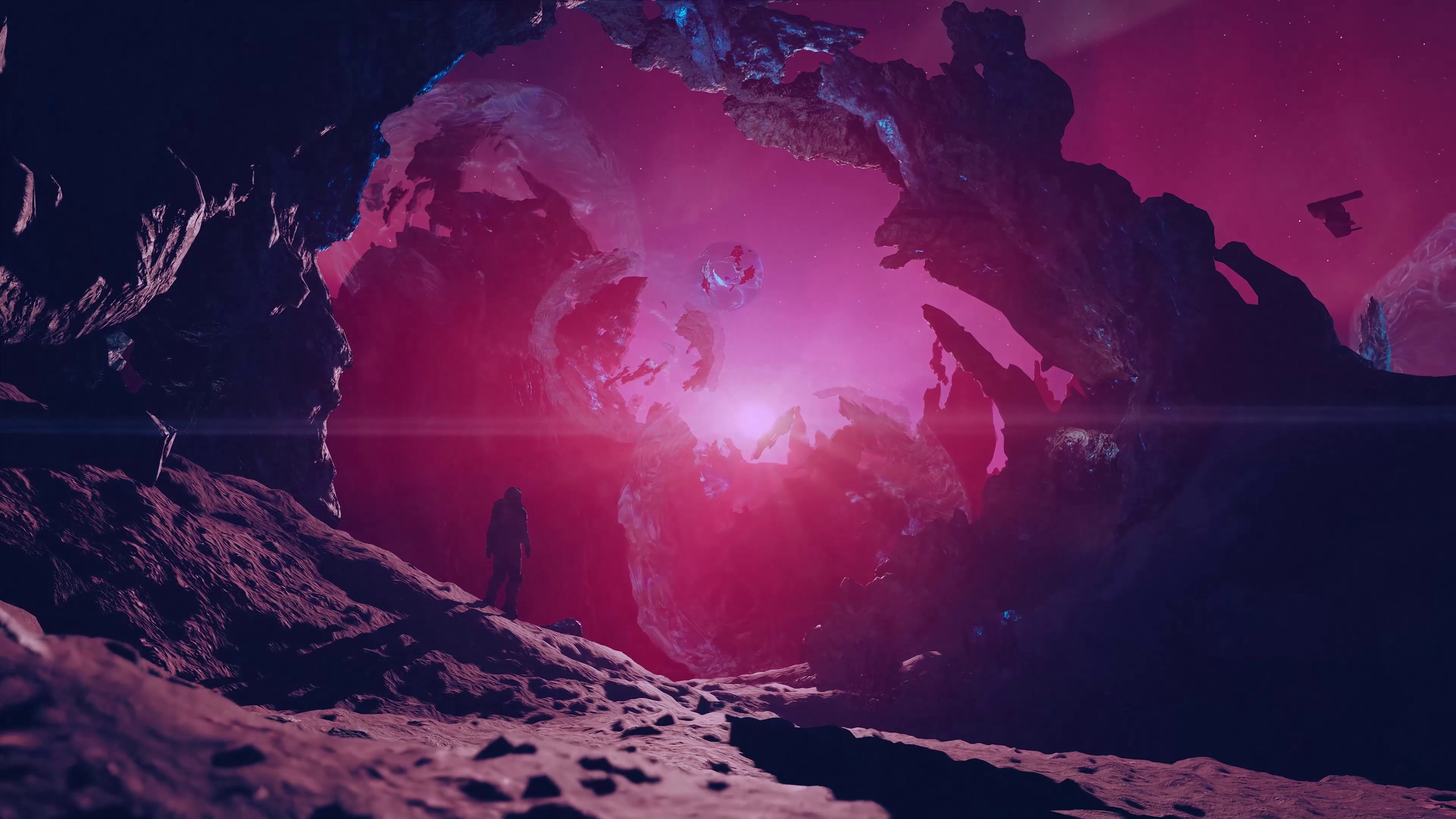
With Starfield, it's finding the right balance between elements that people are identifying as something that belongs to space, but also trying to develop a new language. I remember that there was a lot of thinking that we did and I was basically taking back into this world that on one hand is huge, vast and standing still almost like a void, but then inside this space, there are lots of elements that are moving quickly and happening quickly and zooming in and out and everything.
This was the first image I had when I started working on Starfield. The use of the orchestra is not completely traditional. For example, woodwinds are not playing melodies. They're almost always playing very fast patterns that are like everlasting fast movements and motions in space. The brass and strings are actually more stable and playing really slow, and try to capture the space by playing really low ambience and very high notes together. This is how I basically created this sort of round or huge shape of something that no matter where we are, it's just bigger than us. This all started from an image.
So I've described this huge vast place with the void on one hand, darkness, but then all these lights that are moving, but then there is the person. There is the personal touch. There is one human being that just stands in between. This was the second element that was really important for me in the score for Starfield.
The relationship between something that is, on one hand really nothing compared to the size or time, that we're talking about space, but then it's us. It's you. It's me. We are important, so how can I create this relationship between a person and this huge thing around you? It's more philosophical, but this was what really drove my thinking when I composed the music for Starfield.
Instead of trying to mimic John Williams or Jerry Goldsmith or more electronic elements like Vangelis and other people, what I tried to capture is the main emotion. I knew for a fact that since I know John Williams music, I know Jerry Goldsmith's music, I know Stravinsky, I know that these elements will pop in, and will surface. There is no escape and it's okay. It is okay to be influenced by great composers, but it is the idea behind it that makes the score for Starfield this wholesome, unique on one hand, accessible to the people, but also bringing the real story behind Starfield.
Inon Zur: I must say that it was a long journey and search to find the right language for Starfield. Yes, I love Fallout music, but for me, both Rise of the Ronin and Starfield, and I would add to it also Syberia, a small game that I did, that I'm very very much emotionally attached to. These are a few of my favorite scores I did personally.
With Starfield, it's finding the right balance between elements that people are identifying as something that belongs to space, but also trying to develop a new language. I remember that there was a lot of thinking that we did and I was basically taking back into this world that on one hand is huge, vast and standing still almost like a void, but then inside this space, there are lots of elements that are moving quickly and happening quickly and zooming in and out and everything.
This was the first image I had when I started working on Starfield. The use of the orchestra is not completely traditional. For example, woodwinds are not playing melodies. They're almost always playing very fast patterns that are like everlasting fast movements and motions in space. The brass and strings are actually more stable and playing really slow, and try to capture the space by playing really low ambience and very high notes together. This is how I basically created this sort of round or huge shape of something that no matter where we are, it's just bigger than us. This all started from an image.
So I've described this huge vast place with the void on one hand, darkness, but then all these lights that are moving, but then there is the person. There is the personal touch. There is one human being that just stands in between. This was the second element that was really important for me in the score for Starfield.
The relationship between something that is, on one hand really nothing compared to the size or time, that we're talking about space, but then it's us. It's you. It's me. We are important, so how can I create this relationship between a person and this huge thing around you? It's more philosophical, but this was what really drove my thinking when I composed the music for Starfield.
Instead of trying to mimic John Williams or Jerry Goldsmith or more electronic elements like Vangelis and other people, what I tried to capture is the main emotion. I knew for a fact that since I know John Williams music, I know Jerry Goldsmith's music, I know Stravinsky, I know that these elements will pop in, and will surface. There is no escape and it's okay. It is okay to be influenced by great composers, but it is the idea behind it that makes the score for Starfield this wholesome, unique on one hand, accessible to the people, but also bringing the real story behind Starfield.
RPG Site: When I first played Starfield, what stood out to me the most were the design language of the game with the iconography, and also the audio design and the soundtrack. I'm curious if you are doing any more music for Starfield in potential DLC.
Inon Zur: I cannot really comment on this, however there's always things to look for in the future.
Inon Zur: I cannot really comment on this, however there's always things to look for in the future.
RPG Site: I'm a big fan of Team Ninja's games and when Sony uploaded this behind-the-scenes video that revealed you as the composer, I was quite surprised since there was no announcement of your involvement in the project. How did you get in touch with Team Ninja and Sony for this project?
Inon Zur: That was really interesting. They actually contacted me because they knew my scores for very Western games, and they wanted a Western touch to Rise of the Ronin. However, I actually approached it from a different point of view. When I was approached, I actually took seriously the whole idea of composing for a traditional Japanese game, and I studied a lot of Japanese instruments, the way they're playing, Japanese modes and scales, and other elements. This game actually, and the music, became way more ethnic than what they'd sought before, but I also added more of the orchestral elements to it.
In the beginning they expected more straightforward orchestra music, but then they heard it, and they thought it worked well because I managed to use all these ethnic elements inside and then wrap it with a more Western orchestral aspect. They were very happy with the results, although this is not what they've initially asked for.
Inon Zur: That was really interesting. They actually contacted me because they knew my scores for very Western games, and they wanted a Western touch to Rise of the Ronin. However, I actually approached it from a different point of view. When I was approached, I actually took seriously the whole idea of composing for a traditional Japanese game, and I studied a lot of Japanese instruments, the way they're playing, Japanese modes and scales, and other elements. This game actually, and the music, became way more ethnic than what they'd sought before, but I also added more of the orchestral elements to it.
In the beginning they expected more straightforward orchestra music, but then they heard it, and they thought it worked well because I managed to use all these ethnic elements inside and then wrap it with a more Western orchestral aspect. They were very happy with the results, although this is not what they've initially asked for.
RPG Site: For Fallout 4, I have two questions. The first is how did you feel when you found out your main theme for Fallout 4 was going to be used in the TV show which would likely be watched by millions of people who haven't even played a Fallout game.
Inon Zur: I was really happy about it. Obviously I felt that the language or the musical language for Fallout we created for many years, and I thought that it's going to be a really great idea, although this team had worked on great TV shows before like Westworld and others, and they're a team so they're working together, I was wondering if they're going to incorporate some of my themes there, and I was really happy that they've done it. I also saw the response from the audience that they really thought it was appropriate to do.
Inon Zur: I was really happy about it. Obviously I felt that the language or the musical language for Fallout we created for many years, and I thought that it's going to be a really great idea, although this team had worked on great TV shows before like Westworld and others, and they're a team so they're working together, I was wondering if they're going to incorporate some of my themes there, and I was really happy that they've done it. I also saw the response from the audience that they really thought it was appropriate to do.
RPG Site: The second question is whether you remember any fun anecdotes from the recording process for Fallout 4.
Inon Zur: After doing Fallout 3 and Fallout New Vegas, I came to talk to Todd Howard, the producer and the Director of Fallout, and he said, "Well, this is a different Fallout because we're talking more personal. It's a personal story about somebody who loses his family and is looking for his son." And I said, "Okay, well, you know, then maybe we should not go with a big orchestral score. Maybe we should use an instrument that could sort of create this intimate feeling." And I said, "How about piano?" He said to me, "Great idea. Let's do an acoustic piano theme."
So I went back home and did an acoustic piano theme and I sent it to him and he said, "I don't feel it's right." and I was like, "Okay, but this is what you asked for" and he said, "Yes, but I don't feel it's right." And I thought "All right, let's go back" then, I thought Fallout happens in a parallel reality so maybe we should actually twist and change the piano sound so that it will sound like a piano from a parallel reality, and not our reality. Something that may be dirtier, something may be detuned, something that may be really a bit even alienish so it will match this new reality that was starting from the 50 and just branched in a different way.
I took what I played before, but played it in a combination of synthesizers and pianos that were detuned and weird and I sent it to him and he said "That's it. Right on." It was the same melody, the same harmonies, but it was played in a bit of detuned piano. Something that sounds not perfect, something that sounds not refined, something that sounds really out of the wasteland and he was really happy with it. Then I figured it out and this is actually what we call the famous Fallout piano.
RPG Site: That's how you composed the main theme for Fallout 4?
Inon Zur: Exactly.
Inon Zur: After doing Fallout 3 and Fallout New Vegas, I came to talk to Todd Howard, the producer and the Director of Fallout, and he said, "Well, this is a different Fallout because we're talking more personal. It's a personal story about somebody who loses his family and is looking for his son." And I said, "Okay, well, you know, then maybe we should not go with a big orchestral score. Maybe we should use an instrument that could sort of create this intimate feeling." And I said, "How about piano?" He said to me, "Great idea. Let's do an acoustic piano theme."
So I went back home and did an acoustic piano theme and I sent it to him and he said, "I don't feel it's right." and I was like, "Okay, but this is what you asked for" and he said, "Yes, but I don't feel it's right." And I thought "All right, let's go back" then, I thought Fallout happens in a parallel reality so maybe we should actually twist and change the piano sound so that it will sound like a piano from a parallel reality, and not our reality. Something that may be dirtier, something may be detuned, something that may be really a bit even alienish so it will match this new reality that was starting from the 50 and just branched in a different way.
I took what I played before, but played it in a combination of synthesizers and pianos that were detuned and weird and I sent it to him and he said "That's it. Right on." It was the same melody, the same harmonies, but it was played in a bit of detuned piano. Something that sounds not perfect, something that sounds not refined, something that sounds really out of the wasteland and he was really happy with it. Then I figured it out and this is actually what we call the famous Fallout piano.
RPG Site: That's how you composed the main theme for Fallout 4?
Inon Zur: Exactly.

RPG Site: Speaking of Todd Howard, how has it been working with him for so many years?
Inon Zur: Todd is one, if not the most creative and invigorating human beings in the industry. He just doesn't stop. He always has new ideas. He always knows what he wants. He is very persuasive and has a very strong character. He will also find ways to describe what he wants without really calling it a name. He knows how to allow freedom of creativity on one hand, but also how to steer it to his own vision. He is a visionary. He sees things that people will start to find out years later.
This also applies to Starfield. When Starfield released, I believe people were just not ready for it. It's a different way of looking at it, but Todd is really strong, and he said very, very lightly, "Look, if you don't like it, then you don't like it, but this is the new thing that we're doing, and we're sticking to it." He believes in his way, and it just has proven time and time again that eventually people will understand his vision. It just takes time and this is a common thing for all the big visionaries. Sometimes people really don't understand them correctly, but they were strong enough to stay on course, and Todd will stay on course on Starfield. Starfield will eventually become something that will be legendary. I have no doubt. It's just a matter of time.
Inon Zur: Todd is one, if not the most creative and invigorating human beings in the industry. He just doesn't stop. He always has new ideas. He always knows what he wants. He is very persuasive and has a very strong character. He will also find ways to describe what he wants without really calling it a name. He knows how to allow freedom of creativity on one hand, but also how to steer it to his own vision. He is a visionary. He sees things that people will start to find out years later.
This also applies to Starfield. When Starfield released, I believe people were just not ready for it. It's a different way of looking at it, but Todd is really strong, and he said very, very lightly, "Look, if you don't like it, then you don't like it, but this is the new thing that we're doing, and we're sticking to it." He believes in his way, and it just has proven time and time again that eventually people will understand his vision. It just takes time and this is a common thing for all the big visionaries. Sometimes people really don't understand them correctly, but they were strong enough to stay on course, and Todd will stay on course on Starfield. Starfield will eventually become something that will be legendary. I have no doubt. It's just a matter of time.
RPG Site: When I was looking at other music you've composed throughout your career that I'm not familiar with, I saw that you worked on English releases of some Digimon movies. How did that happen?
Inon Zur: Because when I was working at the Fox Family channel, they had hosted many shows. Most of my score was for Beetleborgs and Power Rangers, but we were like five composers that were just working like at workstations. So it was like "Oh, I have this episode of Digimon that's really, really good and this is really fitting your style." All right, no problems. I'll do it." There were questions asked. We were really young back then. We were like in the beginning of our 30s, all of us, and we really love to compose and work together. So, there you go.
Inon Zur: Because when I was working at the Fox Family channel, they had hosted many shows. Most of my score was for Beetleborgs and Power Rangers, but we were like five composers that were just working like at workstations. So it was like "Oh, I have this episode of Digimon that's really, really good and this is really fitting your style." All right, no problems. I'll do it." There were questions asked. We were really young back then. We were like in the beginning of our 30s, all of us, and we really love to compose and work together. So, there you go.
RPG Site: What are your thoughts on the state of game soundtracks and the music industry right now?
Inon Zur: It's ever evolving. It's ever changing and it will be, because the world is ever evolving and ever changing. Art just follows, and sometimes even precedes humankind's reaction to what is happening. Music is no different. It's not about the technicalities or technical aspects. Of course, there are technical aspects, and of course now introducing AI, it will add a lot to what we are experiencing, but in general, a public's taste is influenced by the world that surrounds them.
You could see every century there's just a different taste and we are as artists going with this and so it's really hard to know where music will go, but one thing I do know, that I personally will always try to push the envelope and introduce new elements, introduce new angles, introduce new ideas and new sounds, so I could really stay one of the pioneers of soundtracks for games instead of trying to imitate something that was done before me.
Inon Zur: It's ever evolving. It's ever changing and it will be, because the world is ever evolving and ever changing. Art just follows, and sometimes even precedes humankind's reaction to what is happening. Music is no different. It's not about the technicalities or technical aspects. Of course, there are technical aspects, and of course now introducing AI, it will add a lot to what we are experiencing, but in general, a public's taste is influenced by the world that surrounds them.
You could see every century there's just a different taste and we are as artists going with this and so it's really hard to know where music will go, but one thing I do know, that I personally will always try to push the envelope and introduce new elements, introduce new angles, introduce new ideas and new sounds, so I could really stay one of the pioneers of soundtracks for games instead of trying to imitate something that was done before me.
RPG Site: When you listen to music in general, do you prefer digital or vinyl?
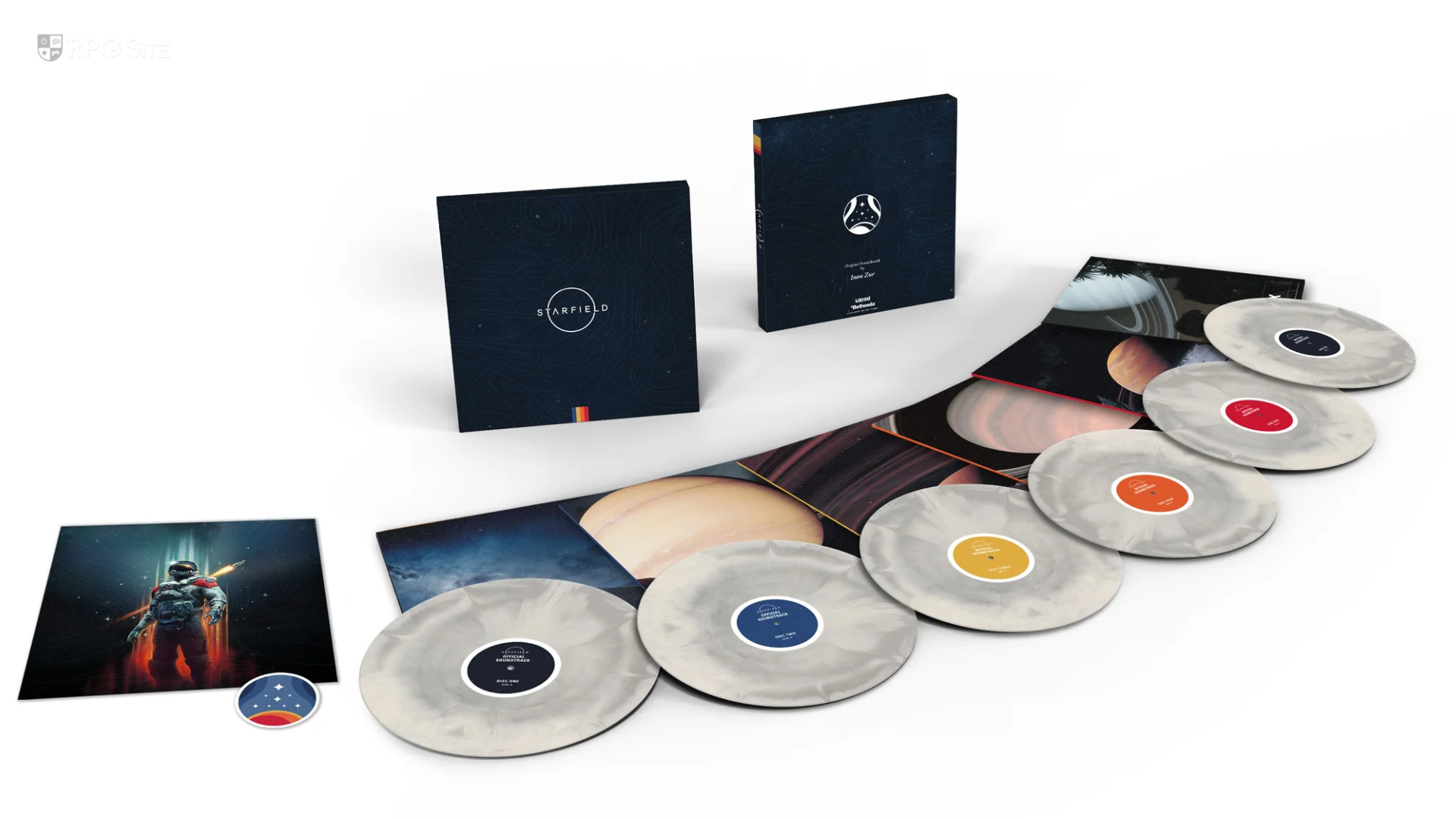
Inon Zur: I prefer vinyl for sound, but I prefer digital for working. The beauty of vinyl is that it's limited, it's very distorted in a way, and that's why it is so fun to listen to. I love listening to vinyl. It really puts me in a classical mood.
But for work, I cannot work off vinyl. I have to work with digital music because it gives me all the aspects and stuff, and I can hear everything very clearly.
Inon Zur: I prefer vinyl for sound, but I prefer digital for working. The beauty of vinyl is that it's limited, it's very distorted in a way, and that's why it is so fun to listen to. I love listening to vinyl. It really puts me in a classical mood.
But for work, I cannot work off vinyl. I have to work with digital music because it gives me all the aspects and stuff, and I can hear everything very clearly.
RPG Site: You've composed so many soundtracks that you've probably lost track of some. Have you ever been in a situation where you forgot a specific project you worked on and ended up getting royalties for it?
Inon Zur: *laughs* Actually, I never really forget about projects that I work on really, because every project that I'm working on is important. Even like the smallest ones.
Seriously, I don't remember a time that I got royalties for and I thought what was that for? Not in video games. I composed lots of library music that goes into lots of TV shows, but when it comes to video games, they're all my sons and daughters.
Inon Zur: *laughs* Actually, I never really forget about projects that I work on really, because every project that I'm working on is important. Even like the smallest ones.
Seriously, I don't remember a time that I got royalties for and I thought what was that for? Not in video games. I composed lots of library music that goes into lots of TV shows, but when it comes to video games, they're all my sons and daughters.
RPG Site: Which are the most memorable soundtracks for you when it comes to working on them?
Inon Zur: The most memorable usually is the one that is being played the most. Okay, that's technical but it is true. You could say Fallout 4 is the most memorable because it's just the most known and it played one, but it's different with how I look at it. Memorable for me is what I remember. For example, thinking about the music that I wrote for Syberia, it is almost one of the most memorable things I worked on, although it was a very small game that not a lot of people know. So there is memorable to the public and then there is memorable for me.
Inon Zur: The most memorable usually is the one that is being played the most. Okay, that's technical but it is true. You could say Fallout 4 is the most memorable because it's just the most known and it played one, but it's different with how I look at it. Memorable for me is what I remember. For example, thinking about the music that I wrote for Syberia, it is almost one of the most memorable things I worked on, although it was a very small game that not a lot of people know. So there is memorable to the public and then there is memorable for me.
RPG Site: Hypothetical situation. Assuming there are no restrictions and you can do whatever you want, what media or IP would you like to compose for?
Inon Zur: Let me give you the real and honest answer. I don't care. Because all I care about is writing music that will challenge me, will stretch me, will give me the feeling that I'm being inspired by a project. So it doesn't matter if it's a movie or TV or video game. As long as I feel inspired, this is what I'm looking for.
Inon Zur: Let me give you the real and honest answer. I don't care. Because all I care about is writing music that will challenge me, will stretch me, will give me the feeling that I'm being inspired by a project. So it doesn't matter if it's a movie or TV or video game. As long as I feel inspired, this is what I'm looking for.
RPG Site: In a prior interview, you mentioned how you would be on a farm taking care of animals if you weren't composing music for movies and video games. Is that still something you'd like to do?
Inon Zur: Yes, definitely. The older I'm getting, the closer I'm getting to that.
Inon Zur: Yes, definitely. The older I'm getting, the closer I'm getting to that.
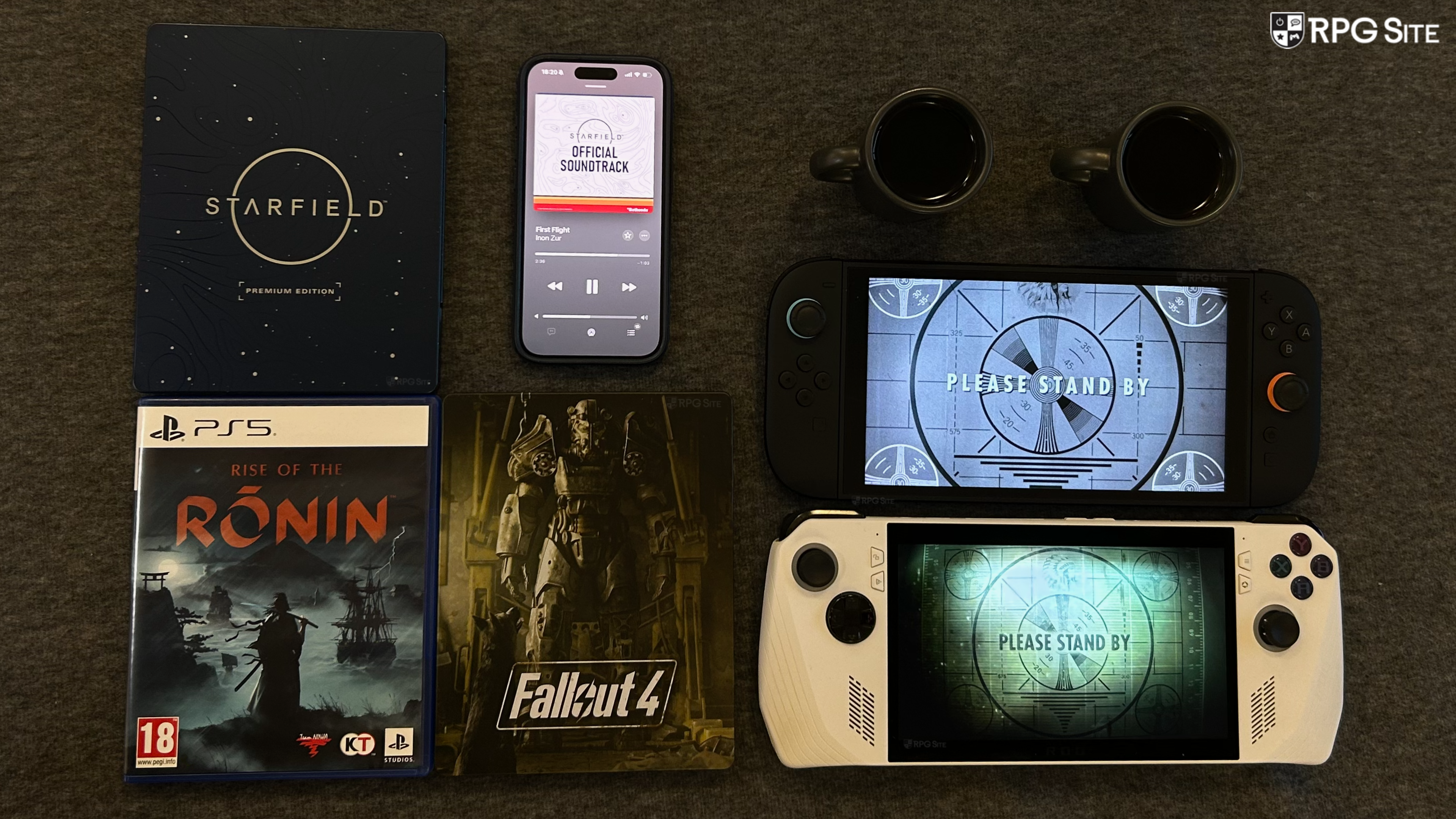
RPG Site: How do you like your coffee?
Inon Zur: Black. No sugar. No cream. No milk. Thick, bitter, and strong.
Inon Zur: Black. No sugar. No cream. No milk. Thick, bitter, and strong.