
Nioh 3 Post-Game Guide: All the features available after clearing the story
Players of the Nioh series have been long declaring that the real fun in these games begins in the post-game, where many new features further enhance the game's combat-related replay value. And of course, we can confirm that the same also applies to Nioh 3.
The new features are generally available at two different timings. Some of them will be available as soon as you have beaten the main story's final boss. But most of the rest will only be available in the "New Game+" mode with a higher difficulty level.
You can find more details on the Nioh 3 post-game features right below. Take note that an obligatory Spoiler Warning is in effect, as you will have to clear the game first before accessing any of these features.
New gear rarity unlocked after the final boss
Divine Gear and Sudama Blessing
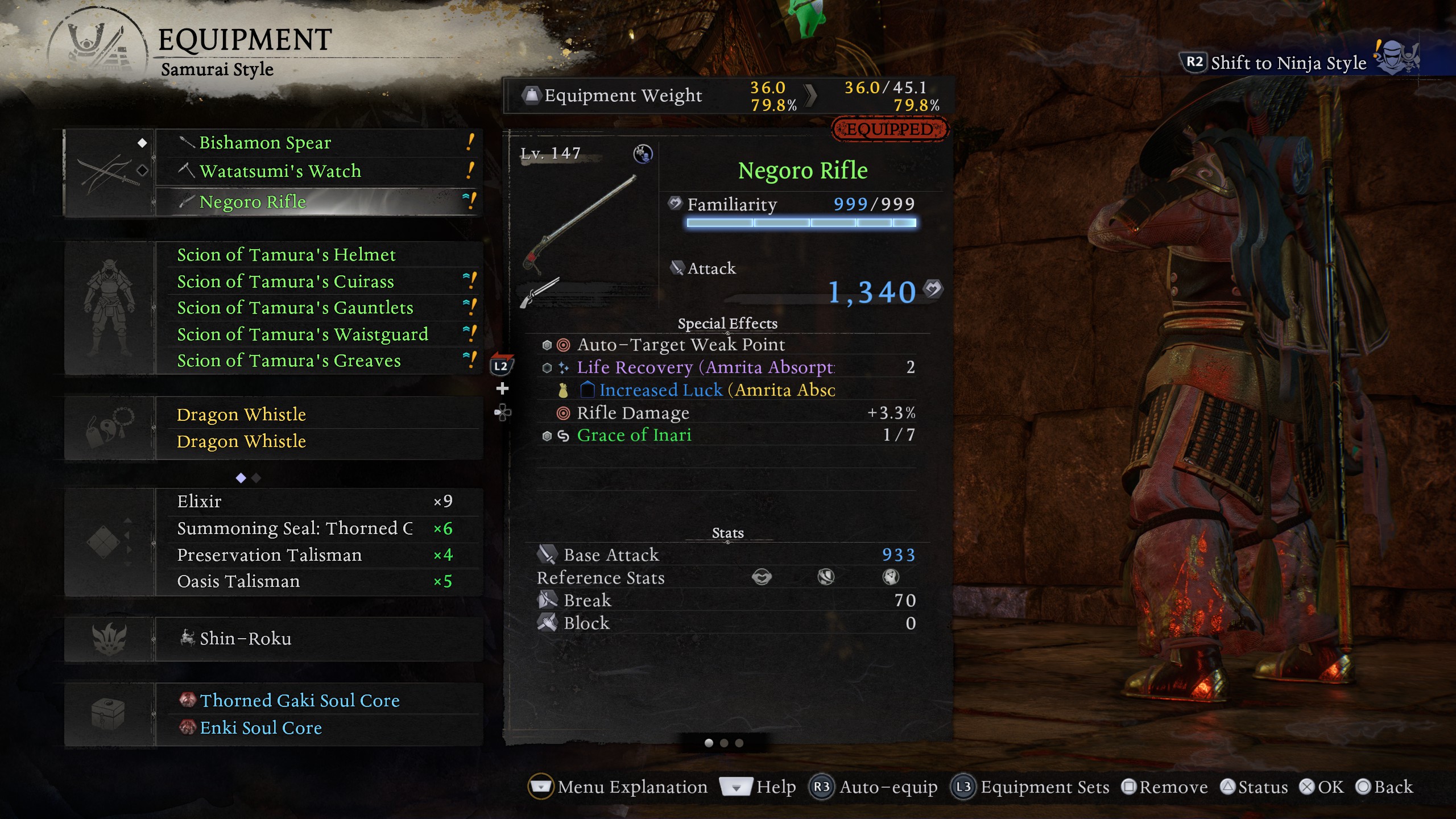
After you have successfully defeated the final boss of the game, you will get to gather the usual item drops before heading to the last story cutscene. However, you will notice a new color among the drops. If you have not tinkered with the rarity color setting, this color should be Green by default.
This is the new Divine rarity. It notably has an even higher maximum familiarity rate at 999 points. But Armor parts with a Divine rarity will also finally have familiarity rates that gradually increase their Defense stats.
In addition, if a Divine gear does not already have a specific Set Bonus, it will come with a new Grace set based on a random group. Just like the fixed sets, when you equip multiple pieces of gear with the same Grace group, you will gradually unlock the Grace's buffs.
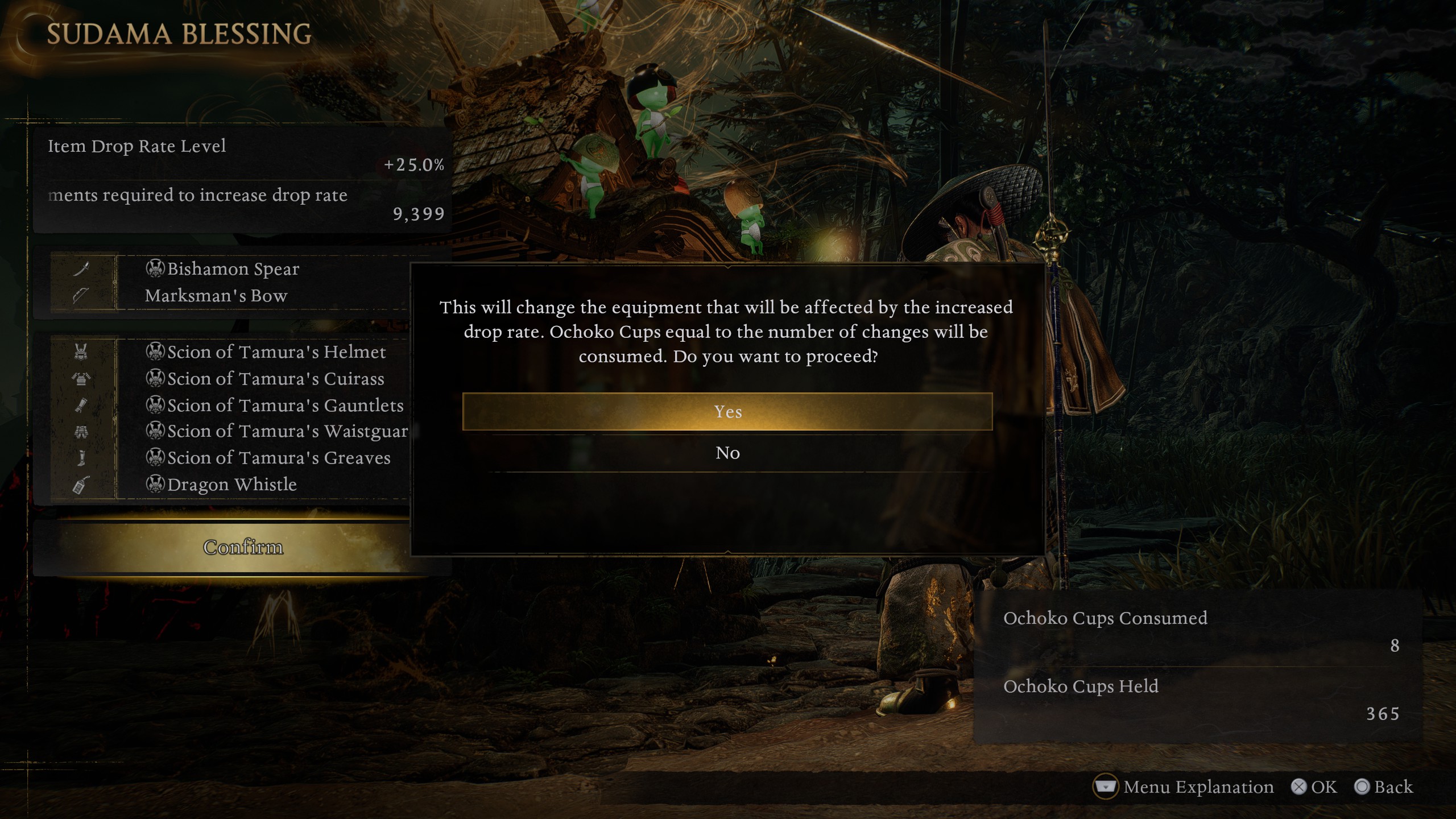
Another gear-related feature that will be unlocked will be Sudama Blessing in the shrine's Blessings menu. This lets you specify weapons and armors you want to focus on collecting with boosted drop rates, whether you want a specific bonus set or a favorite loadout.
If you're going to set or change the category entries, take note that each change will require an Ochoko Cup (yes, the same item needed to summon Acolytes or co-op friends). If you want to change all 8 category entries at once, that will cost 8 Ochoko Cups in one go.
Rare Soul Cores and Soul Core Transformation
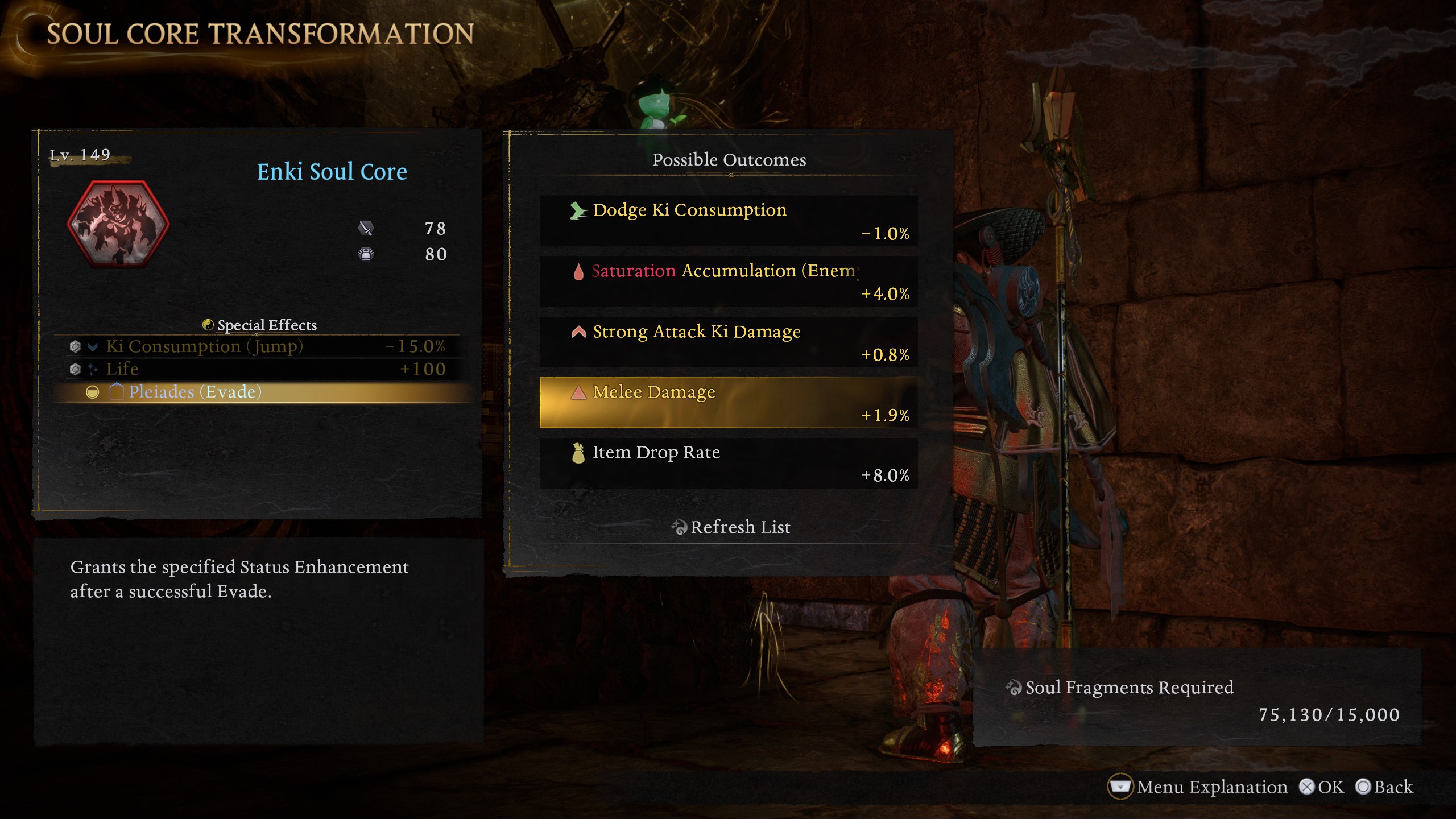
In your initial run, you will notice that you can only get Common (default color: white) and Uncommon (yellow) Soul Cores. These rarities will only come with one or two fixed Special Effects respectively.
But once you have reached post-game, you can now get Soul Cores with the higher Rare (blue) grade. The new rarity will also come with extra Special Effects that are random, and you can change those via the newly unlocked Soul Core Transformation menu. To actually do a thing here, you will need to spend the Soul Fragments you got from discarding surplus Soul Cores via Resting Rites.
New difficulty level - Shogun's Journey
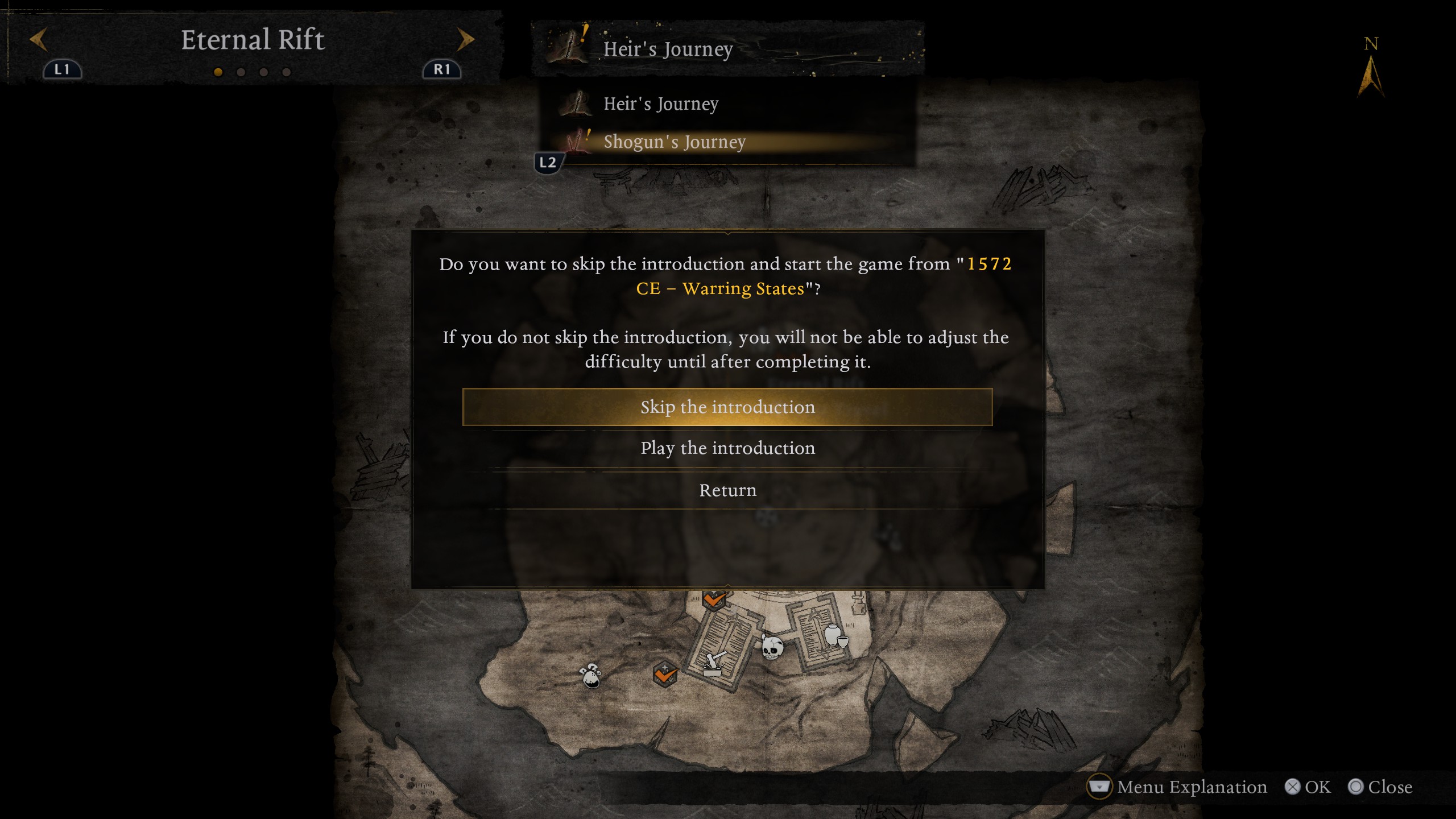
The post-game mode also comes with a new difficulty level called Shogun's Journey (The initial run is then also known as Heir's Journey). When you start this, you will have a new playthrough with higher-level enemies while retaining your current loadout and skills.
However, the game will also offer you to skip the introductory scenes in Edo and go straight to the prologue stage in the Warring States era (Escape from Hitokoto Slope). Just for the sake of it, we have checked that the tutorial stage in Edo is still not expected to be winnable. Even if you manage to whittle down the rebelling Tokugawa Kunimatsu's HP, he will just launch a one-hit-KO attack with his Guardian Spirit afterwards without any bonus rewards.
In Shogun's Journey mode, you will also notice that the enemy layouts have also changed. Either there are more enemies appearing, or some of the human enemies have been swapped with yokai, or existing yokai enemies swapped with an even stronger variant.
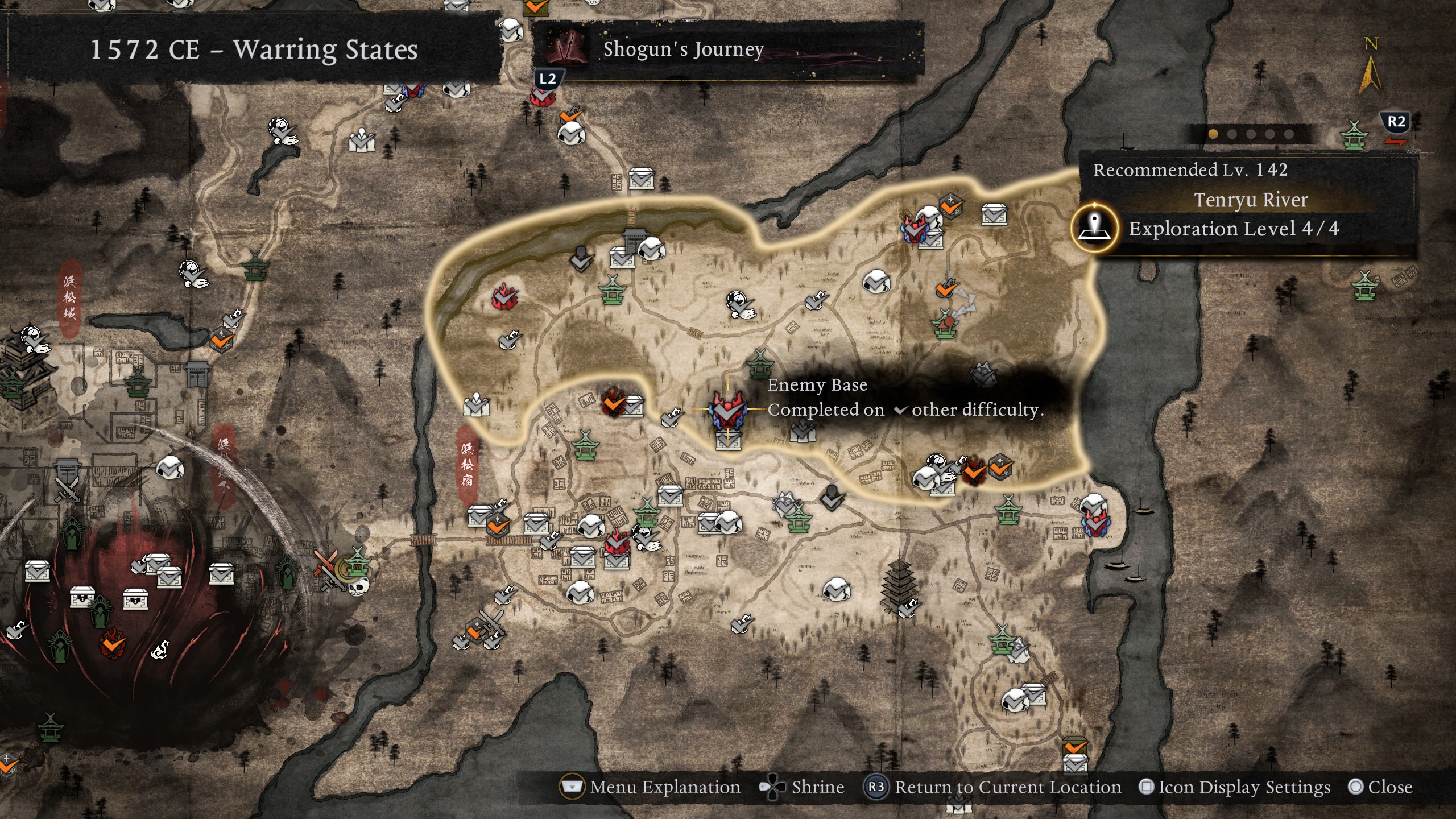
Once you have reached the open field segment, you may initially think that you would have to re-explore the whole map again. That is not really the case here though, as the game will remember your Exploration Level and the Shrines you have visited. However, you are only allowed fast travel to Shrines in the areas accessible before the next story milestone.
Restoring open field combat zones
While a majority of collectible elements like treasure chests and Nigitama creatures are available again in Shogun's Journey, they still appear to be accessible once and thus exhaustable again.
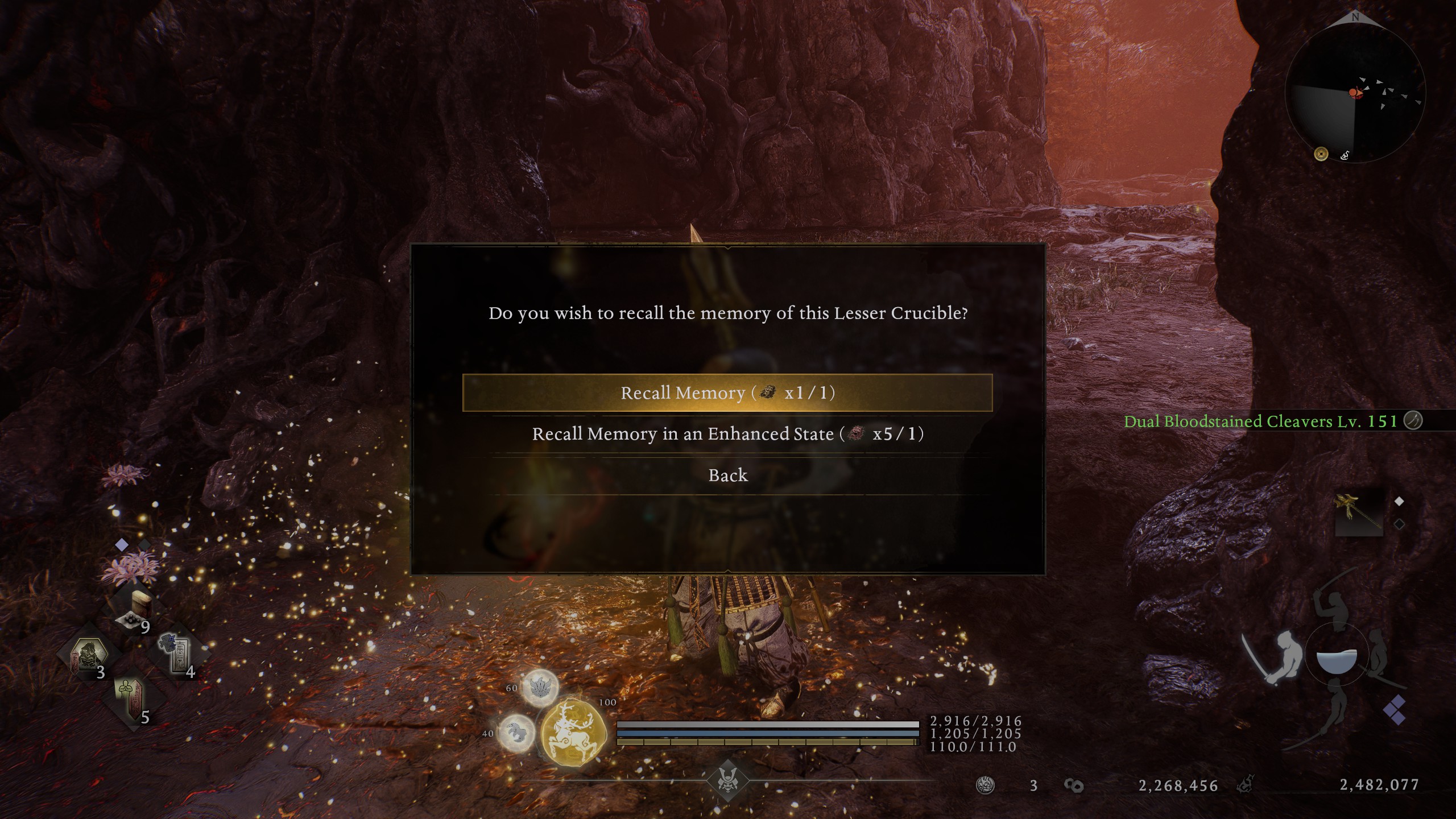
The same thing will not apply to combat areas, though. Team Ninja has added restoration methods for them that lets you challenge the area once again. When you have cleared an area or Myth sidequest, you will notice a new spirit that will offer you the opportunity to restore them. The applicable content here will be Enemy Bases, Lesser Crucibles, Master duels, and Myth sidequests.
The new items required here will be either the Sands of Recollection or the Scarlet Sands of Despair. While you can also gather those throughout the open field explorations, you can also get them as rewards from the Battle Scroll stages.
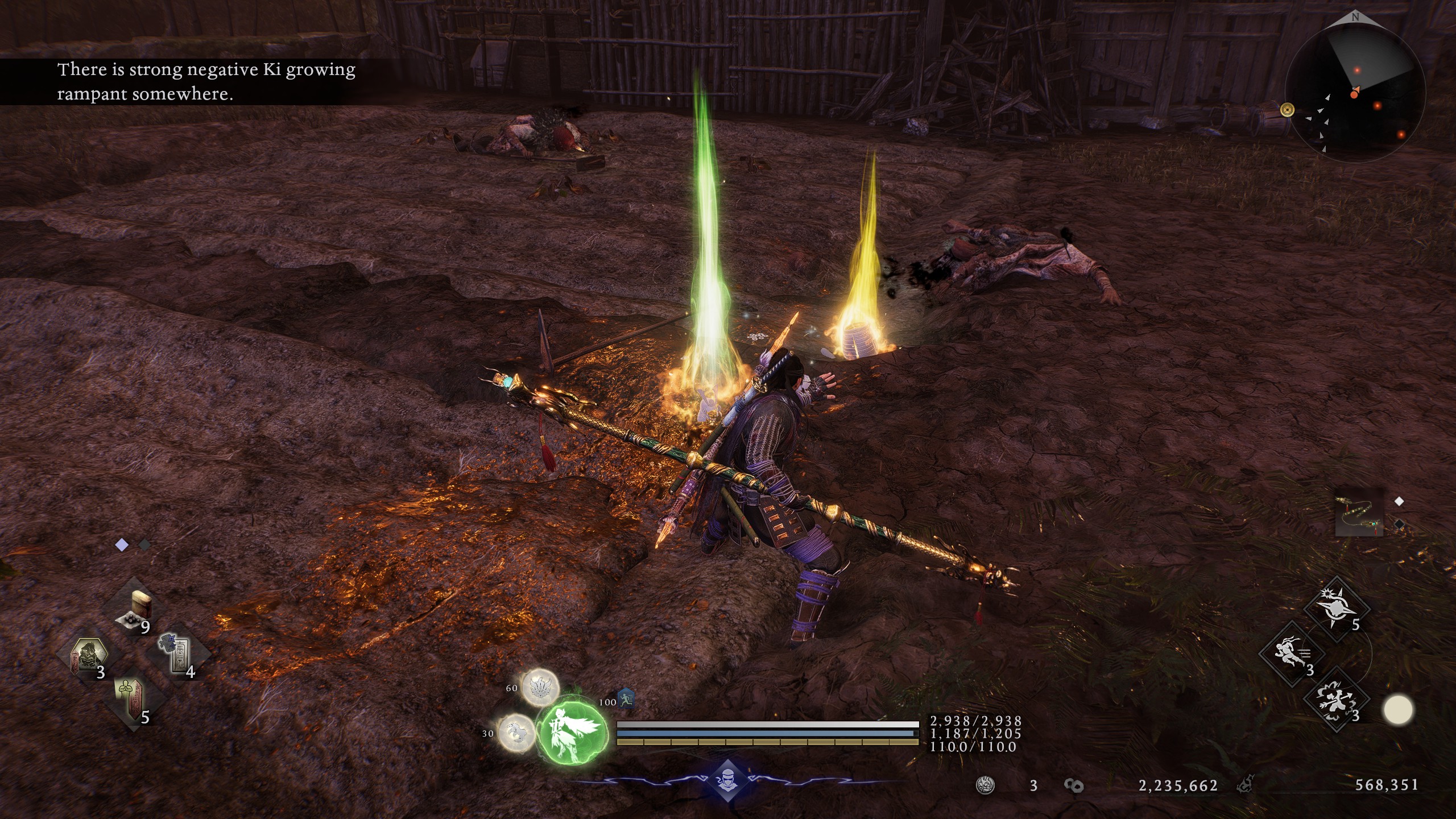
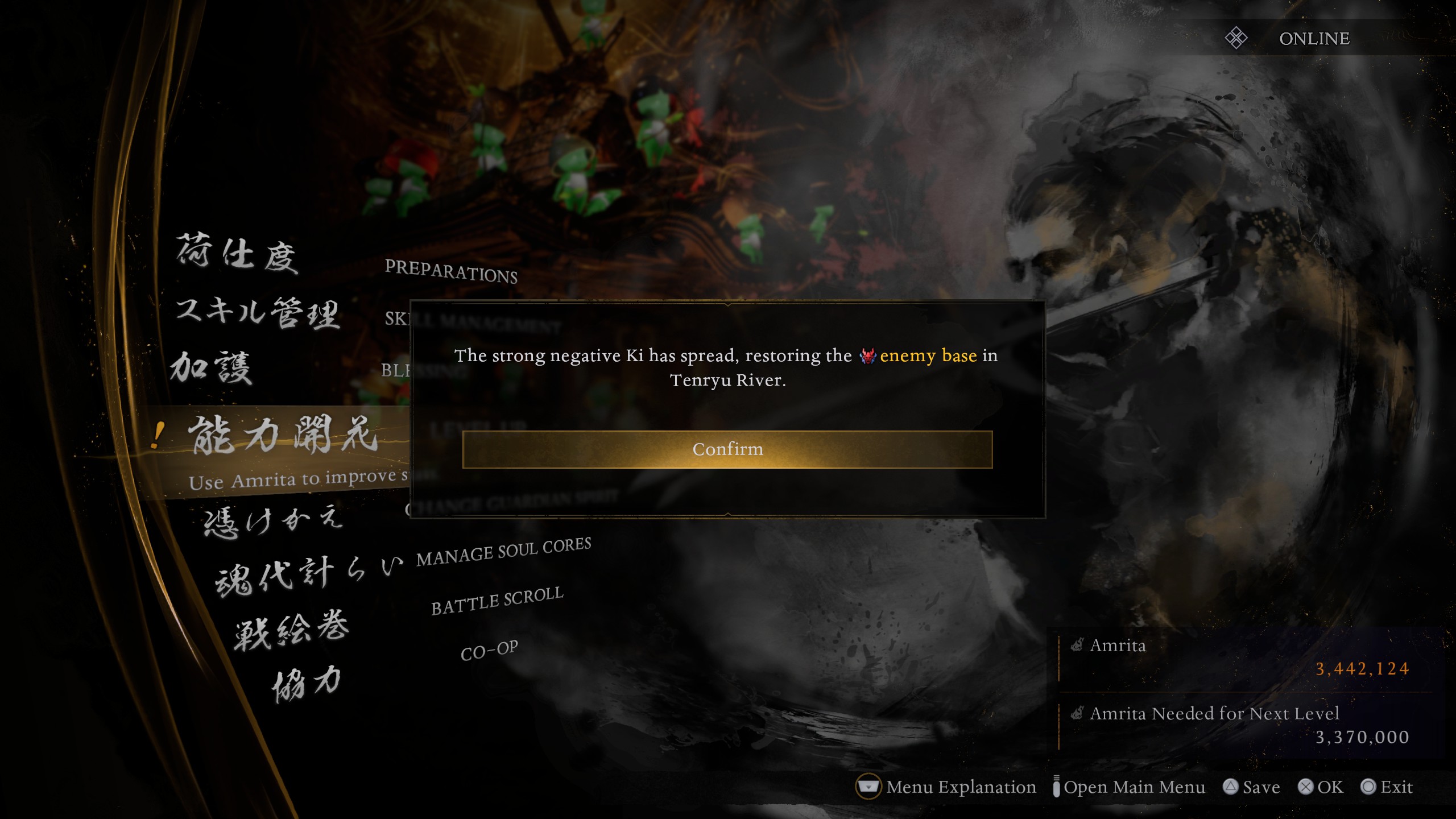
However, take note that if you have beaten quite a lot of enemies in the open fields, you may see the message about "strong negative Ki growing rampant somewhere" popping up. When you pray at a shrine after receiving this message, the game will notify you that a conquered Enemy Base will be restored by itself, even when you have not used any items on it yet.
We therefore recommend that you better use the sand on other content like Myth sidequests and Masters, and the Scarlet Sands of Despair on Lesser Crucibles that require more of them.
Level Sync in Battle Scroll stages
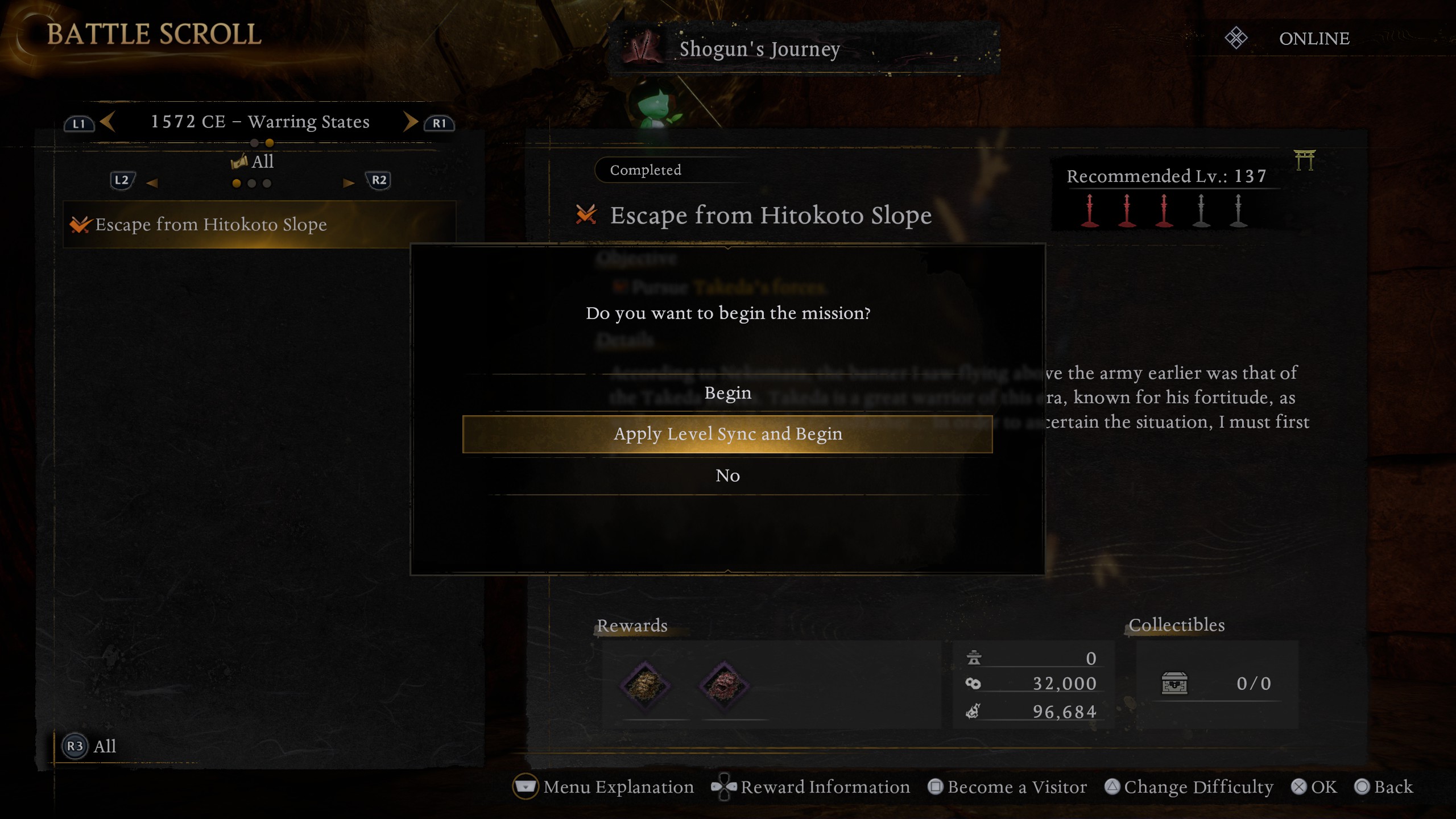
Speaking of the Battle Scroll stages, the Shogun's Journey mode also adds a new Level Sync option when you try to access a stage in this menu. If your character has leveled up more than the recommended level, this option will scale down your level to provide a more suitable challenge.
If you play along with this rule, the game also promises better rewards when you have cleared the stage.